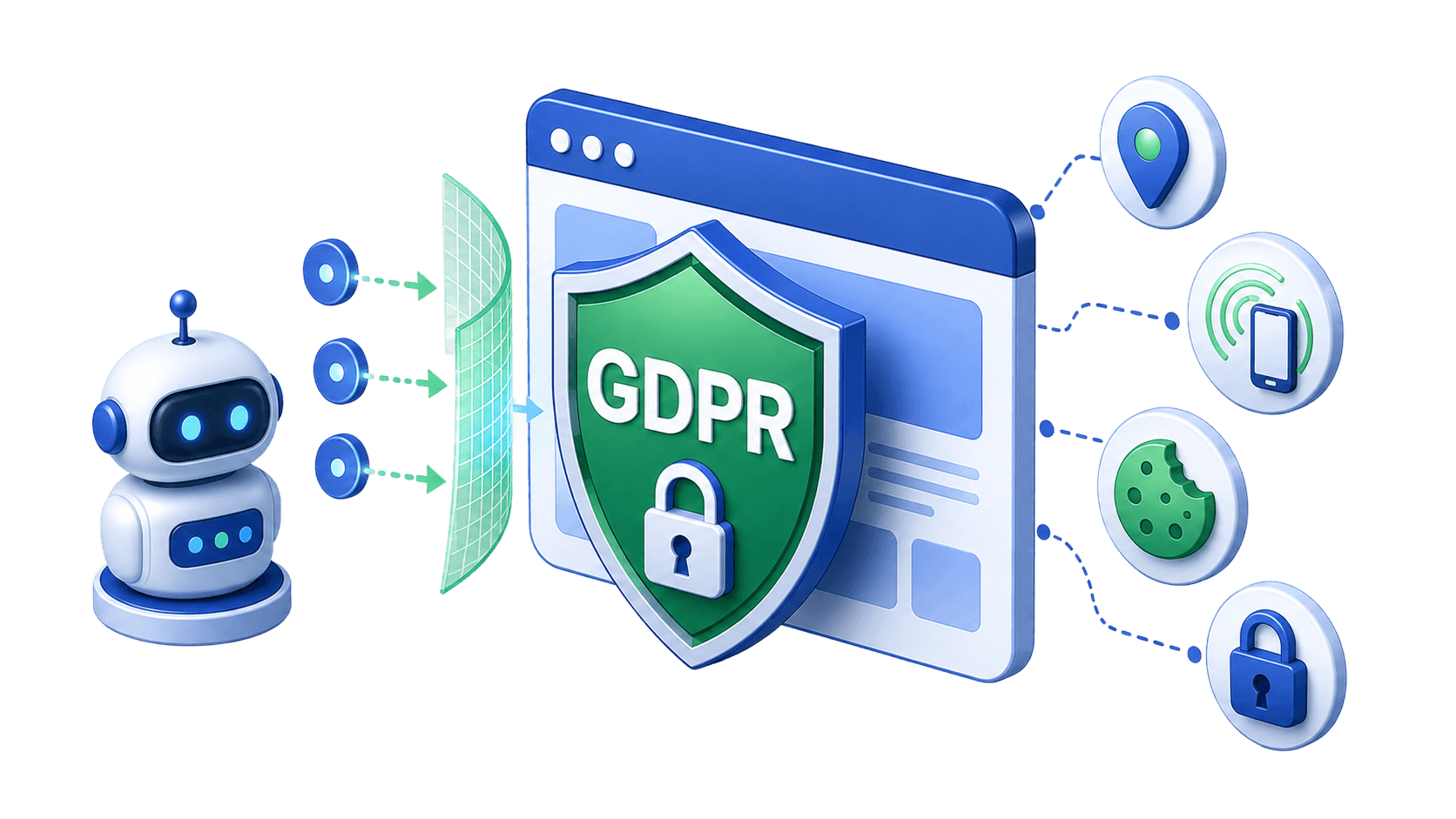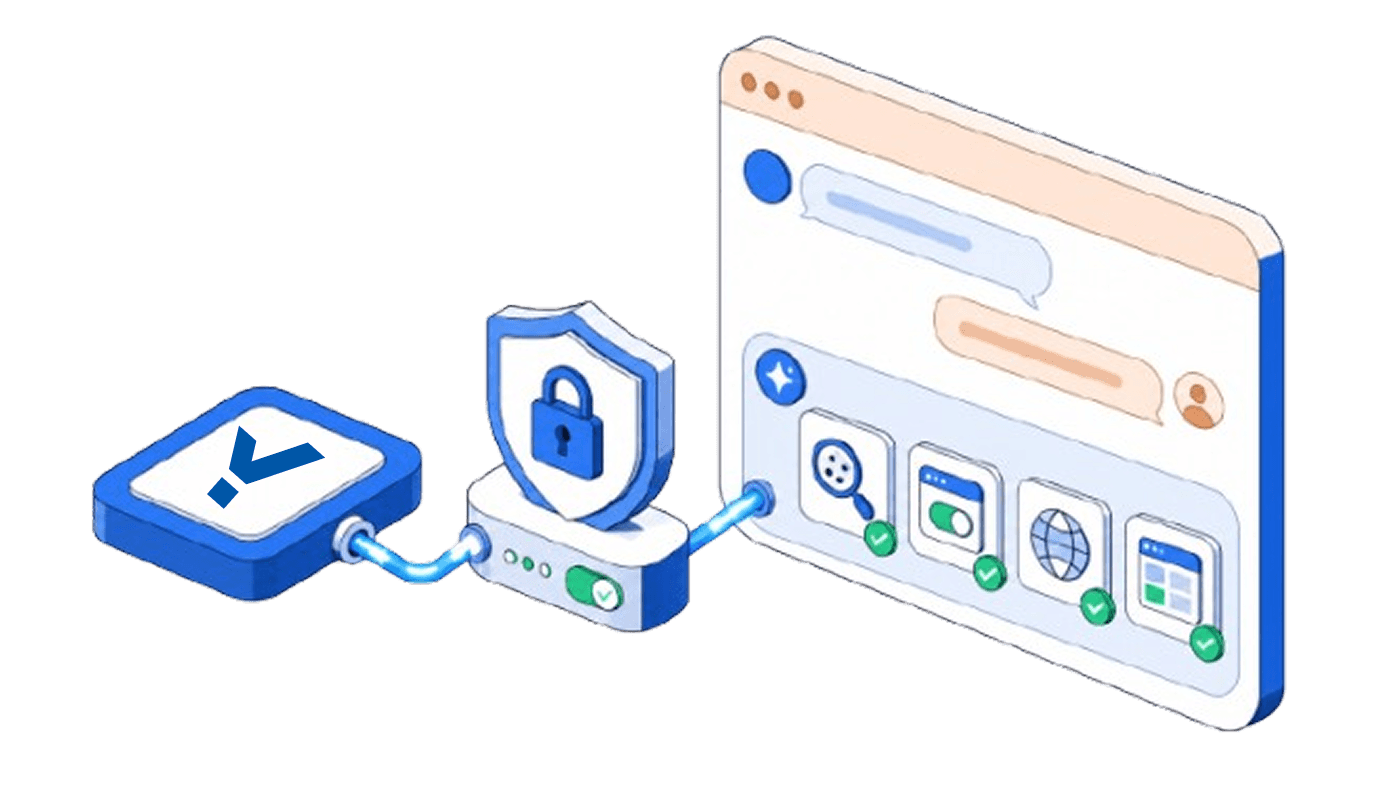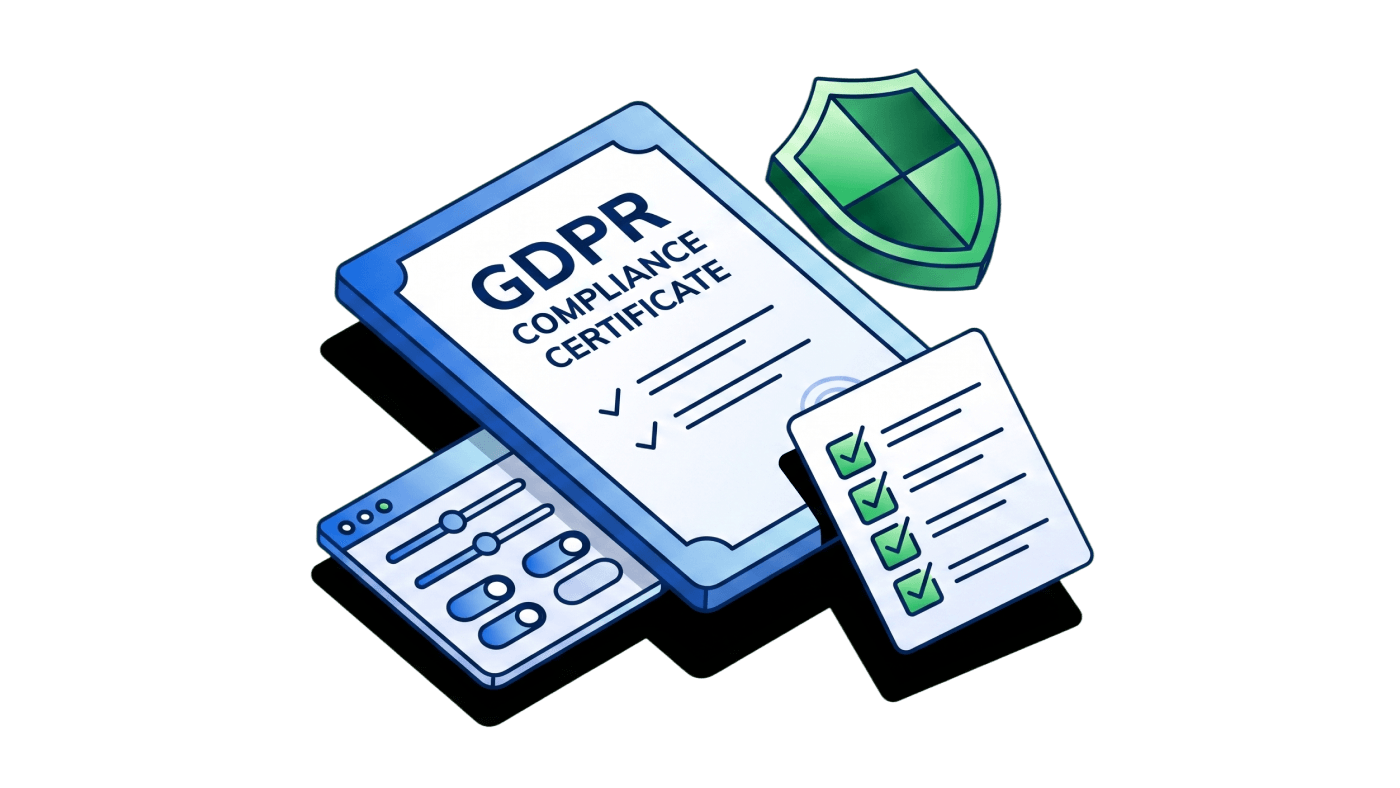
The best compliance programmes are built through everyday habits: a clear lawful basis before collecting data, a compliant cookie banner, updated vendor agreements, timely breach response, and privacy policies users can actually understand. This guide covers practical GDPR best practices businesses can follow to strengthen compliance, avoid common mistakes, and earn user trust where it matters most.
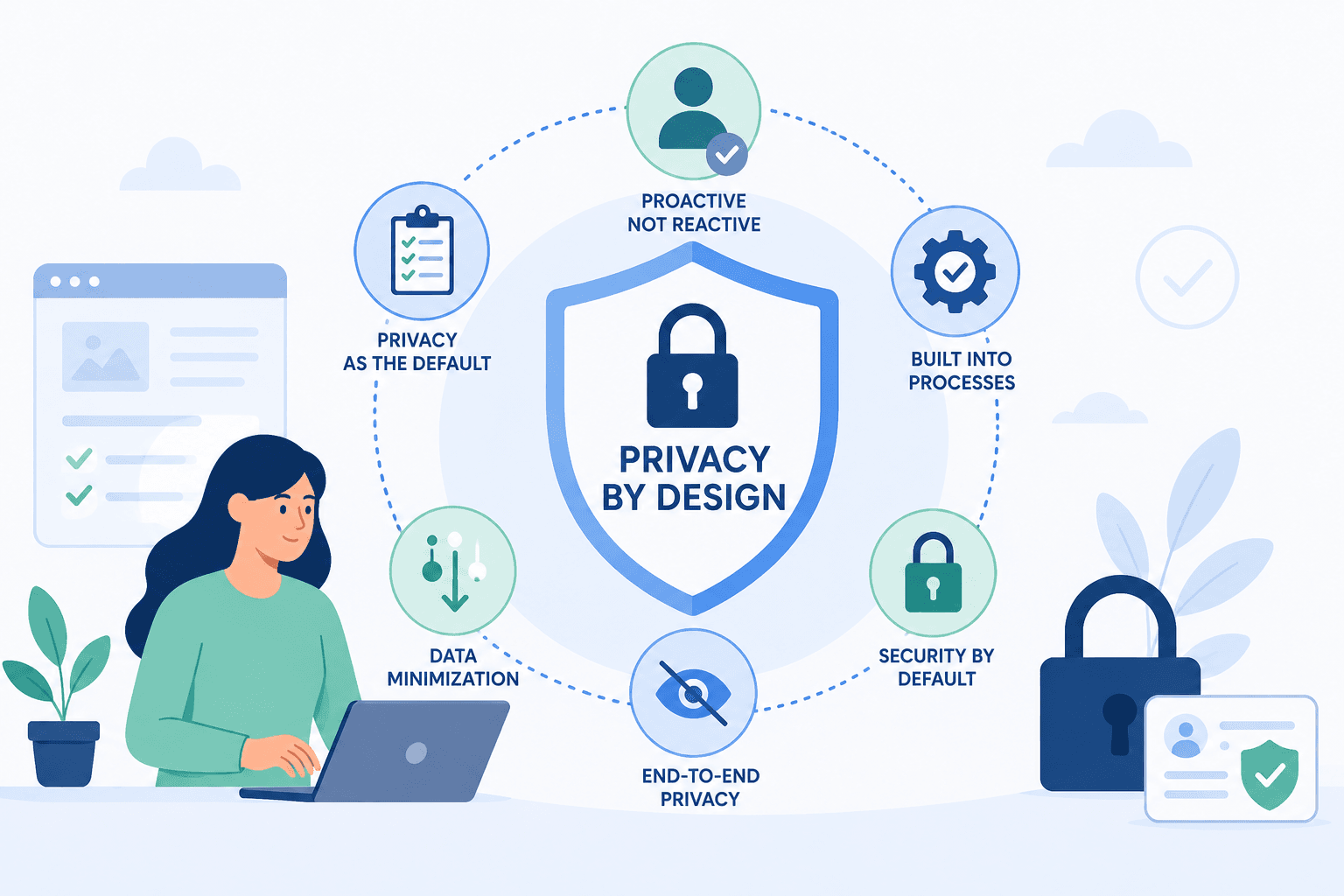
Good GDPR compliance starts before data is collected. Build privacy into every choice, setting, and system from day one.
What is GDPR?
General Data Protection Regulation (GDPR ) is a landmark piece of legislation passed by the European Union that fundamentally changed how organisations around the world handle personal data. It came into effect on 25 May 2018, after a two-year transition period that gave organisations time to get their houses in order.
GDPR applies to:
- Businesses established in the EU/EEA that process personal data, regardless of where the data subjects are located.
- Businesses outside the EU/EEA if they:
- Offer goods or services to people in the EU/EEA, or
- Monitor the behavior of people in the EU/EEA (for example, through cookies, analytics, or behavioral advertising).
Examples:
- A company in Germany collecting customer data
- A SaaS company in Canada serving customers in France
- A US e-commerce store uses tracking cookies to profile visitors from Spain.
In many of these cases, the business acts as a data controller because it decides why and how personal data is collected and used. For example, an e-commerce store that collects customer details for orders, marketing, analytics, or website personalisation is usually a data controller under the GDPR.
The GDPR requires organisations to process personal data lawfully, protect it with appropriate security measures, respect individuals' rights, and be transparent about how data is used. Businesses must also maintain records of processing activities, manage consent where required, report certain data breaches, and ensure third parties handle personal data responsibly.
These requirements are built around seven key GDPR principles:
- Lawfulness, fairness, and transparency: Process data legally and be clear about how it is used.
- Purpose limitation: Collect data only for specific, legitimate purposes.
- Data minimisation: Collect only the personal data you need.
- Accuracy: Keep personal data accurate and up to date.
- Storage limitation: Retain data only for as long as necessary.
- Integrity and confidentiality: Protect data with appropriate security measures.
- Accountability: Be able to demonstrate compliance through policies, documentation, and processes.
Enforcement sits with the Data Protection Authorities (DPAs), the independent regulatory bodies operating in each EU member state. In Ireland, this is the Data Protection Commission, and in France, it is the CNIL. The European Data Protection Board (EDPB) supports consistent GDPR enforcement across borders and steps in when cross-border cases become complex.
Penalties under GDPR operate on a two-tier fine structure.
- Less serious violations can lead to fines of up to €10 million or 2% of global annual turnover, whichever is higher.
- More serious violations can lead to fines of up to €20 million or 4% of global annual turnover, whichever is higher.
GDPR best practices for businesses
The following best practices can help organisations build a stronger privacy programme, reduce compliance risks, and demonstrate accountability to regulators and customers alike.
#1 Conduct data mapping
You cannot protect what you do not know exists. The same applies to personal data. Data mapping helps organisations understand what personal data they collect, why they collect it, where they store it, who can access it, and how long they retain it. This visibility forms the foundation of every GDPR obligation, from transparency and consent to security and data subject rights.
A good data mapping exercise should identify:
- Data collection points, such as forms, mobile apps, customer support interactions, and website tracking technologies
- Storage locations, including databases, cloud platforms, spreadsheets, and email systems
- Third parties that receive personal data
- Retention periods and deletion practices
- Security measures used to protect the data
This process must also include website tracking technologies. Analytics tools, advertising pixels, social media plugins, and third-party scripts may collect personal data through cookies and similar technologies.
To maintain an accurate inventory of tracking activities, conduct regular cookie audits. Scan your website to identify cookies and trackers, categorise them based on purpose, and document them in your cookie policy. Repeat these scans periodically and whenever you add new tools or integrations to the site.
#2 Establish a lawful basis before processing personal data
Every processing activity under the GDPR must have a lawful basis.
Article 6 identifies six lawful bases :
- Consent
- Contract
- Legal obligation
- Vital interests
- Public task
- Legitimate interests
The appropriate basis depends on why the data is being processed. For example, processing customer information to deliver a purchased service may rely on contract, while sending promotional emails may require consent.
Identify and document your lawful basis before collecting personal data. Attempting to justify processing after the fact can create significant compliance risks.
#3 Implement robust consent management
Consent is one of the most widely used lawful bases, but it should be used cautiously. Valid consent under GDPR must be freely given, specific, informed, and unambiguous. Individuals should understand what they are agreeing to and have a genuine choice.
This applies across many data collection points, including newsletter sign-ups, lead generation forms, account registrations, marketing communications, and cookie consent banners.
For websites, a compliant cookie banner should:
- Give equal prominence to "Accept All" and "Reject All" options
- Allow users to make granular choices for different cookie categories
- Avoid dark patterns or misleading design
- Block non-essential cookies until consent is obtained
- Make it easy to withdraw consent at any time

Example of an opt-in cookie banner
Stay GDPR-compliant with automated cookie consent
Scan your site, block non-essential cookies, collect consent, and maintain policies from one platform.
Start Free- 14-day free trial
- Cancel anytime
#4 Maintain transparent privacy notices and documentation
As a GDPR best practice, transparency should go beyond legal disclosure. Your privacy policy is your business speaking directly to the people whose data it uses, so make it worth reading. Tell users what you collect, why it matters, who else sees it, how long it stays with you, and what control they have over it. Also, write the policy in clear, accessible language and review it regularly to ensure it reflects your actual processing activities.
Build trust with a clear privacy policy
Explain how you collect, use, and protect personal data with a privacy policy tailored to your business.
Generate privacy policy- 14-day free trial
- Cancel anytime
Alongside external notices, organisations should maintain internal documentation that demonstrates compliance. This includes data inventories, consent records, vendor agreements, retention schedules, and Records of Processing Activities (ROPA). Although maintaining a ROPA is mandatory only in certain circumstances, it is a best practice for organisations of all sizes because it creates a central record of how personal data flows through the business.
Organisations should also establish clear data retention schedules. Personal data should not be kept indefinitely. Define how long each category of data is retained, document the business or legal justification, and securely delete or anonymise data when it is no longer needed.

#5 Honour data subject rights without delay
The GDPR gives individuals significant control over their personal data. These rights include:
- Right to be informed
- Right of access
- Right to rectification
- Right to erasure
- Right to restrict processing
- Right to data portability
- Right to object
- Rights related to automated decision-making
Organisations must be prepared to respond to DSAR requests efficiently and within the required timeframes.
Create a documented process for handling requests, verify the requester's identity before disclosing information, and maintain records of all requests and responses. A dedicated inbox or workflow can help ensure requests are not missed.
#6 Build privacy into products and processes
Privacy should be considered from the beginning of every project, not added after launch.
This principle, known as Privacy by Design , requires organisations to integrate data protection measures into products, services, and business processes from the outset.
In practice, this means:
- Collecting only the personal data you need
- Limiting access to authorised personnel
- Using pseudonymisation where appropriate
- Reviewing privacy risks before launching new initiatives
For processing activities that present a high risk to individuals, conduct a Data Protection Impact Assessment (DPIA). A DPIA helps identify potential risks and document safeguards before processing begins.
#7 Secure personal data and prepare for breaches
Organisations should implement technical and organisational measures that are appropriate for the nature of the data they process and the risks involved.
Examples include:
- Encryption
- Multi-factor authentication
- Role-based access controls
- Regular security testing
- Employee training and awareness programmes
Despite strong safeguards, incidents can still occur. Every organisation should maintain a documented breach response process .
Where a personal data breach is likely to result in a risk to individuals' rights and freedoms, the relevant supervisory authority generally must be notified within 72 hours. Maintaining a breach register and testing response procedures regularly can help organisations respond more effectively when incidents occur.
#8 Manage vendors and international data transfers
Many businesses rely on third-party providers to process personal data on their behalf. Before sharing personal data with a vendor, assess their security practices, understand how they process data, and ensure a compliant Data Processing Agreement (DPA) is in place.
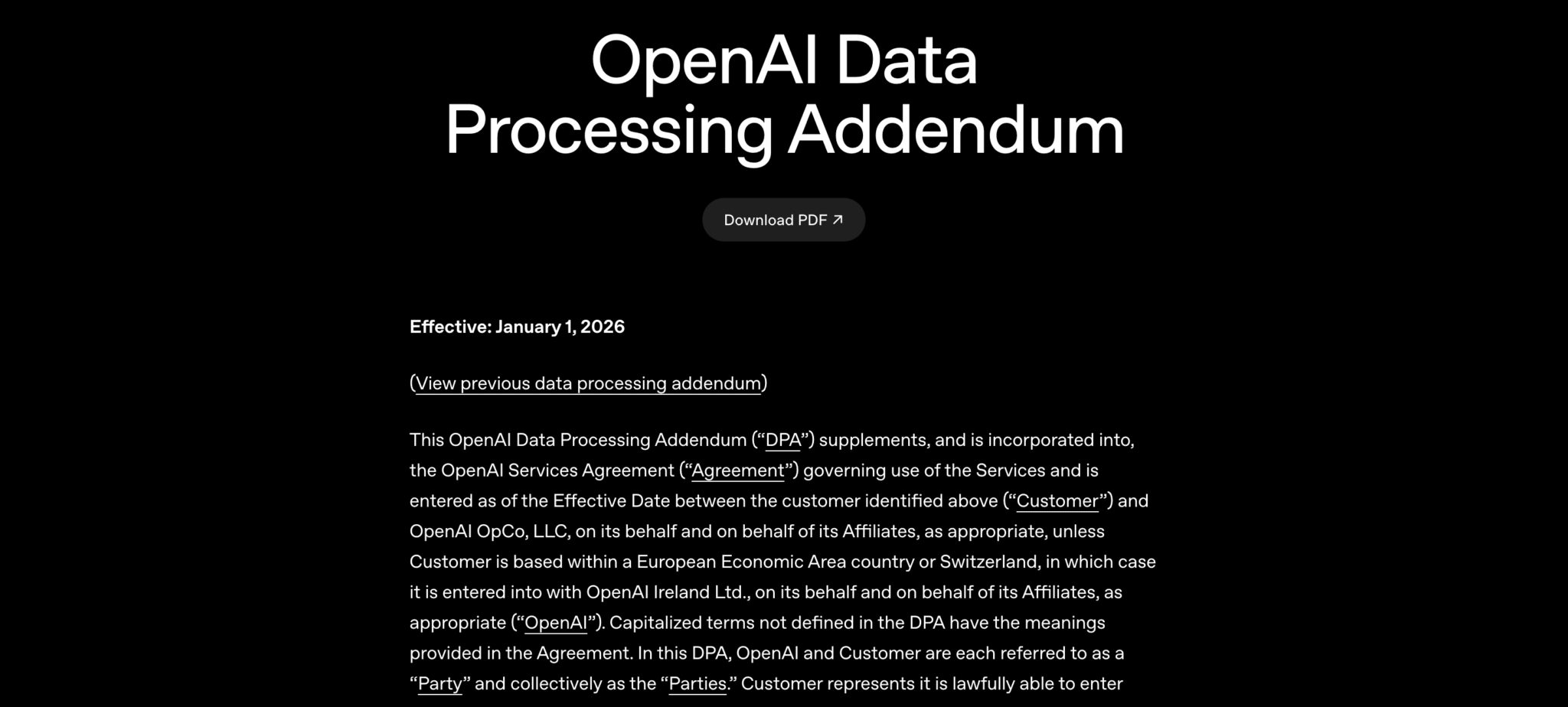
Example of a data processing agreement from Open AI
If personal data is transferred outside the European Economic Area (EEA), verify that an appropriate transfer mechanism exists. This may include an adequacy decision from the European Commission or Standard Contractual Clauses (SCCs). Note that vendor management should be an ongoing process rather than a one-time review.
#9 Review compliance regularly
GDPR compliance evolves alongside your business. New products, marketing initiatives, software tools, vendors, and regulatory guidance can all affect your compliance obligations.
Schedule regular reviews of:
- Privacy notices
- Consent mechanisms
- Cookie disclosures
- Vendor relationships
- Security controls
- Data retention practices
- Records of Processing Activities
Regular reviews help identify gaps early and demonstrate accountability if regulators request evidence of compliance. Compliance reviews should extend beyond policies and systems. Regular privacy training helps ensure employees understand their responsibilities and can apply data protection principles in their day-to-day work.
#10 Data protection officers
Depending on the nature of your processing activities, you may also need to appoint a Data Protection Officer (DPO) or designate internal responsibility for overseeing privacy compliance. This is typically required when an organisation carries out large-scale systematic monitoring, processes special-category data at scale, or is a public authority.
Even when a DPO is not legally required, it is still good practice to assign clear internal responsibility for privacy compliance. Someone should own GDPR documentation, monitor policy updates, coordinate data subject requests, review vendor risks, and ensure teams follow agreed data protection processes.
Key takeaways: Implementing GDPR best practices
- Know your data: Maintain an up-to-date inventory of the personal data you collect, use, share, and store.
- Establish a lawful basis: Identify and document the legal basis for every processing activity before collecting data.
- Manage consent properly: Ensure consent is freely given, informed, specific, and easy to withdraw.
- Be transparent: Use clear privacy notices and maintain accurate compliance documentation.
- Respect data subject rights: Create processes to handle access, deletion, correction, and portability requests on time.
- Build privacy into operations: Apply Privacy by Design principles and assess risks before launching new initiatives.
- Protect personal data: Implement appropriate security measures and maintain a breach response plan.
- Monitor vendors and transfers: Use DPAs and appropriate safeguards for international data transfers.
- Review compliance regularly: Update policies, records, and training as your business and processing activities evolve.
- Assign privacy accountability: Appoint a Data Protection Officer (DPO) where required, or designate clear responsibility for overseeing GDPR compliance.
FAQ on GDPR best practices
What are GDPR best practices?
GDPR best practices are practical measures that help organisations comply with the regulation and protect personal data responsibly. They include maintaining an accurate data inventory, establishing a lawful basis for processing, obtaining valid consent where required, providing transparent privacy notices, respecting data subject rights, implementing appropriate security measures, managing vendors carefully, and reviewing compliance regularly.
Together, these practices help businesses reduce compliance risks, demonstrate accountability, and build trust with customers
How to prepare for GDPR compliance?
Businesses can prepare for GDPR compliance by first understanding what personal data they collect, how they use it, and who they share it with. Conduct a data mapping exercise, identify a lawful basis for each processing activity, review privacy notices, and implement a process for handling data subject requests.
Organisations should also establish appropriate security measures, assess third-party vendors, maintain compliance documentation, and ensure employees receive regular privacy training. For websites, reviewing cookie usage and implementing a compliant consent management solution are also important steps.