By 2026, privacy also means clearly telling users exactly what data you're collecting and why you're collecting it. You can't just gather data at random. Laws like GDPR and CCPA make it a basic right for people to know what personal data organisations collect. This blog offers a simple and effective privacy policy Checklist, helping your business stay clear, responsible, and trusted by your users.
What is a privacy policy?
Privacy policies define how businesses collect, manage, share and use personal data, providing transparency and compliance with laws like GDPR, CCPA/CPRA, and LGPD.
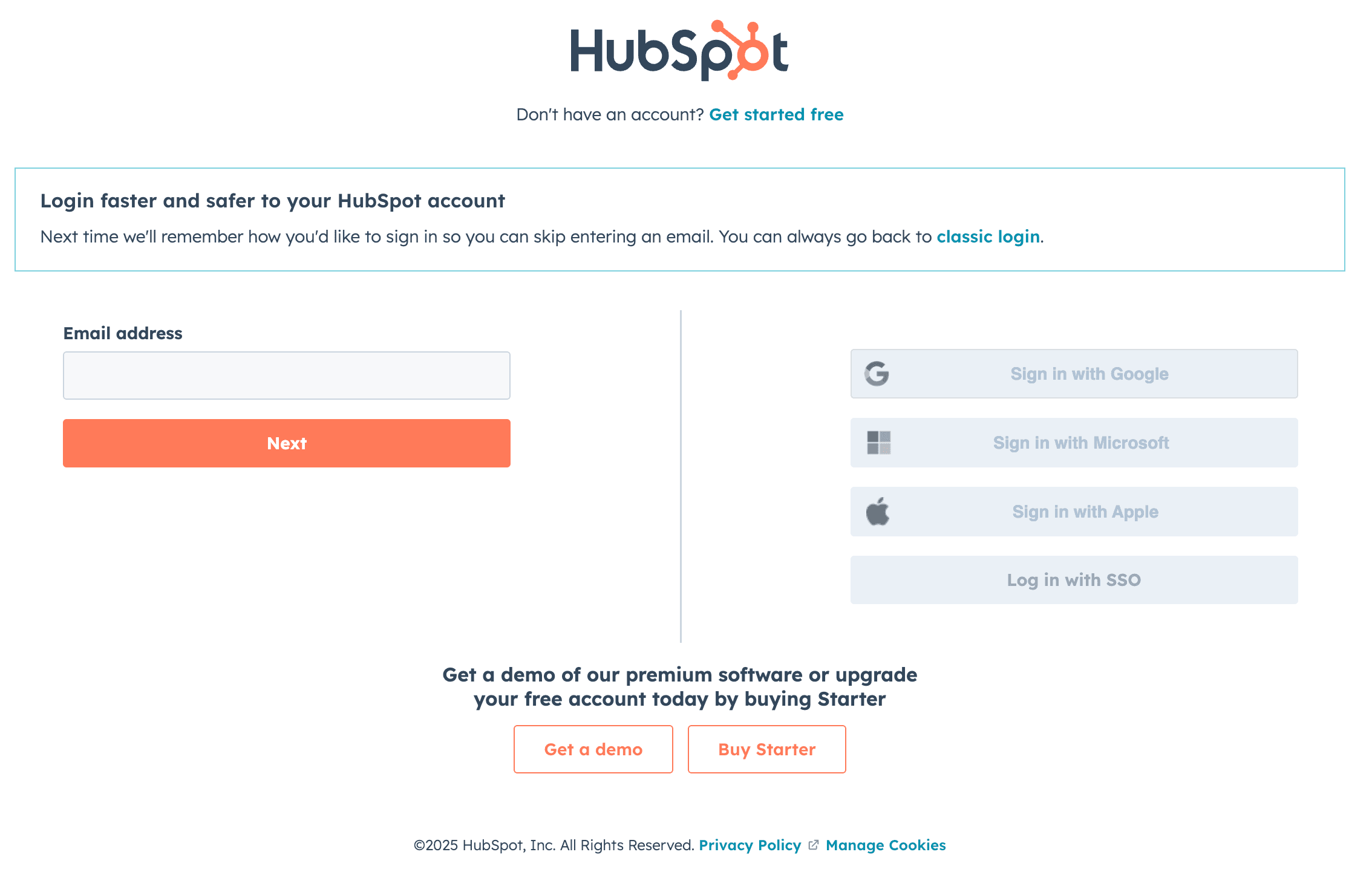
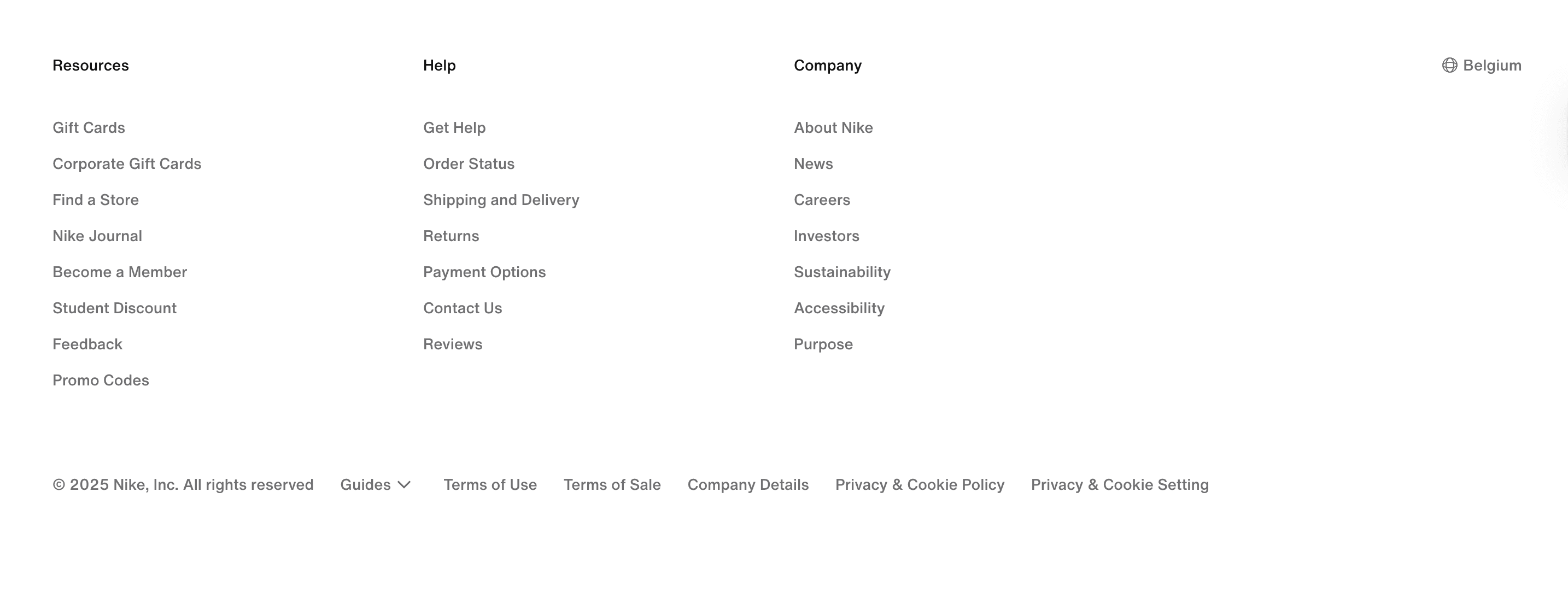
Typically, privacy policies are placed on forms requesting personal details, sign-up pages, website footers, cookie banners, email communications, and account management pages.
Where to display your privacy policy? (Real-life examples)
Regardless of whether offline or online, a privacy policy belongs to a prominent area. Think of the places where data collection happens, like the footer of your website or the signup forms.
Take these examples for a better understanding of where you should be displaying your privacy policy at.
Emails
Privacy policy linked to the footer of a Forbes email
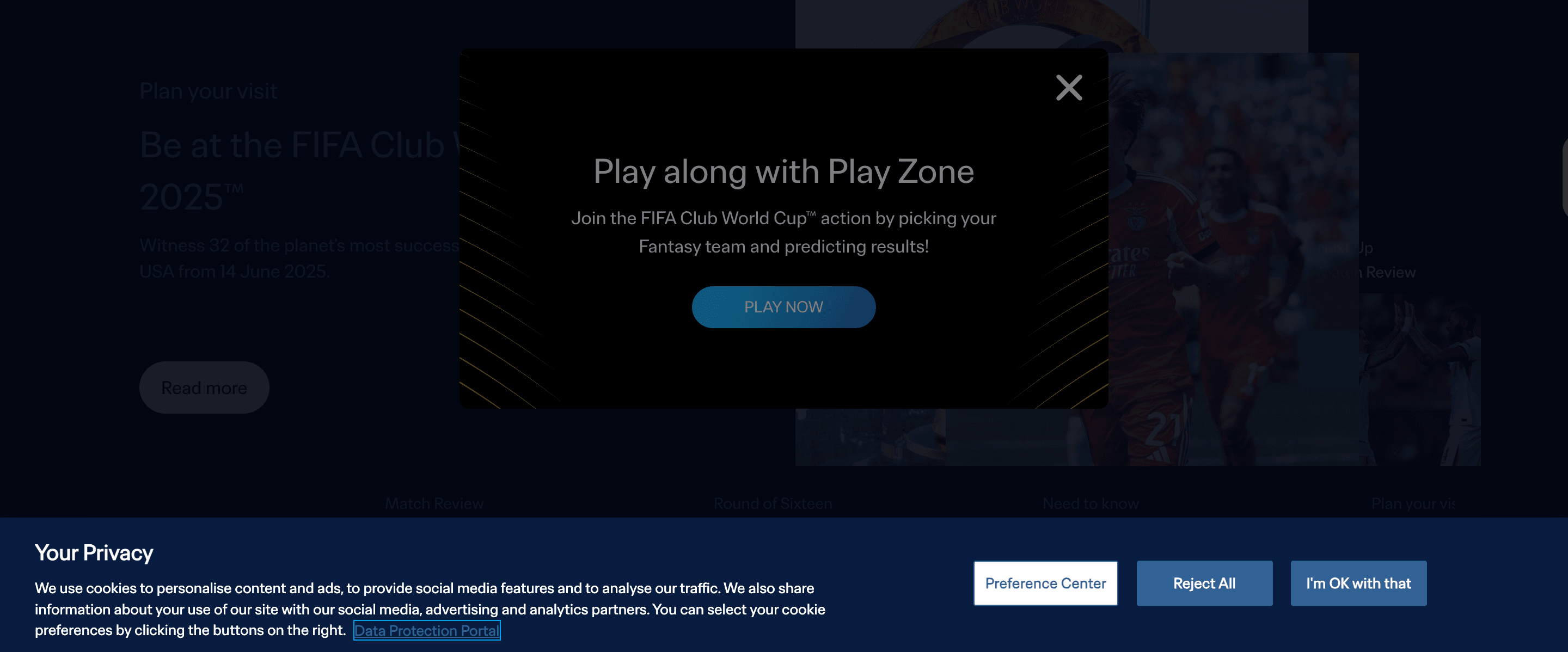
Link to the data protection portal that takes the user to both the privacy and cookie policy on FIFA's website
This visibility ensures consumers can easily access, understand and control how their information is used, building trust and fulfilling compliance requirements.
Legal requirement: Data privacy laws require organisations to provide a conspicuous, accessible, and easy-to-understand privacy policy.
Fines and penalties: Non-compliance can lead to fines and legal action. The fine amount varies with regional laws.
Transparency: Clearly informing users about data practices enhances trust and user satisfaction.
Consumer expectations: Today’s users expect clear, upfront information about how their personal data is managed.
Competitiveadvantage: Demonstrating responsible data practices can differentiate your brand in the marketplace.
Riskmanagement: Clearly outlined privacy practices reduce the risk of data misuse, breaches, and associated liabilities.
Reducessupportrequests: Clearly outlining data processing in your privacy policy can proactively address common privacy-related user questions, saving your support team valuable time.
AIandautomationcompliance: Clearly defined data practices support the responsible use of artificial intelligence and automated decision-making systems.
Privacyasuserexperience: Privacy clarity directly enhances the user experience, aligning your business with evolving consumer values around digital ethics.
Therefore, a privacy policy helps your website remain trustworthy, compliant, and competitive.
Things to include in your privacy policy: Privacy policy checklist 2026 (CCPA, CalOPPA, GDPR)
While privacy policy requirements vary across data protection laws, certain disclosures are universally expected. Here’s a quick checklist of what your privacy policy must contain in 2026.
Transparent data collection
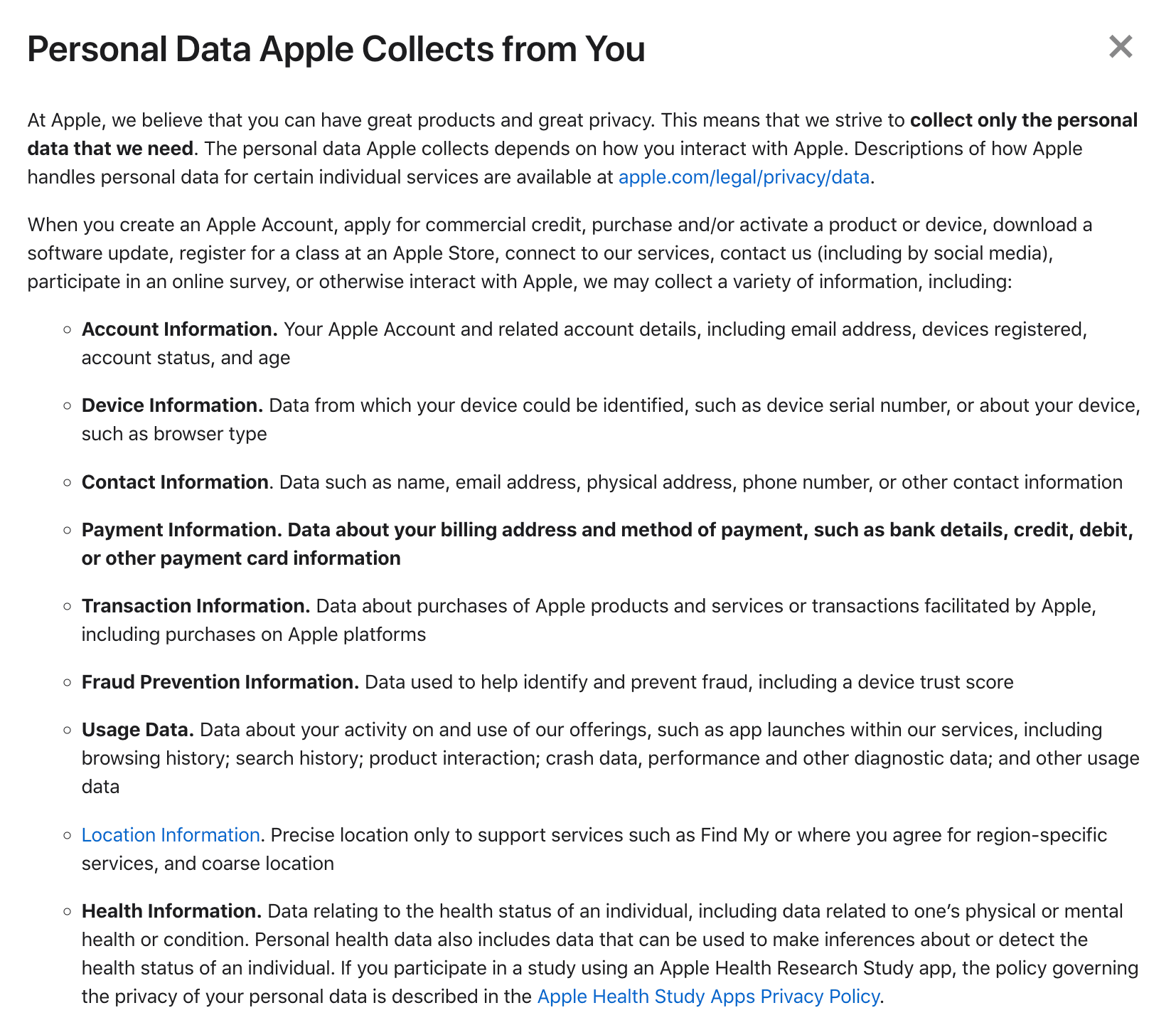
List the categories of collected personal data (e.g., names, emails, phone numbers, IP addresses).
Specify how you collect user data (e.g., cookies, tracking pixels, form submissions).
Detail the types of cookies (functional, marketing, analytics) and tracking technologies used by your website.
Specify the purposes and duration of those cookies.
Mention what data these cookies collect (IP address, device type, browser type).
Inform users on how they can customise cookie preferences.
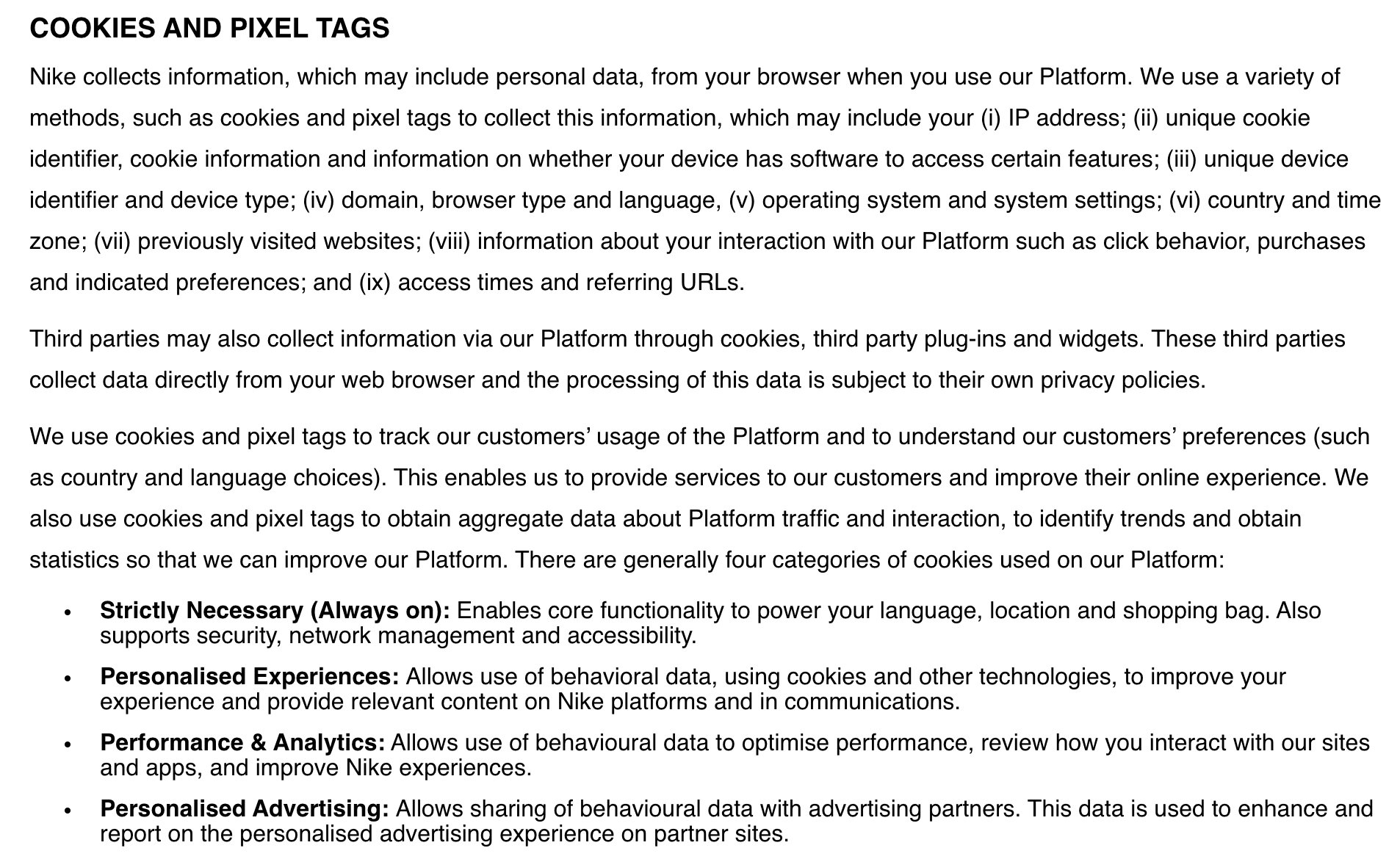
Cookie-related clause as seen on Nike’s privacy policy
Global compliance assurance
Convey your commitment towards user privacy
Ensure explicit alignment with GDPR, CPRA, CCPA, and emerging international privacy standards.
Regularly review and update to reflect legal developments.
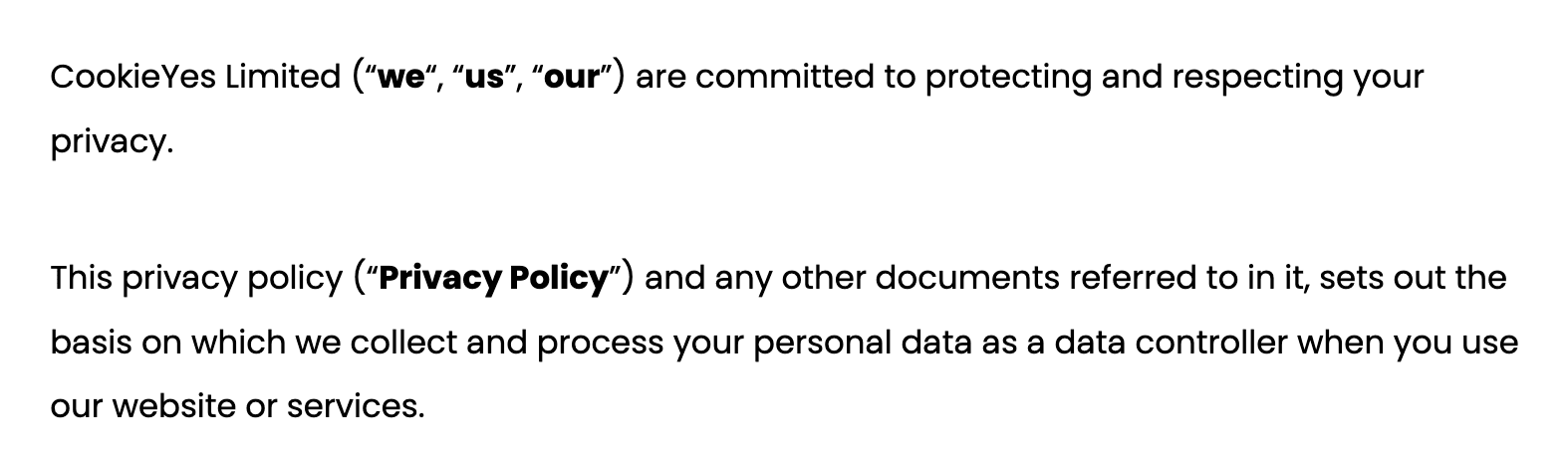
CookieYes highlights its commitment to privacy in the privacy policy.
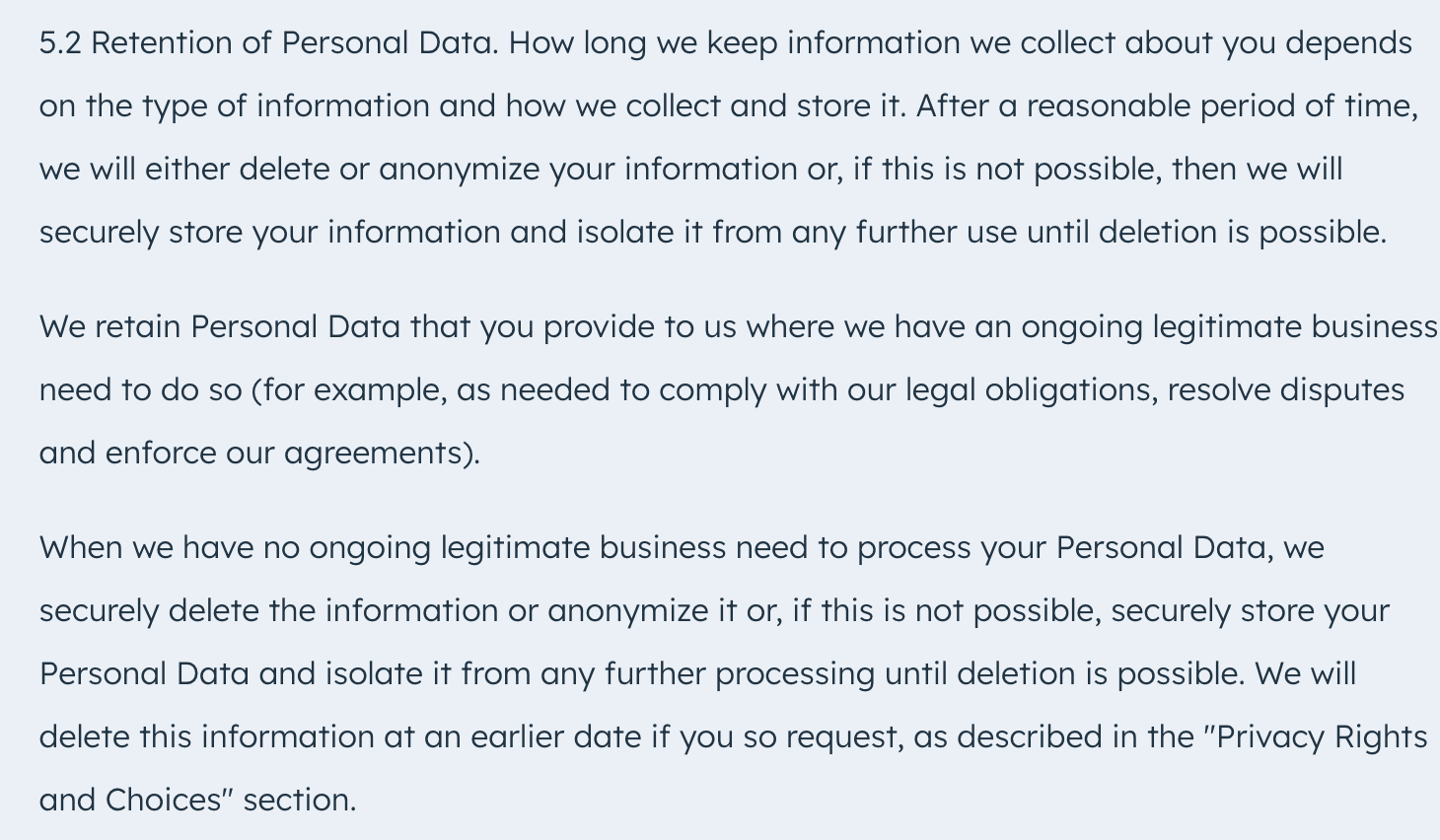
Define data retention practices
State how long you will store different categories of personal data.
Justify retention periods to align with specific business needs and regulatory compliance.
Retention clause as seen on Hubspot’s privacy policy
Transparent contact details
Provide two or more designated contact points for privacy-related inquiries (email, phone, or form).
Ensure responsiveness to user concerns or requests.
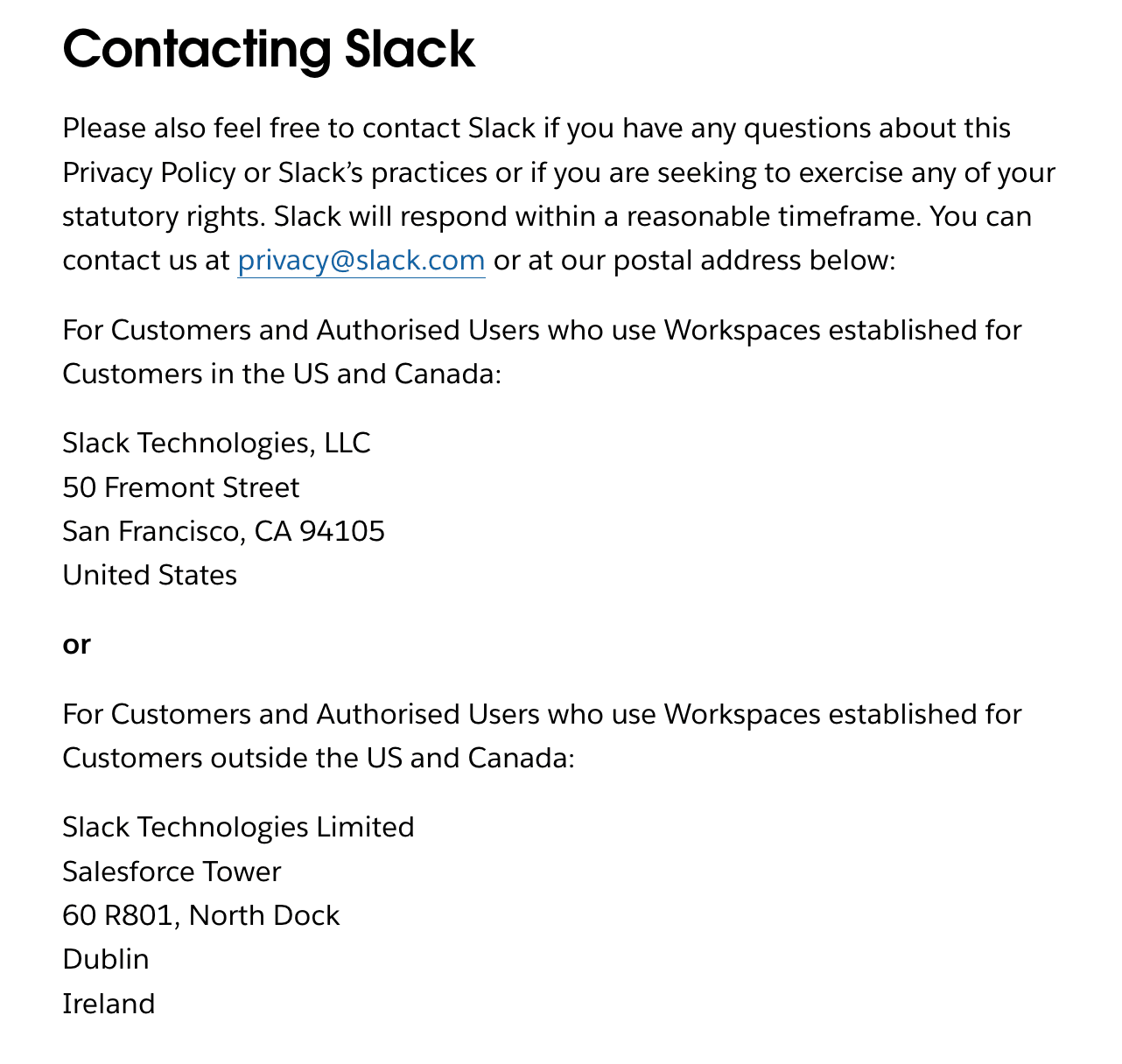
Give the name and contact information of your representatives and Data Protection Officer, if you have one.
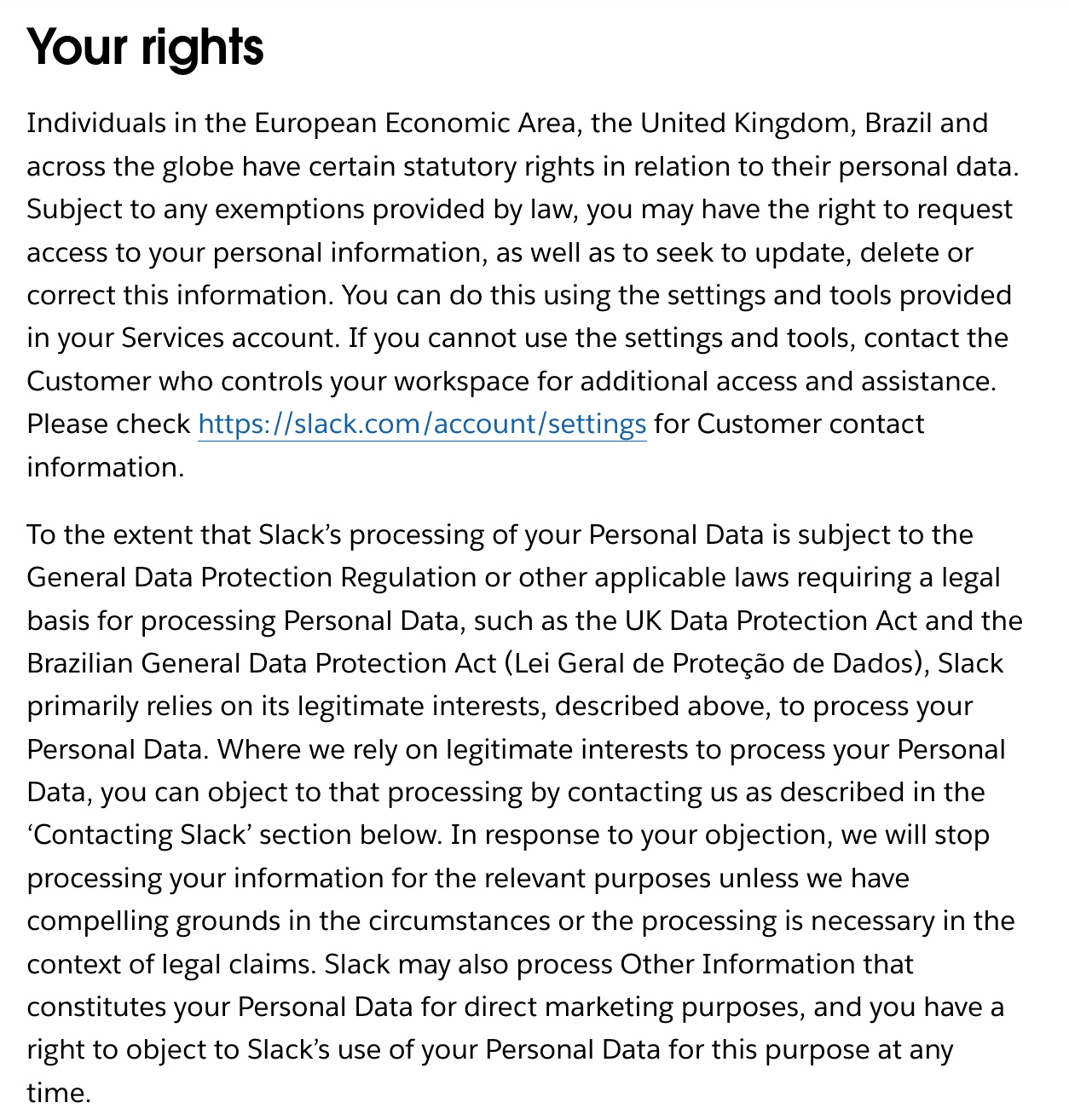
Contact information as provided in Slack’s privacy policy
Policy update date
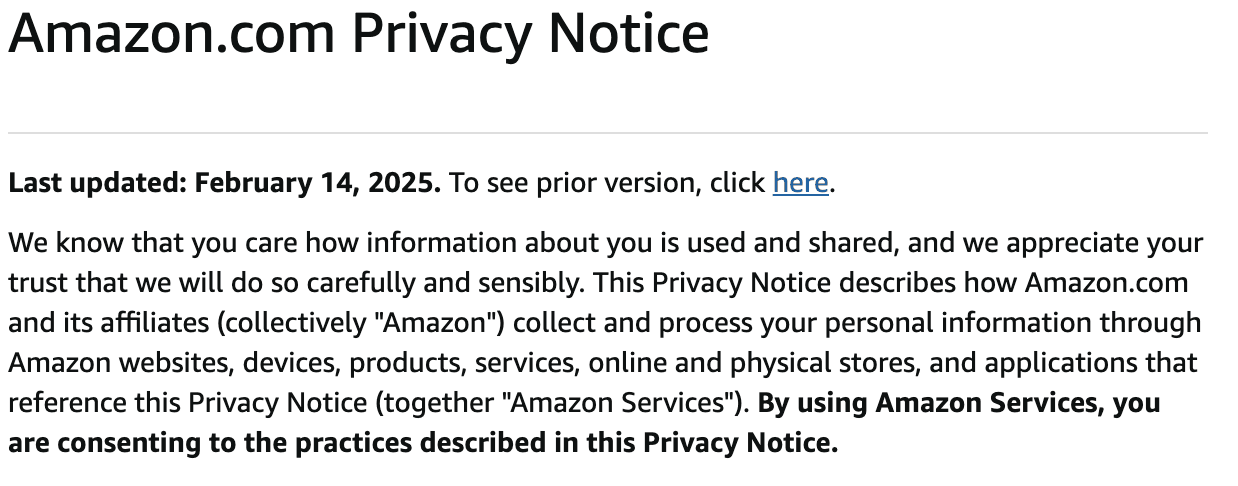
Provide the effective date and the date of your last privacy policy update.
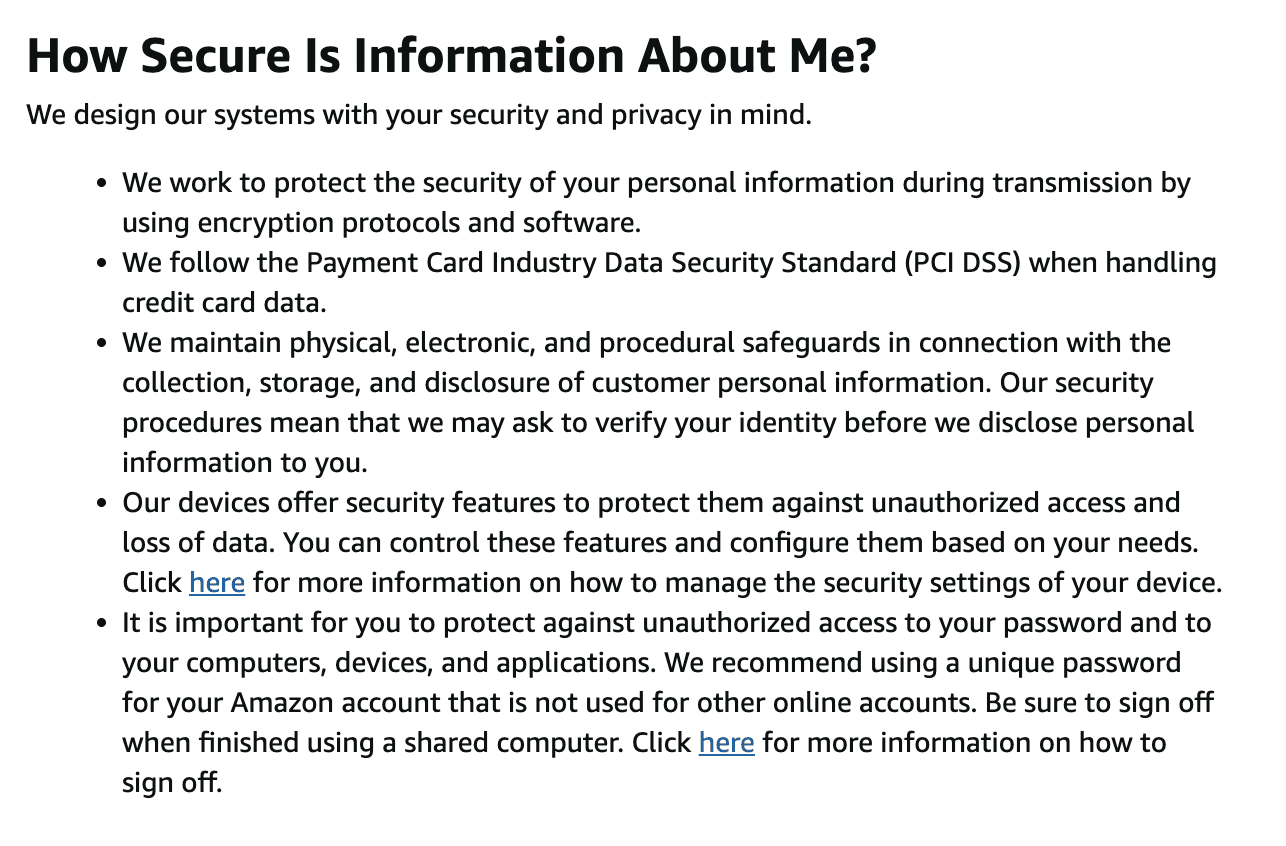
Last updated section in Amazon's privacy policy
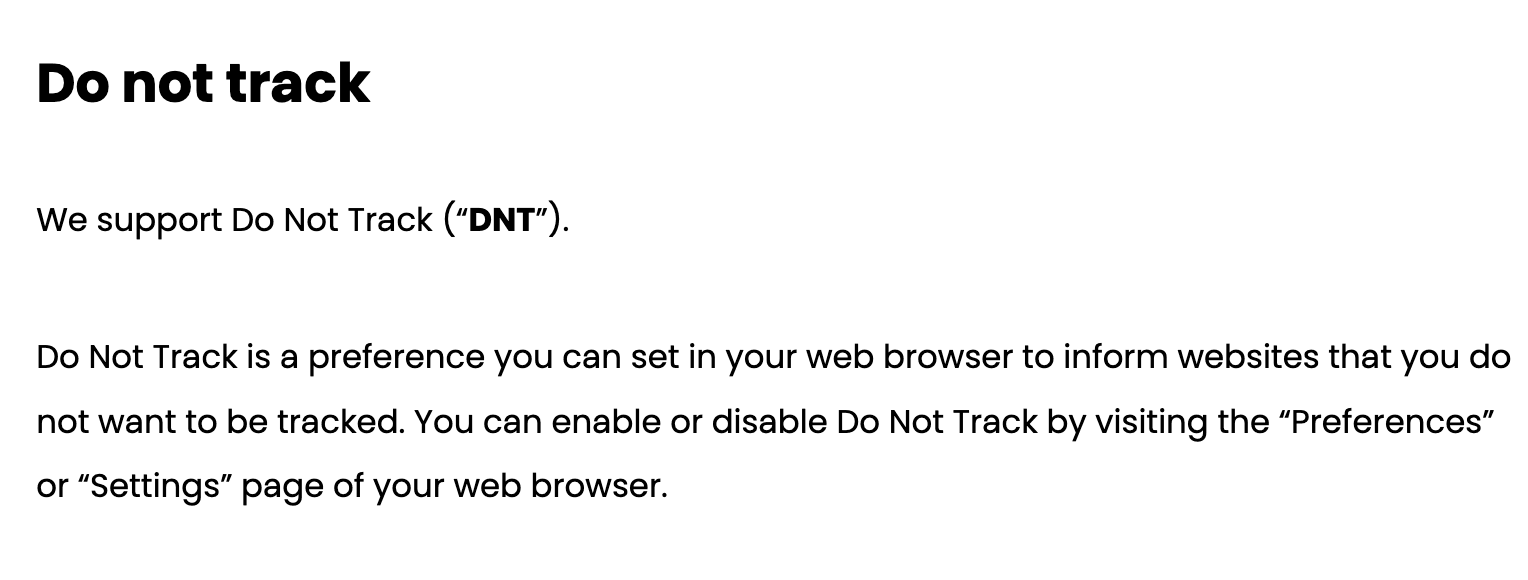
Do not track response
Clarify if you respond to Do Not Track signals (CalOPPA)
Response to “Do not track” mentioned in CookieYes privacy policy
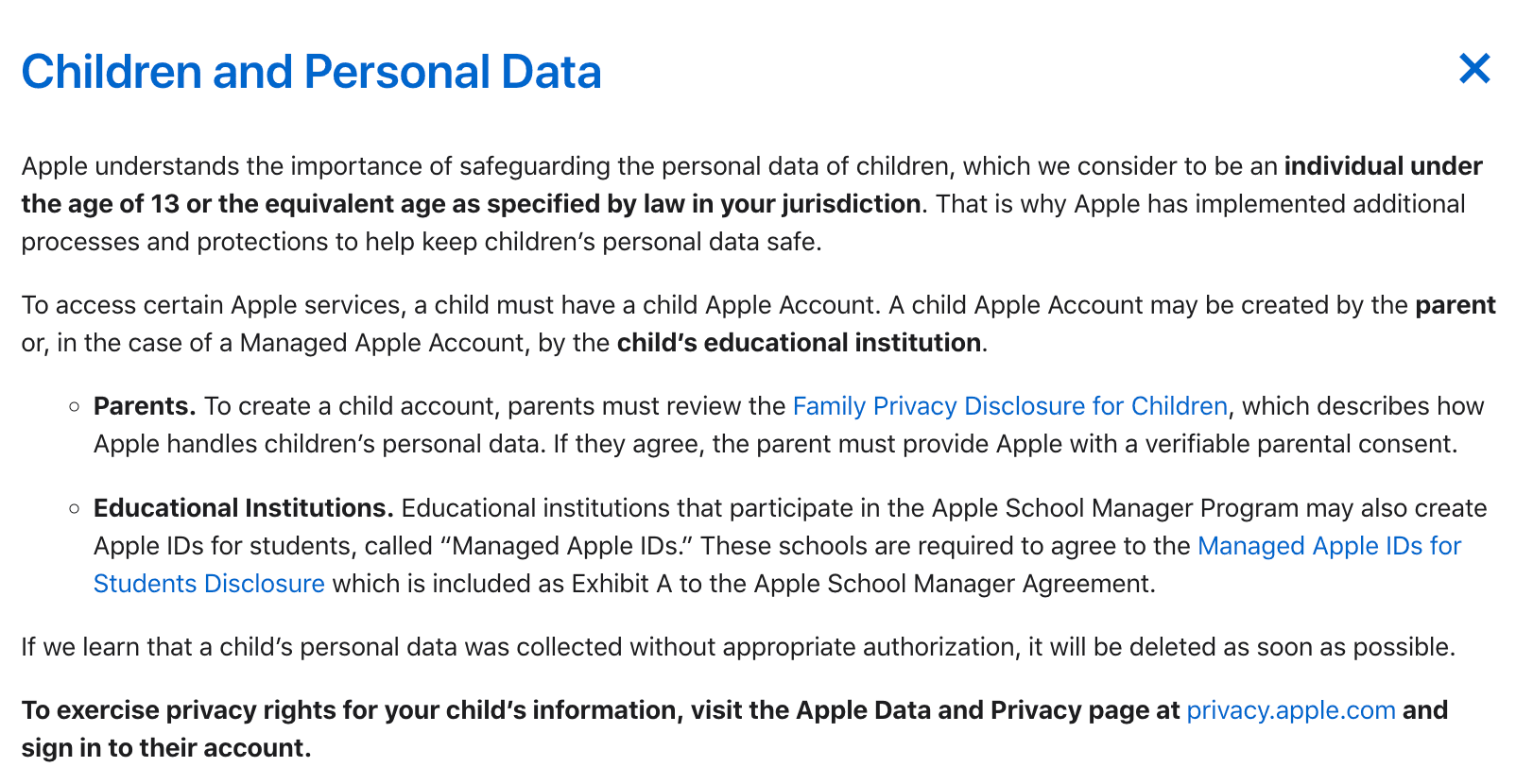
Personal data of children
Provide a statement regarding the use of children’s personal information (under 13 years)
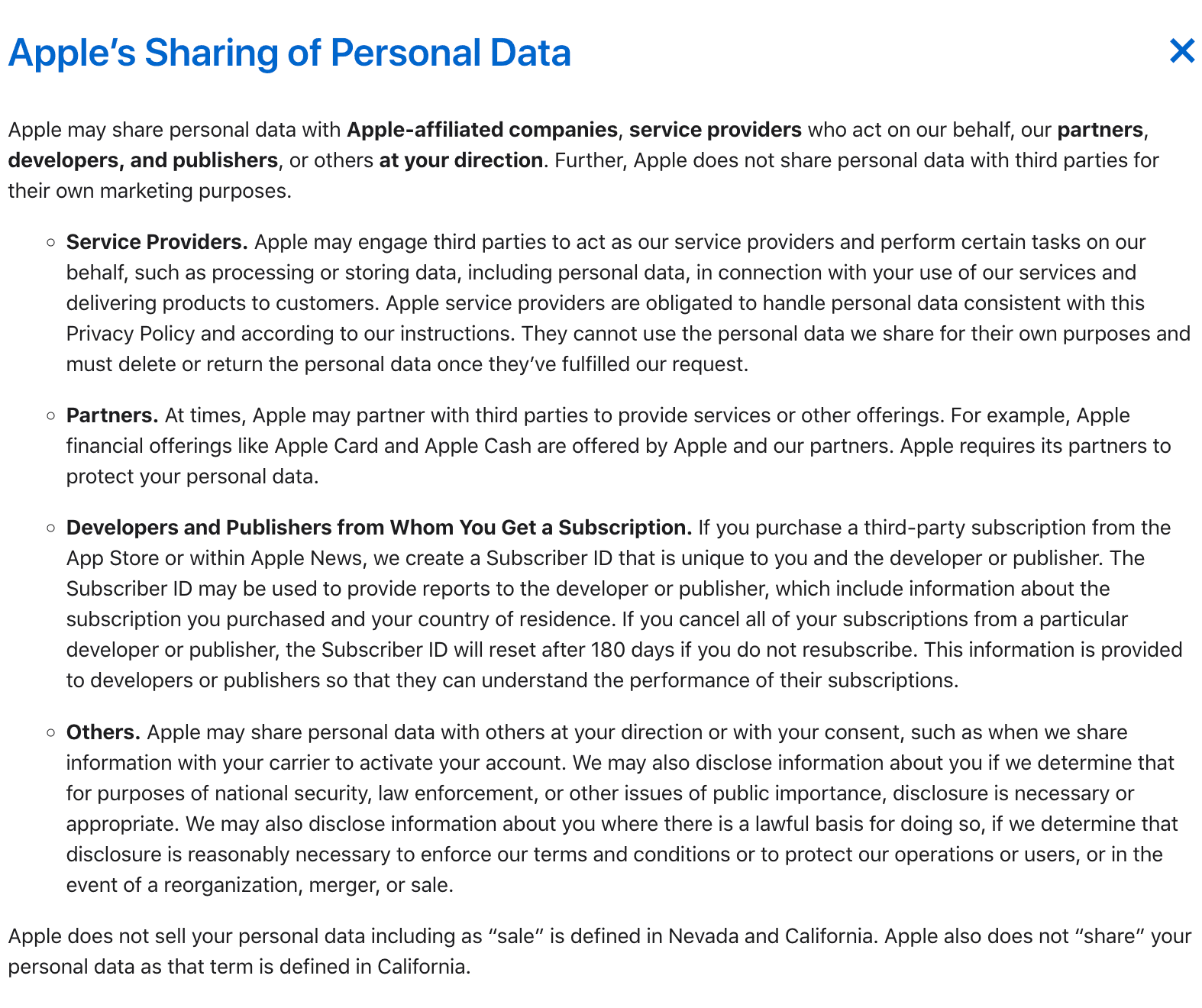
Clause on children’s data as seen on Apple’s privacy policy.
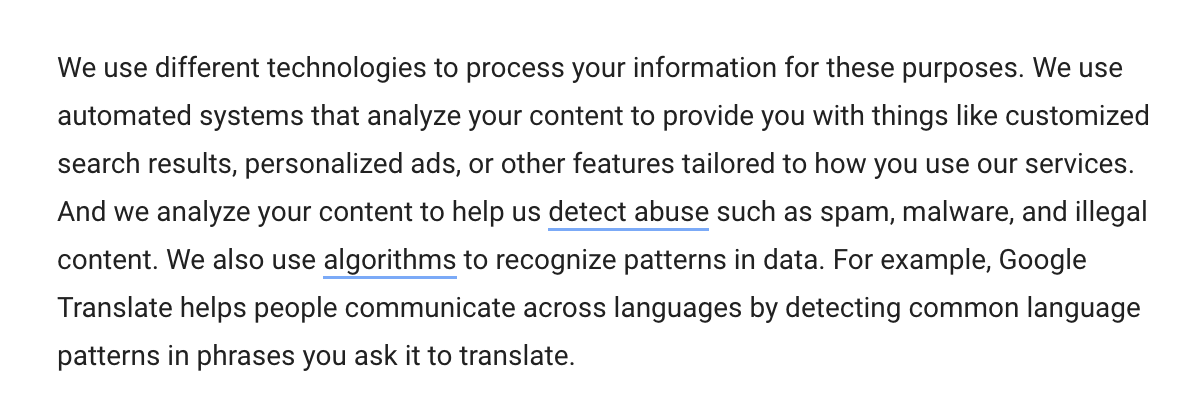
Automated decision-making
If your company makes decisions based on automated processes and profiling, mention this in your policy along with what personal data is collected, logic involved in making such decisions, users' rights, including how they can opt out, significance of such decisions and the consequences.
Information on Automated decision-making as provided in Google’s privacy policy
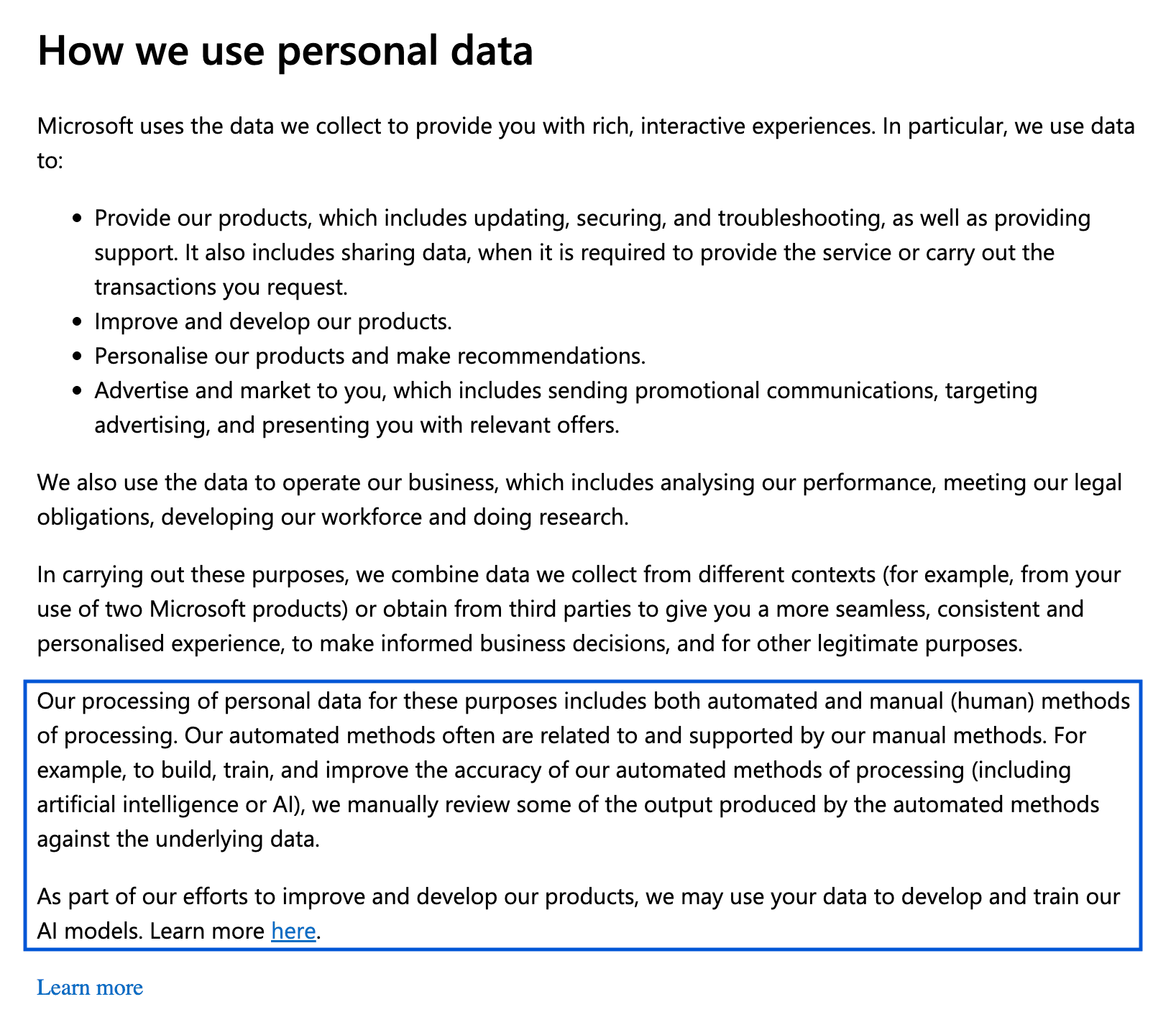
Use of Artificial Intelligence (AI clause)
Nowadays, companies use AI for a range of purposes, such as training models and powering chatbots. Regulators are catching up, too. The EU AI Act, for instance, now requires businesses to clearly inform users when they’re interacting with AI.
As AI tools become more embedded in websites and digital services, your privacy policy must also keep pace.
Therefore, to be transparent with your users, disclose whether your business uses AI, especially if it processes personal data for automation, personalisation, or customer support.
A concise, transparent AI clause not only ensures compliance with emerging laws but also reassures users that you prioritise ethical and responsible data use.
Here are the best practices to comply with global privacy policy requirements.
Keep your policy user-friendly
Employ clear, simple language to avoid confusing users.
Use visual aids (bullet points, tables, and icons) to improve readability and accessibility.
Integrate interactive elements, allowing users to easily navigate the policy.
Avoid vague language and confusing terminology.
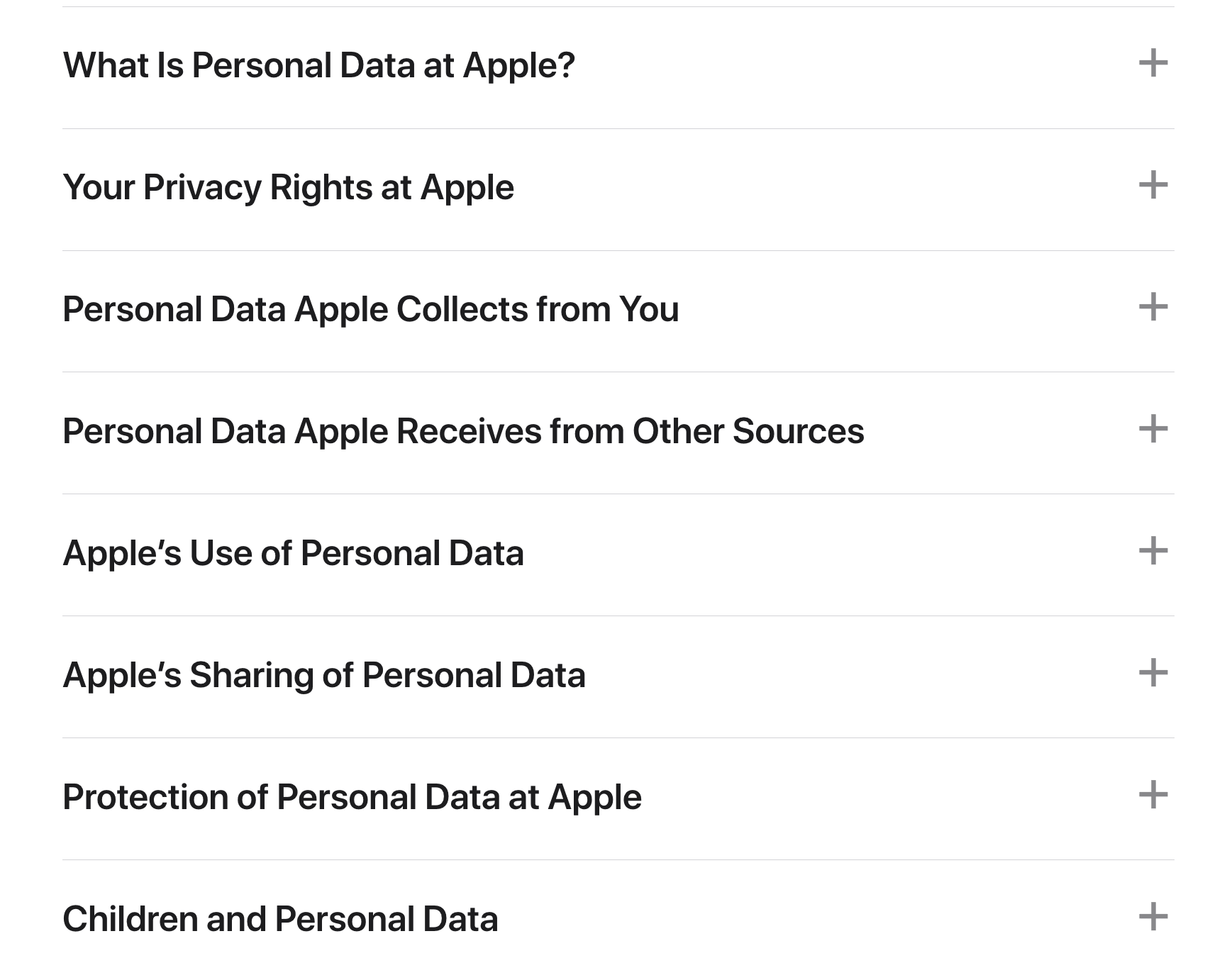
Accordion-style privacy policy as seen on Apple’s website simplifies complex information, making it user-friendly and interactive.
Enhance transparency beyond legal requirements
Use visual summaries such as infographics to highlight key privacy points.
Regularly update users through clear notifications about policy changes.
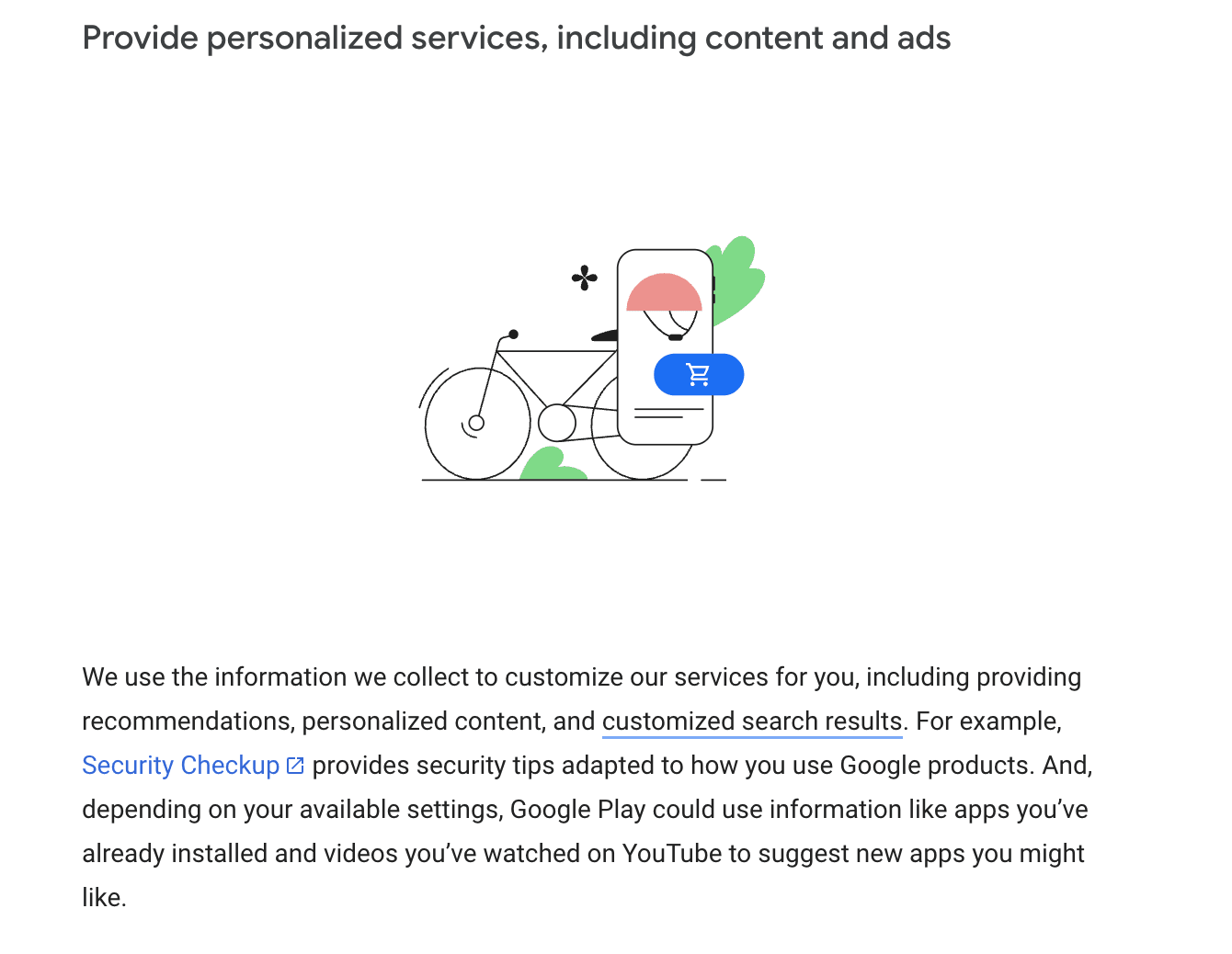
Provide interactive content such as clickable sections and images to enhance user engagement.
Google’s privacy policy uses images in its privacy policy
Update your privacy policy
Update your privacy policy at least once annually or when there are any significant changes in data collection, processing or sharing.
Free of charge
Ensure that users can access the contents of your privacy policy free of charge.
Easy access
Your privacy policy must be provided conspicuously on your website. Users should be able to get them at multiple data collection points.
Ensure that your privacy policy is available orally upon request for accessibility
Provide the link to your privacy policy on your website to ensure easy access.
Practical steps for decision makers
As privacy laws evolve, organisations must take proactive steps to ensure they continue to meet privacy policy requirements and maintain user trust.
Conduct regular audits of your privacy policy (recommended annually)
Engage privacy experts for periodic legal and compliance reviews.
Prioritise transparency to foster sustained user trust and confidence.
Stay updated with law reforms by following industry experts and law enforcers.
Adopting this Privacy Policy Checklist for 2026 not only ensures legal compliance but significantly enhances your business’s reputation and user trust, fostering stronger relationships and sustained growth in an increasingly privacy-focused world.
Quick look: Privacy policy checklist summarised
List the categories of data collected and their sources.
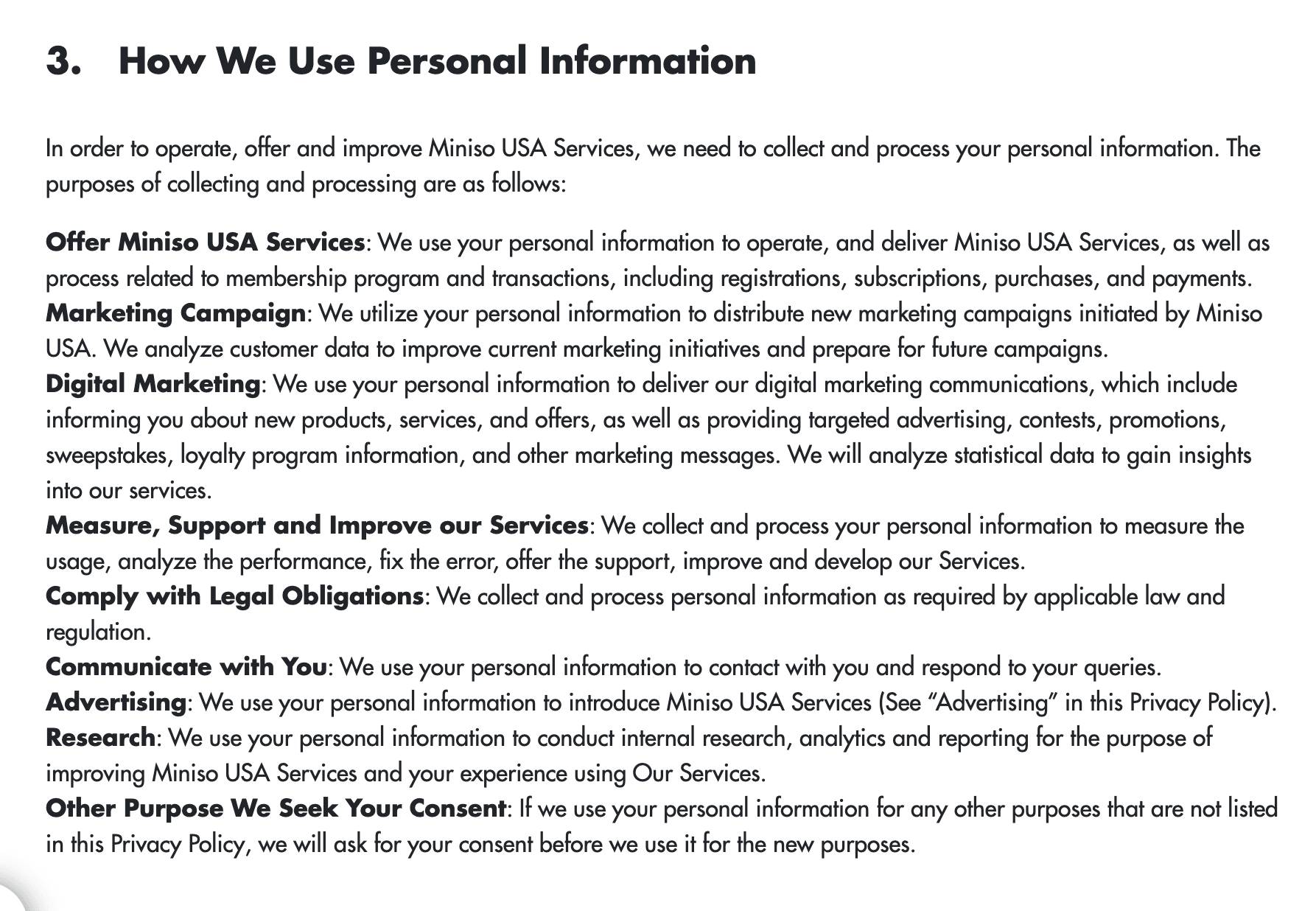
Explain the specific purpose for data use.
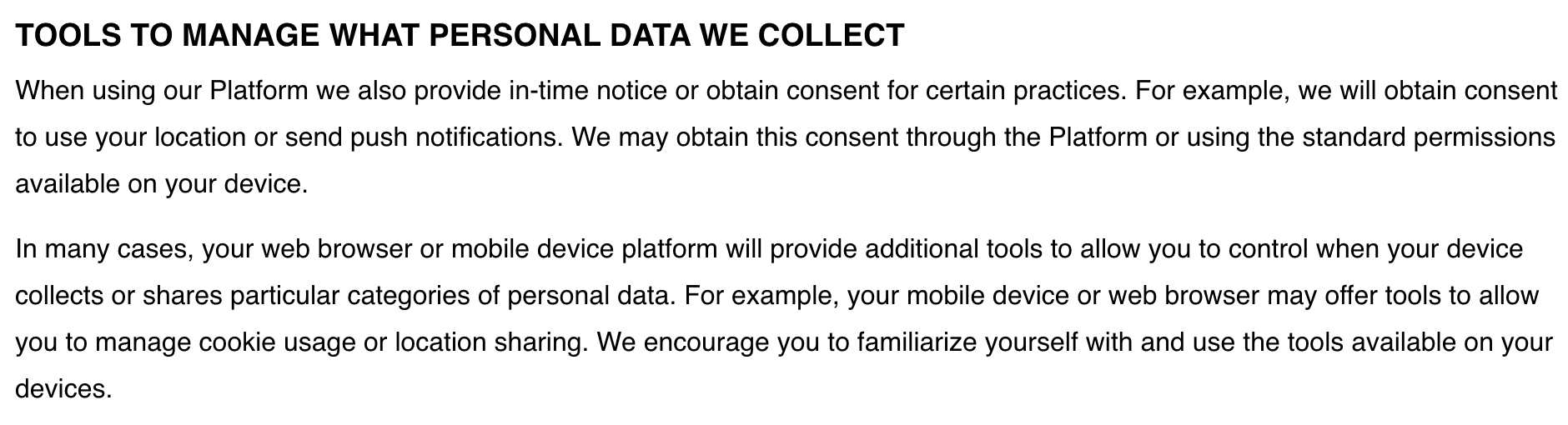
Detail clear opt-in/opt-out and withdrawal methods.
List third parties with whom you share data, the types of data shared, their purposes, and links to their policies.
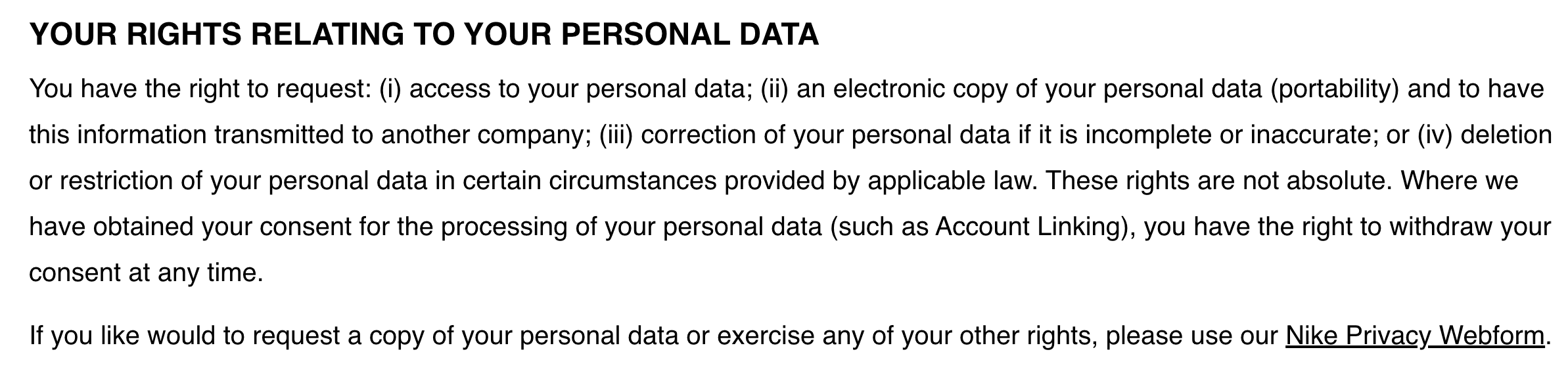
Communicate user rights and how to exercise them.
Mention data protection technologies and proactive measures.
Detail cookie types, purposes, duration, collected data, and how users can customise preferences.
Convey commitment to user privacy and alignment with GDPR, CPRA, CCPA, etc.
State data storage duration and justification.
Provide multiple contact points for privacy inquiries, including DPO if applicable.
Include the effective date and last update date of the policy.
Clarify whether you respond to Do Not Track signals (CalOPPA).
Provide a statement regarding the use of children's data.
Use clear language, visual aids, and interactive elements.
FAQ on privacy policy checklist 2026
What should my privacy policy include in 2026?
Your privacy policy in 2026 must clearly disclose categories of data collected, data collection methods, data use purposes, third-party sharing, cookies and tracking technologies, AI or automated decision-making, user rights, data retention, and how users can contact you about privacy concerns.
How often should I update my privacy policy in 2026 to remain compliant?
You should review your privacy policy at least annually or whenever there's a regulatory change, a significant business update, or new technologies affecting data privacy practices.
Does my privacy policy need to address AI and automated decision-making processes in 2026?
Yes. In 2026, privacy policies should explicitly disclose if your organisation uses AI or automated decision-making systems, clearly stating their purpose, implications for users, and ways users can object or request human review.
How can I ensure my privacy policy remains easy-to-understand and accessible to users in 2026?
Use clear, plain language, concise formatting, layered privacy notices, and intuitive navigation. Provide summaries or visual aids if helpful, and ensure policies are easily accessible from all site pages or apps.