The internet has transformed how businesses connect with customers, trading expensive flyers and guesswork for instant, data-driven results.
From traditional bubble sheets and oral surveys to cookies powering analytics, personalising experiences, and fueling marketing engines, businesses have come a long way in data collection.
But as useful as they are, cookies also sit at the centre of a growing privacy concern. If you're a marketer, founder, or digital decision-maker, understanding the ethical side of cookie tracking has become more than just a good-to-have.
This guide explores the ethics of cookie tracking and provides a roadmap to balance business goals with user trust.
What are internet cookies and how do they help my business?
Internet cookies are just small pieces of text that websites save on your web browser. When a user visits a website, the server sends cookies to the browser, which stores them and sends them back with future requests.
Most cookies are harmless and just make your web experience smoother. Some cookies disappear when you close your browser, while others stick around to remember you later.
Different types of cookies serve different purposes to simplify business operations. For example, some cookies keep users logged in, while others save shopping carts and display relevant content.
They also give you insights and drive revenue through targeted ads and personalised content. For instance, cookies help you identify potential buyers by remembering who showed interest, reduce lost sales by preserving shopping carts, enable you to test what works best on your site through A/B experiments, and improve marketing ROI by targeting ads to users most likely to convert.
Therefore, businesses rely on cookies to build rich profiles of user behaviour across sites, powering practices like audience targeting and retargeting for more effective marketing campaigns. They can collect personal data; hence, it is important to use it ethically.
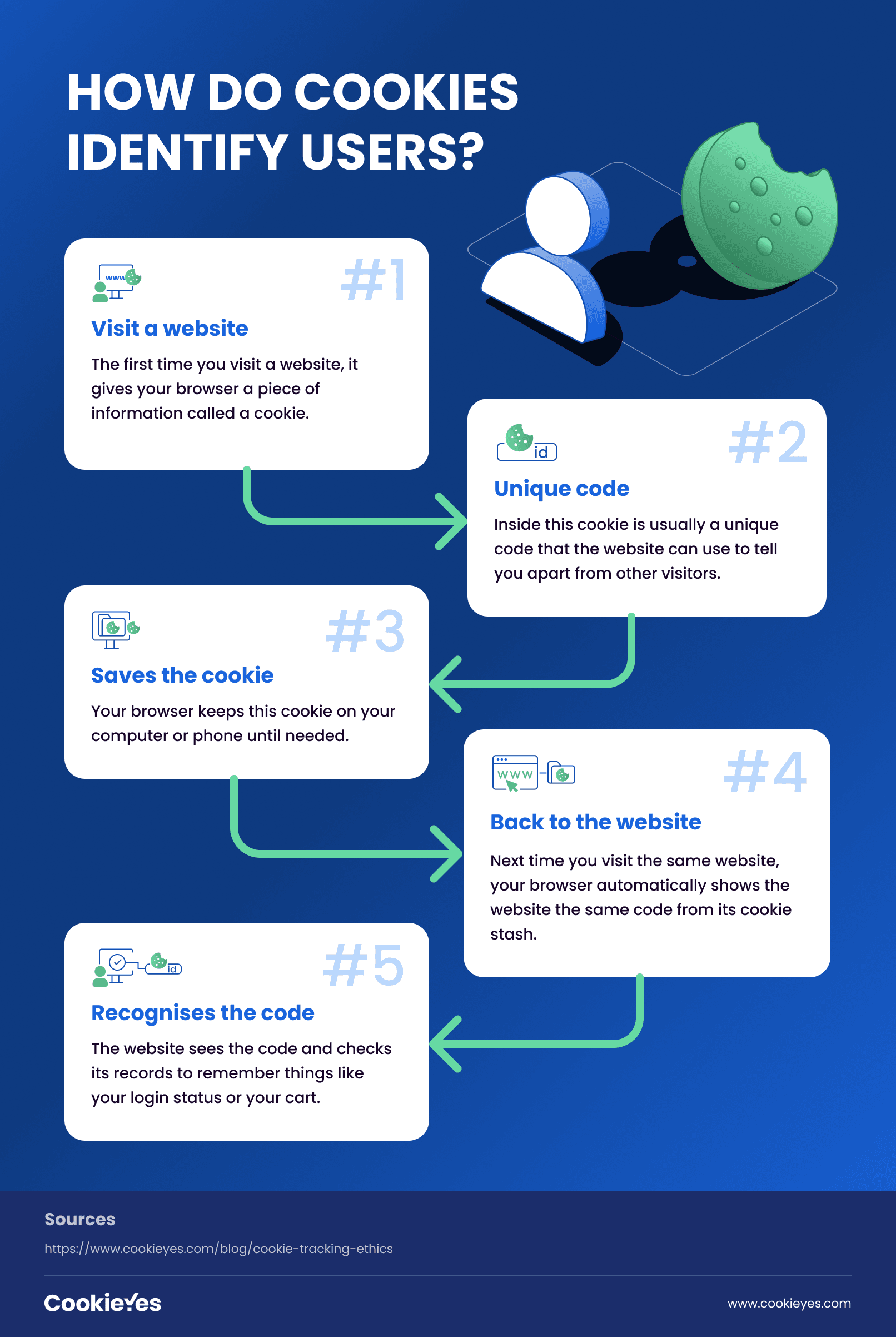
How do cookies remember your customers? (Infographic)
Cookies follow a specific process to identify, track, and recall user activity across sessions. Here's how that process unfolds, step by step.
But, convenience comes with strings. Tracking, especially from third-party cookies, often happens in the background, unnoticed. And that's where ethics come in.
What does unethical cookie tracking look like?
Even today, unethical practices are not very uncommon. Some of them are:
- Cookies dropped onto user devices without their knowledge
- Overusing legitimate interest to bypass consent
- Data passed to dozens of ad partners without transparency and user consent
- Lack of a compliant cookie banner on websites
- Not respecting opt-out signals
- Not providing “Do not sell/share” links (CCPA)
Ethical considerations in cookies: How to use cookies ethically?
Cookies can collect personal data such as names, location, etc. That is why they are considered personal data under many privacy laws, including GDPR.
Showing a pop-up saying you are consenting to the use of cookies if you continue to use the site is no longer ideal. You need informed consent that is voluntarily given.
Ethical considerations of cookies reflect how a business values and respects customer privacy, trust, and fairness. Here are 12 ethics of cookie tracking to guide responsible cookie practices:
#1 Informed consent
Users should clearly understand what cookies will be stored on their browsers, how long they will stay, and how they will be used.
Provide clear and honest cookie consent options without misleading designs/dark patterns. This also means allowing users to freely accept or decline cookies without influencing their decisions.
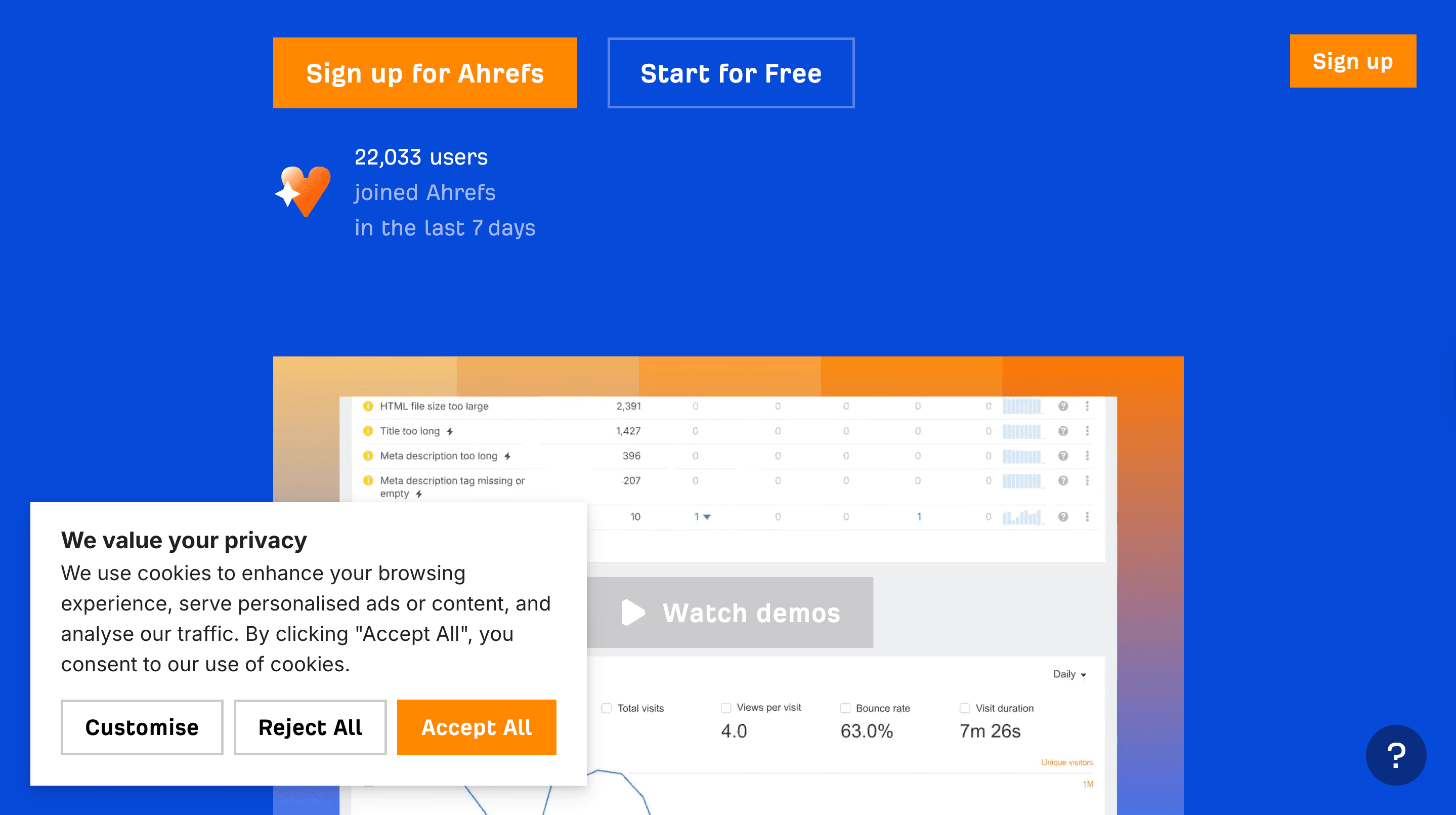
Cookie banner as seen on Ahref‘s website
Create your custom cookie banner today
Automate your consent management & stay compliant
Sign up for free- 14-day free trial
- Cancel anytime
#2 Transparency
Clearly communicate the presence of cookies, their specific purposes, and your cookie practices. Cookie policies should be easy to find, simple to understand, and disclose third-party data-sharing activities.
#3 User control
Give users real control over their cookie choices. Allow them to accept, reject, or customise cookie settings easily using a cookie banner. Users should also be able to give granular consent and must have a straightforward way to change or withdraw consent at any time.
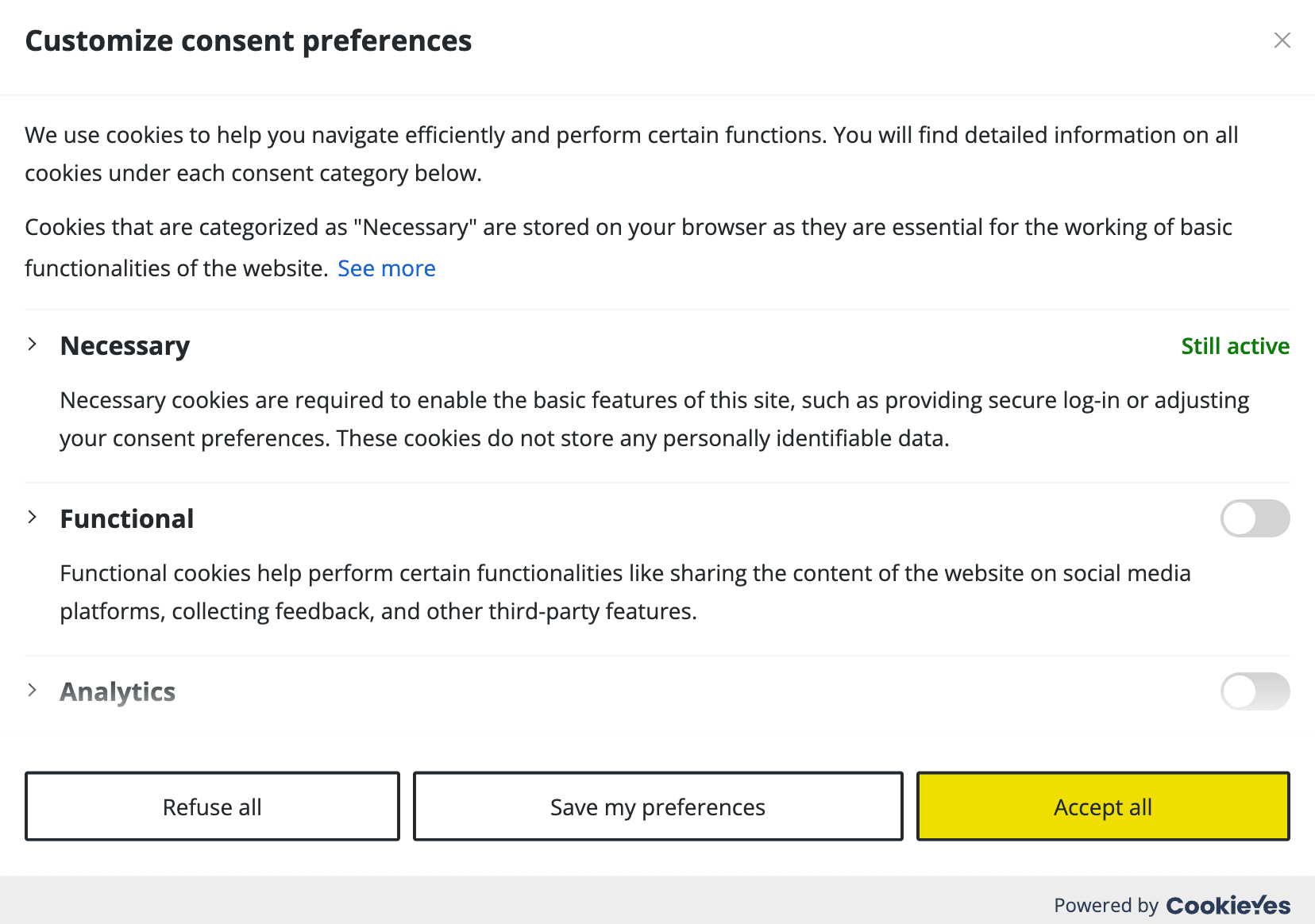
Cookie consent preference buttons as seen on a cookie banner
#4 Limited cookie usage
Only use cookies for the specific purposes agreed upon by users. Do not use for secondary or hidden purposes without additional consent. Furthermore, avoid using cookie data outside the context that users initially approved.
#5 Minimal data collection
Collect only the essential data required to fulfil your stated purposes. Limit cookie lifespans and avoid unnecessary or excessive user tracking. Regularly review and minimise data collection practices.
#6 Data security
Protect cookie data with strong security measures. Regular audits help prevent breaches or unauthorised data sharing.
#7 Respect for sensitive audiences
Extra care should be taken when websites are accessed by children or vulnerable groups. Avoid behavioural targeting based on sensitive personal topics like health or religion, unless by following the relevant laws. Protect the privacy of these users proactively.
#8 Ethical marketing practices
Use cookie-based marketing carefully. Avoid intrusive retargeting and excessively personalised ads that users may find invasive. Respect user comfort levels to maintain their trust and goodwill.
Note that cookies you control, on your own site, are less invasive and more transparent compared to third-party cookies.

#9 Accountability and governance
Establish clear responsibility within organisations for ethical cookie use. Furthermore, regular training for teams must be given to ensure the secure handling of cookie data.
# 10 Avoid cookie walls
Do not restrict access to website content solely because users refuse cookie tracking. This could result in a forced decision, which is not considered consent under almost all privacy laws.
#11 Use a reputable CMP
A reliable Consent Management Platform helps you deploy proper banners that align with various privacy laws, respect opt-outs, store consent logs, and avoid unintentional violations.
Looking for a reliable CMP?
That’s CookieYes- #Top-rated cookie consent tool
Sign up for free- 14-day free trial
- Cancel anytime
#12 Regular audits
Run site scans for cookies, update your policies, and check for any regulatory updates often.
Privacy laws that regulate the use of cookies
Along with the ethics of cookies, let's look at the regulatory side of cookie tracking. Here are some of the major data privacy laws all businesses must be aware of.
General Data Protection Regulation (GDPR)
The GDPR treats cookies that identify users as personal data, subjecting them to strict rules:
- Websites must obtain explicit and informed consent before setting cookies, except those strictly necessary for basic site functions.
- Users need clear information about cookie use, simple options to accept or decline, and easy ways to withdraw consent at any time.
- Businesses must keep consent records and cannot rely on pre-ticked boxes or implied consent.
ePrivacy Directive (EU Cookie Law)
The cookie law complements GDPR specifically for tracking technologies:
- Websites must inform users about cookies and secure consent before placing non-essential cookies (like analytics, advertising, or social media trackers).
- It covers cookies and similar technologies like tracking pixels.
- Cookies essential for website functionality, such as login sessions or shopping carts, are exempt from consent but still require disclosure.
California: CCPA and CPRA
The California privacy law classifies cookies as unique identifiers, which are personal information:
- Businesses must disclose cookie use and inform users about data collection purposes.
- Users must have clear options to opt out of selling or sharing personal data collected through cookies. Explicit cookie consent isn’t required, but the opt-out right must be prominent.
- Special protections exist for minors, requiring parental consent for cookie use.
Brazil LGPD
LGPD treats cookies as personal data, much like Europe’s GDPR.
- Businesses must clearly inform users about cookies, obtain explicit consent for non-essential cookies.
- Allow users to easily manage or withdraw consent.
- Limiting cookie use to stated purposes.
FAQs on ethical considerations of cookies
What are the ethics of cookies?
The four main ethical pillars of cookie tracking are transparency, consent, user control and data security.
Are cookies inherently unethical?
No, cookies are not inherently unethical. Their ethicality depends on how they’re used, whether they respect user consent, disclose data practices, and avoid intrusive tracking.
How can websites use cookies ethically?
By implementing clear cookie banners, honouring opt-out choices, offering granular consent options, and limiting unnecessary tracking.
What are the ethical issues around cookies?
The ethical issues around cookies include excessive tracking, profiling, and data sharing without clear consent, a lack of transparency about how data is used, and limited user control. If not handled ethically and in moderation, cookies can become intrusive, undermining privacy and trust.