A Terms and Conditions agreement defines how users interact with your platform, how payments and refunds work, who owns the content, and how disputes are handled. If you’re not a lawyer, covering everything correctly, especially across multiple jurisdictions, can be difficult. A terms and conditions generator helps you create T&Cs without drafting them from scratch.
Automated T&C tools guide you through simple questions, then produce a custom agreement for your site, ecommerce store or SaaS platform. In this guide, we explain what a terms and conditions generator for a website does, how to choose the right one, and how to use it properly.
What is a terms and conditions generator?
A terms and conditions generator (sometimes called a terms of use generator or terms of service generator) is an online tool that builds a legal agreement tailored to your business.
Instead of editing a generic terms of use template or copying a website terms and conditions example, many businesses now use a website terms and conditions generator to create a customised document based on their business model.
Unlike privacy policies, T&C agreements aren’t legally mandatory, but they are highly recommended for websites, mobile apps, desktop apps, SaaS platforms and ecommerce stores.

T&C generators generally produce agreements that include the following clauses:
- Introduction and acceptance of terms: identifies your business and states that using your service constitutes acceptance of the terms.
- Usage guidelines and user responsibilities: spell out acceptable and prohibited conduct.
- Intellectual property rights: clarifies who owns the site or app content and associated rights.
- Payment and refund policies: details prices, payment methods and refund conditions.
- Disclaimers and limitations of liability: limit your responsibility for factors beyond your control.
- Privacy and data handling: describes how user data is collected and refers to your privacy policy.
- Governing law and dispute resolution: states which jurisdiction’s laws apply and how disputes will be handled.
These sections aren’t exhaustive, but they highlight why a comprehensive agreement is vital. A website terms and conditions template or terms of use ecommerce sample can save you from missing critical clauses.
What does a terms and conditions generator do?
At its core, a T&C generator automates the drafting process of your terms and conditions.
Typically, when you start, the tool asks questions about your platform, whether you run a website, mobile app, e-commerce site, SaaS service or combination. You may also be asked if users can create accounts, if you sell products, or which regions your business targets. Based on your responses, the tool:
- Identifies relevant clauses. For example, if your app allows user accounts, the generator adds sections governing account creation, termination and acceptable use. If you operate a store, it includes shipping and refund terms. If you are a SaaS provider, it may reference uptime, support and service-level commitments.
- Delivers a finished document. After you complete the questionnaire, you can download the agreement as a document or copy a snippet of code to publish on your site.
Advanced generators also offer automatic updates when laws change, easy methods to add to website, and multilingual versions. While these features vary, the fundamental goal is to simplify compliance and ensure you don’t overlook essential legal protections.
How to choose the right T&C generator?
If you’re trying to find the best terms and conditions generator for your website, SaaS product, or ecommerce store, here’s what you should evaluate:
Coverage for your business model
Your terms and conditions agreement should reflect how your business actually operates. The clauses required for a content website are different from those needed for a SaaS platform, an e-commerce store, or a subscription-based service.
When choosing a terms and conditions generator, look for one that provides clauses tailored to the type of platform you run, including:
- Websites and blogs
- Mobile apps
- SaaS products
- E-commerce stores
- Marketplaces
- Subscription services
For example, an online store typically requires detailed payment, refund, and delivery terms. A SaaS platform needs subscription, cancellation, and usage restrictions. A marketplace may require additional rules governing third-party sellers. A generator that only produces a generic terms of use template may not account for these operational differences. The right tool should align your terms and conditions with how you sell, deliver, and manage your services.
Guided and structured
The best T&C generator for your website should guide you through a structured, step-by-step process instead of giving you a static template. It should ask relevant questions about:
- Whether users create accounts
- How you handle payments
- Whether you offer subscriptions
- Whether you allow user-generated content
- Where your business operates
This approach helps ensure that the agreement reflects your setup, rather than forcing you to manually edit a generic terms of use template.
Comprehensive clause coverage
When evaluating a generator, review what clauses are actually included. A short sample terms and conditions may not be sufficient for businesses that process payments, offer digital products, or manage user accounts. A strong terms and conditions agreement includes all the necessary clauses.
Update flexibility
Businesses evolve. You may introduce new services, expand into new regions, add subscription plans, or change your pricing structure.
The best terms and conditions generator should allow you to customise terms, revisit and update your agreement without starting from scratch. The ability to regenerate your terms as your business changes reduces the risk of outdated provisions remaining on your terms and conditions page.
Ease of use and implementation
A terms and conditions generator should simplify the process without making it more technical.
- Look for a tool that offers an intuitive, step-by-step builder that walks you through the setup without requiring legal or technical expertise.
- The interface should be easy to navigate, with clear prompts that help you complete your agreement efficiently.
- You should be able to adjust sections, add relevant clauses, and reflect your business model without manually rewriting large portions of the document.
Finally, consider how easy it is to publish your terms. Practical embed options, such as downloadable text, formatted HTML, or direct integration with your website platform, make it easier to add and maintain your terms and conditions page.
A fast Terms and Conditions generator that is simple to use and easy to implement saves time while reducing the risk of formatting or publishing errors.
Multilingual Support
If your audience spans multiple regions, language clarity becomes important. A generator that supports multiple languages can help ensure your terms of use are understandable to a broader audience. This can improve transparency and reduce disputes arising from misunderstandings.
Transparent pricing
Many tools market themselves as a free terms and conditions generator solution. However, free versions may limit clause selection, downloads, or update options.
Before selecting a tool, review:
- What features are included in the free plan
- Whether updates require payment
- Whether pricing is one-time or subscription-based
Understanding the pricing structure upfront helps you avoid unexpected costs later.
Credibility and support
Your terms and conditions agreement is a legally binding document. The reliability of the provider matters.
Consider whether the generator:
- Is backed by legal review or professional oversight
- Provides documentation and FAQs
- Offers customer support
- Clearly explains its limitations
A credible provider is more likely to maintain and update its clause library responsibly.
Update mechanism and version control
Laws and business models evolve.
Choose a generator that:
- Updates clauses when regulations change
- Allows you to republish updated versions
- Notifies you of legal developments
Lawyer-vetted or legally reviewed templates
Look for generators that clearly state their documents are:
- Attorney-drafted
- Lawyer-reviewed
- Regularly updated by legal professionals
Avoid tools that rely purely on AI or unverified templates. Your T&C is a legally binding agreement and its enforceability matters.
Regulatory and jurisdiction awareness
A strong terms and conditions generator should consider:
- Consumer protection laws
- Ecommerce regulations
- Platform rules (e.g., app stores)
- Regional compliance requirements
If you operate internationally, the tool should allow you to tailor clauses based on where you do business. Even though T&C are contractual documents, they still intersect with local consumer law.
- Regulatory coverage: The generator should account for international data privacy and consumer protection laws relevant to your business. Look for coverage of GDPR, CCPA, and other regional regulations.
- Customisation: A good terms and conditions generator for an e-commerce website or a SaaS privacy policy tool should let you tailor clauses to your industry, including payment terms, subscription models and user responsibilities.
- Automatic updates: Laws change frequently. Generators that provide ongoing updates help ensure your agreement remains current.
- Integration options: For easy deployment, look for tools that integrate with popular platforms (CMS, ecommerce or app frameworks). Integrations can make publishing and updating your website terms of service seamless.
- Multilingual support: If you serve international users, choose a generator that offers translations, ensuring your terms of use are clear in multiple languages.
- Avoiding copy–paste agreements: Copying someone else’s terms and conditions page or using AI-generated templates without customisation can leave gaps and expose you to risk. Choose a trusted generator that crafts agreements tailored to your needs.
How to use a T&C generator
Using a generator is straightforward:
- Select the type of platform: Indicate whether you need terms and conditions for an online store, a SaaS platform, a mobile app, or a combination.
- Answer the questionnaire: Provide details such as whether you collect payments, allow user accounts, support subscription plans, or target specific regions. This ensures the tool inserts the right clauses.
- Review the generated document. Once the generator produces your custom agreement, read it carefully and confirm that it covers all necessary sections.
- Publish the agreement. Add the T&C link to your registration or checkout pages so users must accept it.
- Update when needed. Review and update your T&C at least annually or whenever you launch new products or services.
Why should you use a T&C generator?
Even though T&C agreements are not always legally required, they offer several benefits:
- Reduce legal risks. Clearly defined rules help prevent misuse and protect your business from disputes.
- Protect intellectual property. Specifying ownership of content deters unauthorised copying or distribution.
- Enhance trust. A comprehensive terms of service template for a website reassures users that your business is legitimate and transparent.
- Save time and resources. Drafting a legal agreement from scratch is expensive. A terms & conditions generator streamlines the process, freeing you to focus on your core business.
- Comply with platform requirements. App stores, payment processors and advertising networks often require you to provide a terms and conditions page before they approve your app or campaign.
- Support global expansion. With multilingual options and regulatory coverage, you can serve users in multiple jurisdictions without rewriting your agreement each time.
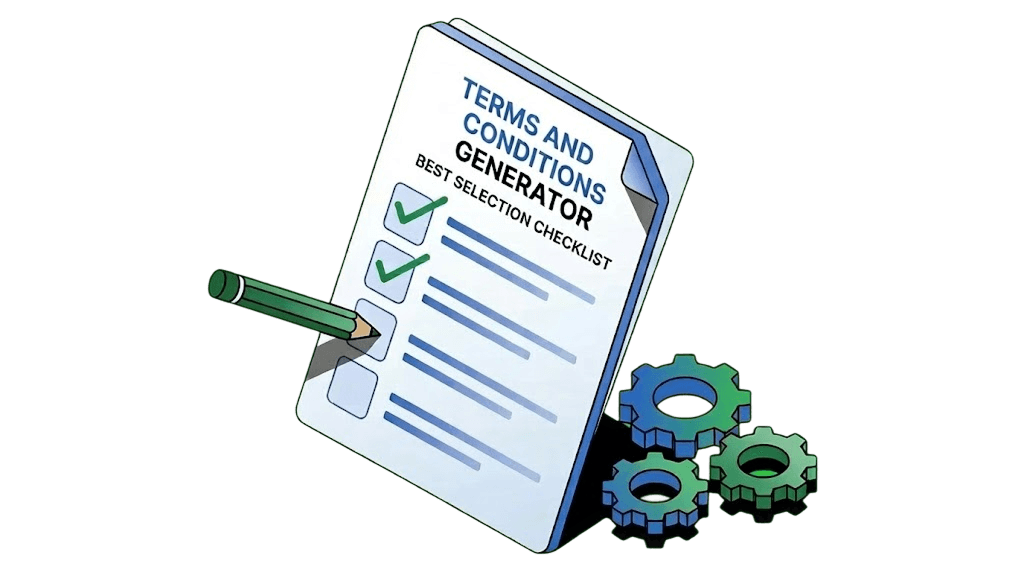
TL;DR: T&C generator checklist
| Feature | Why it matters |
|---|---|
| Relevant clauses | Generates a T&C that has all applicable clauses in it. |
| Customisation options | Adapt the terms and conditions agreement to your business model |
| Automatic updates | Keeps your T&C current as laws change |
| Integrations | Makes it easy to add T&C to your site, app or store |
| Multilingual support | Helps reach global users |
| Transparent pricing | Understand what “free” covers and when you need a paid plan |
| Personalised clauses (no copy–paste) | Avoids generic or outdated terms |
Use this table as a terms of use template, a free reference when evaluating generators. While some tools market themselves as free terms of use generators, ensure they still allow enough customisation for your particular use case.