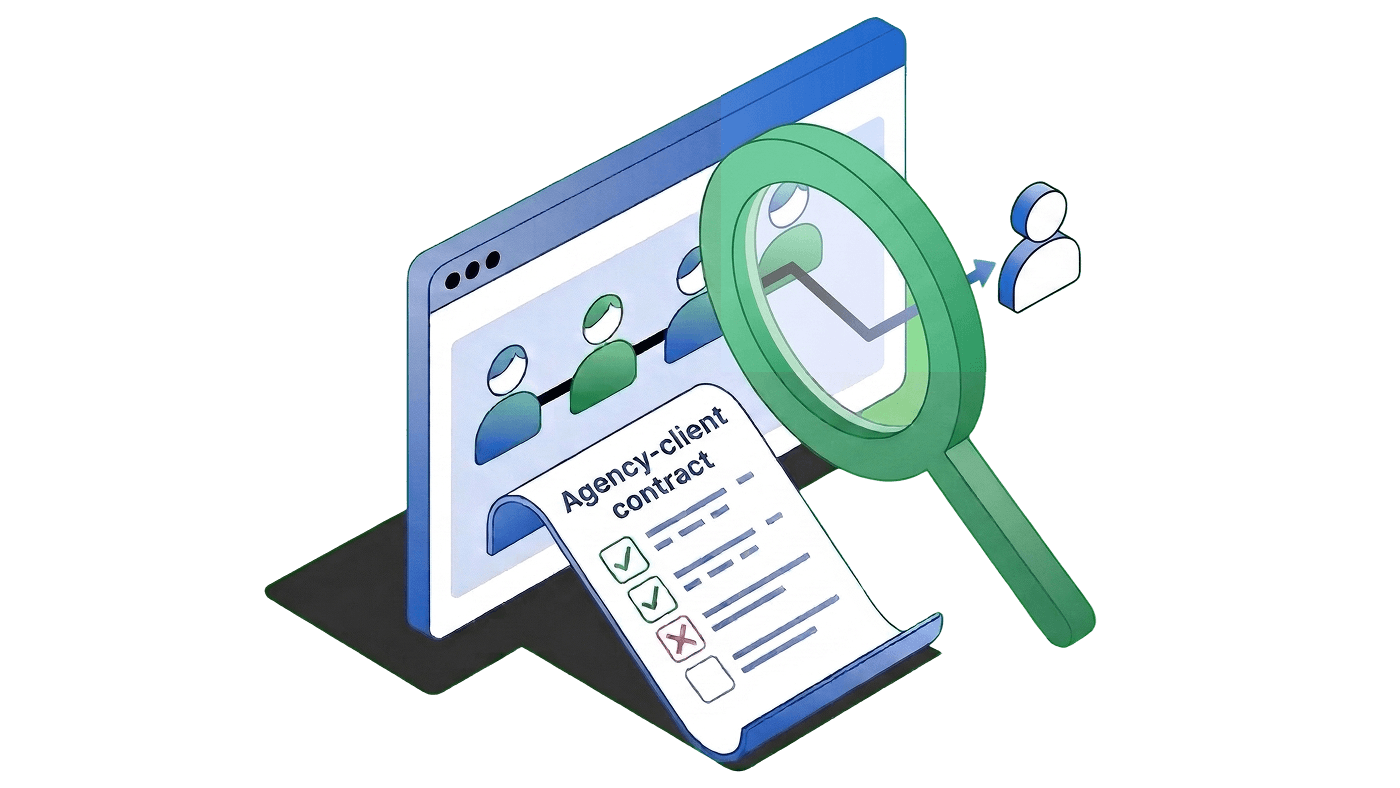
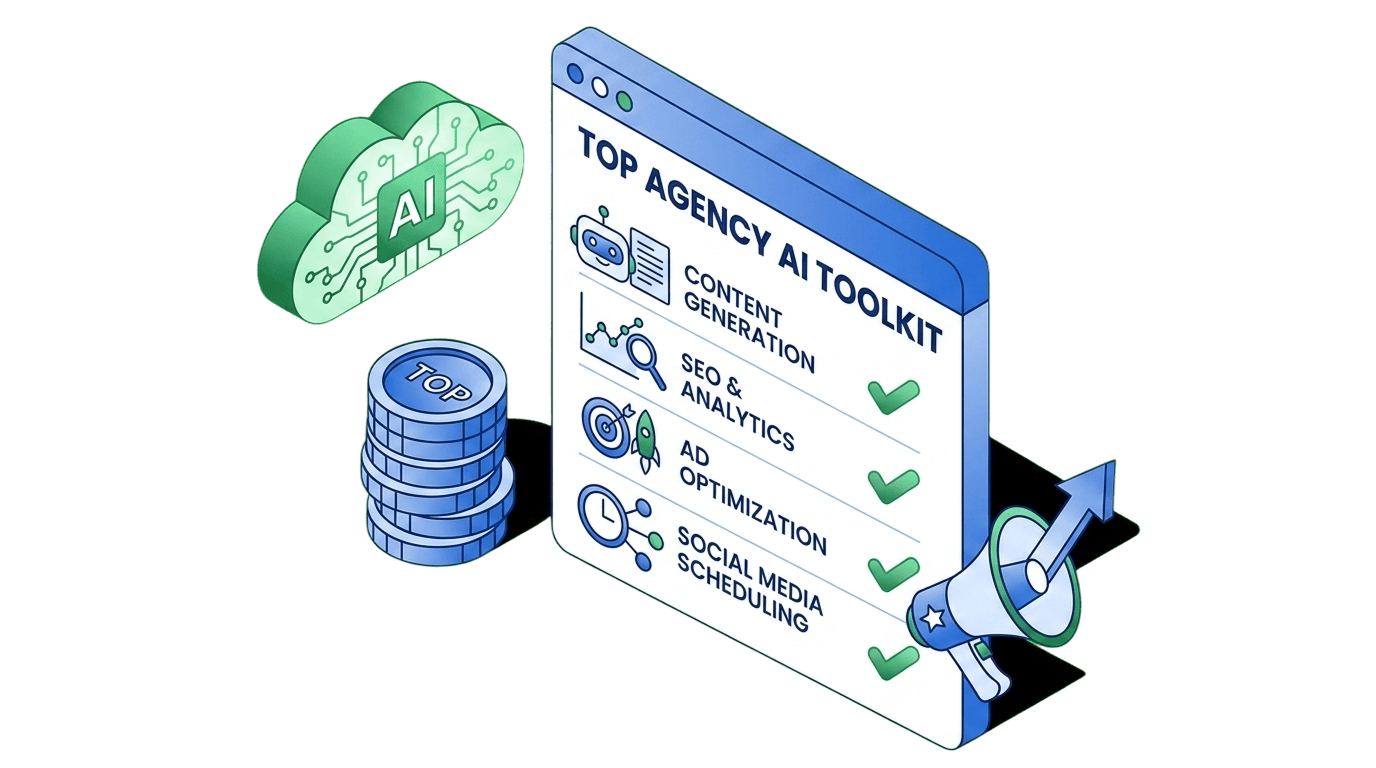
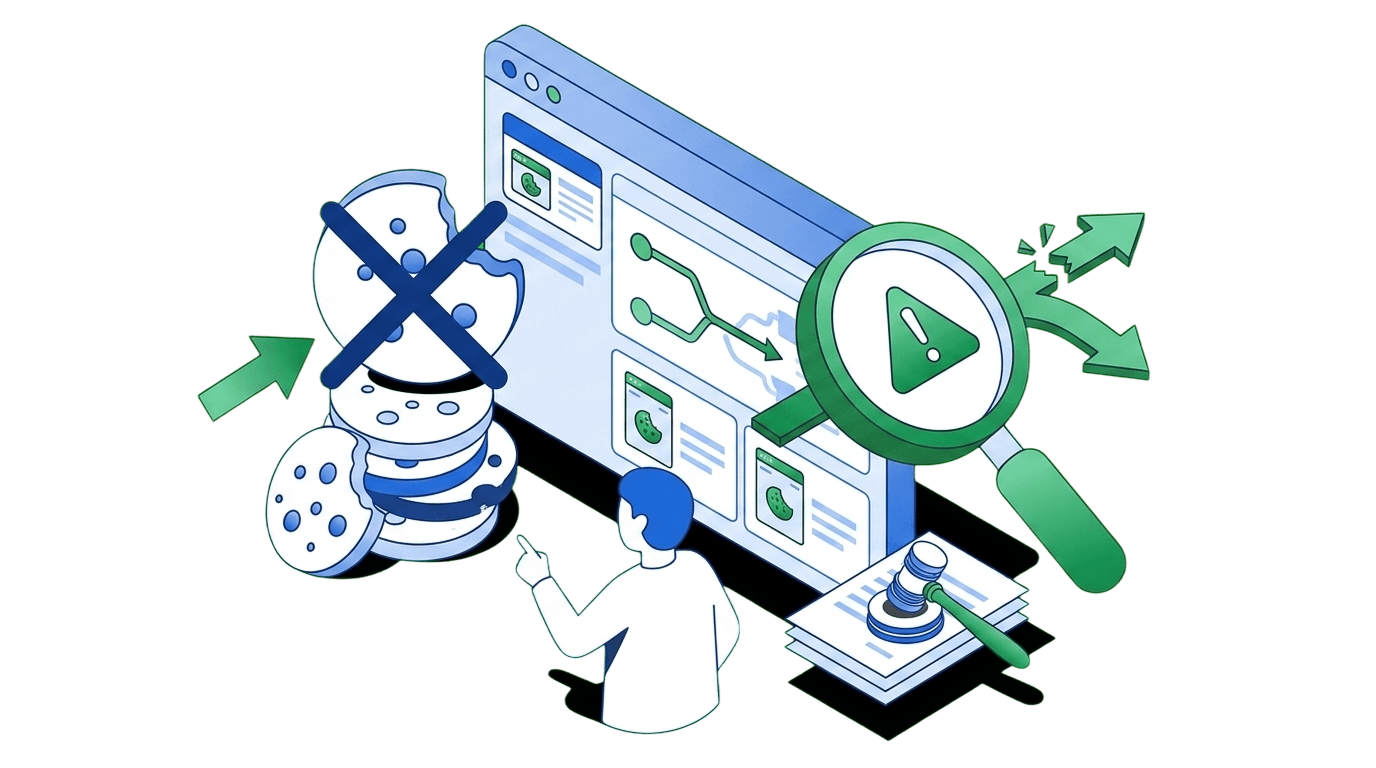
Every digital agency knows the obvious reasons why they lose clients: pricing, performance, or communication gaps. But there’s a quieter, often ignored factor at play: privacy compliance issues. As regulations tighten and businesses become more accountable for how they handle user data, even small compliance gaps can quickly erode trust. Clients aren’t just buying results anymore, they’re buying safety. And when agencies overlook privacy requirements, they’re not just risking penalties; they’re risking the very relationships they depend on.
In this blog, we explore the common compliance issues that cost agencies clients and how CMPs like CookieYes can close that gap.
How privacy compliance issues affects website owners
When a compliance issue occurs, it is the website owner, not the agency, who bears the initial consequences. Regulatory bodies don't usually pursue the agency that misconfigured the consent management platform; they pursue the data controller, which in almost every case is your client.
That means your client is the one staring down a potential fine. But beyond the financial hit, the reputational damage that follows a publicised breach cuts far deeper—customers lose confidence, press coverage is rarely kind, and for smaller businesses, a single compliance incident can be genuinely existential.
Let’s take a look at the impact privacy compliance issues can have on website owners with some empirical evidence:
Fines and penalties
Regulatory bodies impose steep monetary penalties for violations like invalid cookie consents or inaccessible sites. The General Data Protection Regulation (GDPR) can levy up to €20 million or 4% of global turnover, while the California Consumer Privacy Act (CCPA) imposes $7,500 per intentional breach. These drain cash flow, trigger audits, and compound with legal fees, results in monetary loss.
The Luxembourg National Commission for Data Protection (CNPD) imposed a fine of €746 million on Amazon Europe Core S.à r.l. in 2021, as a repercussion of its violation of GDPR compliance in processing of personal data.
Reputational damage
Publicised violations, amplified by media coverage of fines or lawsuits, harm brand perception in privacy-conscious markets. Non-compliant sites face vendor scrutiny and lose partnerships, resulting in slower deal cycles, as trust becomes a core buying factor.
Meta was penalised with a record €1.2 billion in 2023 by Ireland’s Data Protection Commission for violating GDPR provisions and was served with a formal suspension order requiring it to stop exporting EU user data to the US for processing.
Loss of user trust
Users abandon sites after breaches or intrusive tracking, fearing data misuse, which slashes retention and conversions. Privacy compliance gaps derail confidence, leading to higher churn, negative reviews, consumer backlash, and reduced engagement—directly impacting revenue as privacy-aware visitors prioritise compliant alternatives.
Ireland’s Data Protection Commission, in 2025, fined TikTok with €530 million for GDPR breaches for improper data transfers to China and inadequate European Economic Area (EEA) user data protection. This follows a 2021 €750,000 fine by the Dutch Data Protection Authority (DPA) for mishandling children’s data and failing to provide privacy statements in Dutch.
Common compliance gaps that cost agencies clients
Losing a client to a compliance gap rarely looks like losing a client to a compliance gap. No angry emails or offboarding notes citing compliance violations, and the real reason never makes it into the CRM. But beneath that polished exit language sits a more uncomfortable truth: the client no longer trusts that their agency has their back.
Here are some common privacy compliance issues agencies overlook that cost them clients:
Compliance is treated as a “one-time setup”
Many agencies install a cookie banner, configure consent mode once, and move on. But compliance isn’t static. Privacy regulations evolve, websites change, and marketing and technical stacks expand. If compliance isn’t revisited regularly, gaps appear, the most common ones being:
- New scripts bypass consent
- Tags fire incorrectly
- Consent categories become outdated
- Policies no longer reflect actual data usage
To clients, this feels like neglect, especially when they assumed compliance was “handled”. Even if penalties never materialise, reputational anxiety drives client churn.
No monitoring or audits are built into the process
Websites are living systems. Every time a client adds a new plugin, launches a campaign, installs a new analytics tool, or updates their CMS, compliance can break. Without frequent cookie scans, tracking audits, and consent log checks, agencies are driving their clients in for real damage, one that’s often discovered too late, usually triggered by
- Legal reviews
- User complaints
- Vendor audits
- Regulatory investigations
By then, the only remedy is damage control, but clients always go by the mantra “Prevention is better than cure”. This can lead to a higher client churn rate as clients switch to competitors with regular compliance monitoring and audit readiness.
Growth is prioritised without guardrails
Performance teams are measured on various marketing metrics like Return on Ad Spend (ROAS), Conversions, and Cost Per Acquisition (CPA). Compliance can feel like friction on these metrics, and agencies might use shortcuts to remediate, manifesting as
- Weak consent configurations
- Dark patterns in banners
- Presumed consent for non-essential cookies
- Bypass consent to improve ad performance
Metrics may improve in the short term, but the long-term consequences can be detrimental, leading to increased legal risk, audit failures, loss of client trust, and ultimately loss of clients. As an agency, it is important to design systems where both growth and compliance coexist.
Limited compliance checks
Compliance is a multi-dimensional ecosystem that requires ongoing attention. If an agency is not offering advanced compliance check features like
- Geo-specific banners
- Region-specific consent logic
- Auto-updating cookie & privacy policies
clients can be exposed to unintentional violations, inviting penalties for non-compliance. It would also limit their opportunities for international expansion. This can lead to clients switching to more globally aware agencies that offer future-proof compliance.
Agencies that treat compliance as a growth enabler, and not a blocker, retain clients longer and position themselves as strategic privacy-savvy partners.
How CMPs like CookieYes can help agencies with compliance issues
Now that we have explored how agencies can lose clients due to compliance oversight, let us try to understand what can help prevent this. Let’s be real, compliance management is not easy. Managing privacy compliance manually across a growing client portfolio is neither scalable nor reliable.
This is where Consent Management Platforms (CMPs) become an operational necessity. A well-implemented CMP automates the most failure-prone parts of the compliance process—cookie consent collection, preference management, and audit trail documentation—removing the human error that typically sits at the root of most compliance risks.
But the bitter truth is that most privacy compliance solutions are not designed for agencies. They are primarily built for direct brands and enterprises, disregarding the unique workflows, multi-client obligations, and rapid scalability needs of agencies. CookieYes, however, solves for this niche challenge with its exclusive Agency Partner Program, tailoring distinctive agency-focused solutions.
Automated cookie scanning & categorisation
Cookies change every time a new plugin is installed, a third-party script is updated, or a developer pushes a site change. CookieYes provides automated cookie scanning that continuously audits client websites and categorises new cookies as they appear. This means consent banners stay accurate, cookie policies reflect reality, and clients are never unknowingly out of compliance. That kind of systematic, behind-the-scenes protection is exactly what keeps clients from ever having a reason to look elsewhere.
Google Tag Manager integration
Misfiring tags are one of the most common ways agencies unknowingly breach consent rules on behalf of clients. CookieYes GTM integration ensures that tracking tags only fire in line with the user's consent choices, keeping data collection compliant. For agencies, it closes a technical gap that, if left open, gives clients every reason to question whether their agency truly has control of their digital infrastructure and eventually sends them looking for an agency that does.
GDPR & global privacy law readiness
An agency that can only manage regulatory compliance in one jurisdiction becomes a liability the moment a client's audience crosses a border. CookieYes supports compliance with all major global frameworks, including GDPR, CCPA/CPRA, LGPD, and more. As clients expand into new markets, agencies don’t have to rebuild their compliance strategy from scratch. Retaining clients through growth phases is where agencies build their most valuable long-term relationships, and compliance coverage is what makes that possible.
Detailed consent logging
When a client faces a regulatory complaint or data subject request, the agency that cannot produce clear consent records becomes part of the problem rather than the solution. CookieYes maintains secure consent logs, providing agencies and their clients with proof of user consent. That ability to stand behind the work—with evidence—is what makes clients stay confidently with agencies.
Reselling option & partner support
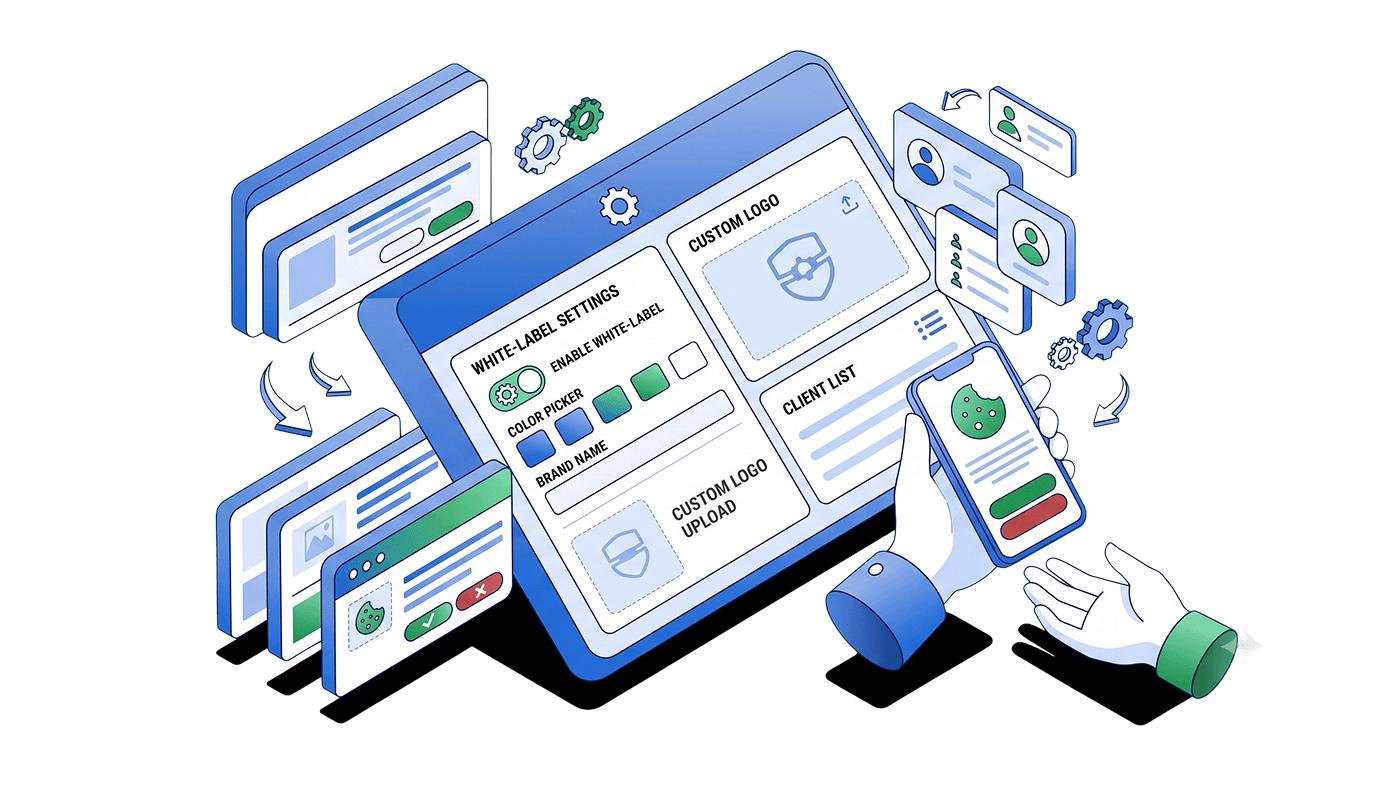
The CookieYes Agency Partner Program allows agencies to resell our licenses at any markup to their clients and offer compliance as a managed service, strengthening their positioning as privacy-forward experts. We also provide priority 1:1 support to our partners. When compliance looks like a core agency capability rather than an afterthought, clients have one less reason to question the value of the relationship.
Exclusive agency discount pricing
Compliance issues occur most often where corners are cut—and corners get cut when tools are too expensive to deploy across every client account. The CookieYes Agency Partner Program offers exclusive discounted pricing tailored specifically for agencies, which significantly reduces per-client compliance expenses. Consistent compliance coverage across all accounts means no client is ever the weak link that triggers the loss of trust or the loss of the contract.
Client churn doesn’t always stem from poor performance or weak creative. Sometimes, it starts with overlooked compliance. In today’s privacy-first landscape, compliance is no longer a background task or a one-time setup. It’s an ongoing responsibility that impacts regulatory risk, brand reputation, campaign integrity, and most importantly, client trust. One misconfigured banner, one unmanaged tag, one outdated consent record. That's all it takes to undo years of relationship-building.
Agencies that treat compliance as strategic infrastructure rather than a technical afterthought stand apart. They build trust, reduce risk, and give clients a reason to stay.
Because in the modern digital landscape, protecting data isn’t optional. It’s part of protecting the partnership.
Frequently asked questions