A privacy policy sets the baseline for how an organisation explains its data practices. Regulators treat it as a statement of fact. This guide diagnoses the most common privacy policy issues, explains the legal side, and outlines how to fix them in a structured way for GDPR, CCPA, or both.
What is a privacy policy?
A privacy policy is a document that explains how a business collects, uses, stores, and shares personal data.
It tells users what information is being taken from them, why it is needed, who it may be shared with, and what rights they have over it. What used to signal a privacy-focused approach is now simply the legal baseline.
A privacy policy, also called a privacy notice, is now a legal requirement under laws like the General Data Protection Regulation and serves as a point of accountability. If a company says it does something in its privacy policy, regulators expect it to follow through in practice.
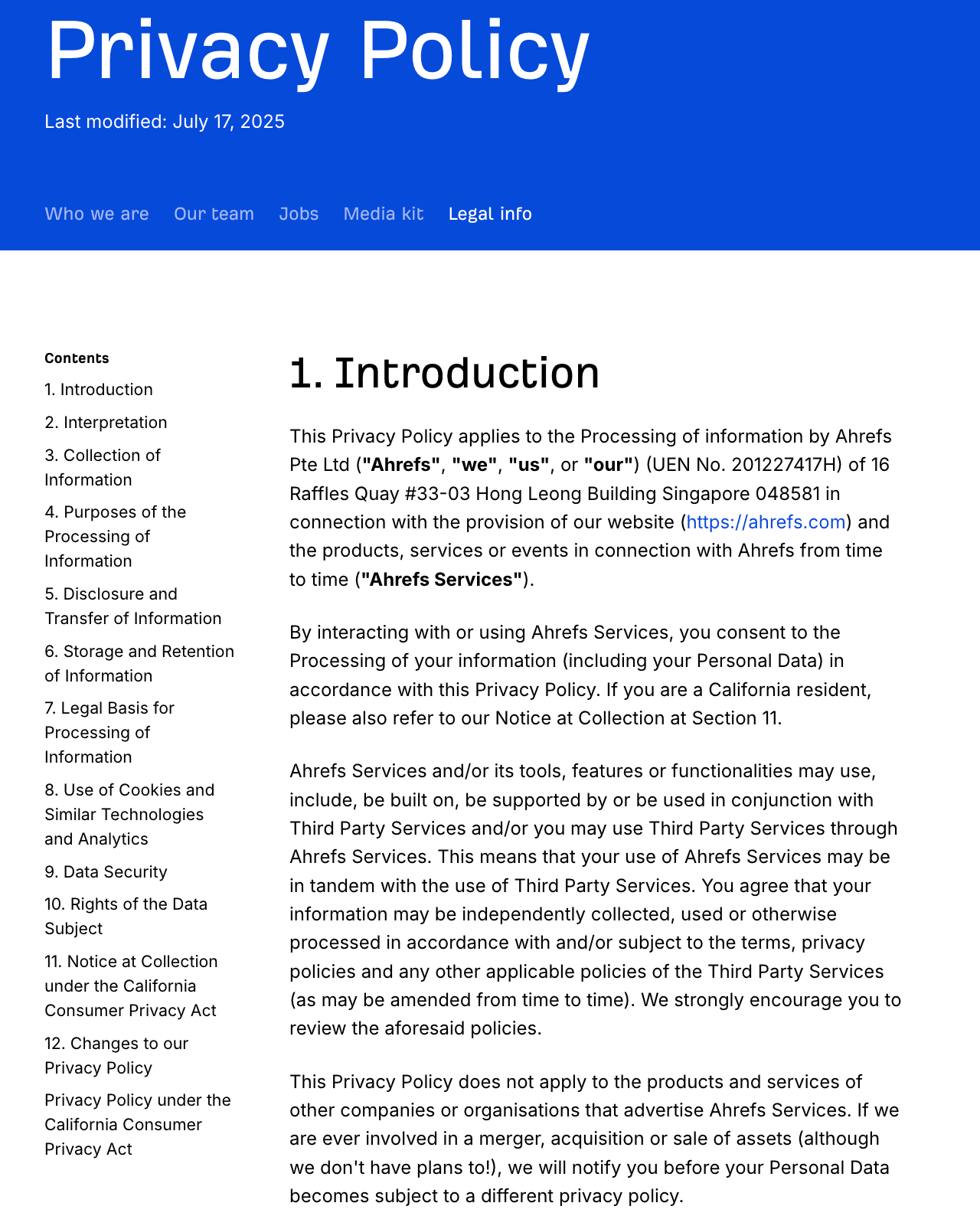
Example of a privacy policy
Why are privacy policy issues a legal risk?
First, let’s understand why you need a privacy policy.
GDPR: Article 13 of the GDPR requires a data controller to provide specific, detailed information to individuals at the point their personal data is collected. This includes the purposes of processing, the lawful basis for processing, data retention periods, and the identity of third-party recipients. The regulation treats this transparency obligation as fundamental, like a precondition for lawful processing.
US: State privacy laws like the California Consumer Privacy Act (CCPA ) regulate data privacy over here. They require businesses to disclose the categories of personal data collected and the purposes for which that information is used or sold. This disclosure must happen at or before the point of collection.
The privacy policy risks arise from a few recurring gaps:
- Mismatch between policy and practice: If your policy says one thing but your systems or vendors do another, regulators treat it as deceptive or unlawful processing.
- Incomplete disclosures: Missing details like retention periods or third-party sharing can invalidate consent or breach statutory requirements.
- Vague or generic language: Broad statements like “we may use your data to improve services” often fail to meet legal standards for specificity.
- Failure to update: Privacy policies that don’t reflect new tools, trackers, or data uses quickly become non-compliant.
- Timing issues: Disclosures provided after data collection (instead of before or at the point of collection) can violate core notice requirements.
How regulators and courts treat defective privacy policy
This is where the concept of the say-do gap becomes critical. The gap between what a policy says and what a business actually does is where most legal exposure lives.
- The Dutch DPA fined Netflix €4.75 million after finding that its privacy policy failed to clearly explain how and why personal data was processed, including missing details on purpose and legal basis.
- In 2023, the FTC settled with BetterHelp for $7.8 million after finding that the company shared health data with advertisers despite its privacy policy promising otherwise.
By now, it should be clear that regulators treat a defective privacy policy as a major privacy violation.
The most common privacy policy mistakes businesses make
Here are the most common privacy policy issues among businesses.
#1 Vague or overly broad data collection language
A key privacy policy concern is the use of catch-all language that provides little meaningful information. Phrases such as "we may collect information to improve our services" or "we gather data to enhance your experience" do not meet the specificity standards set by GDPR or CCPA. This lack of clarity includes details about what specific information is collected and for what purposes it is used.
A compliant version would contain specific information like the types of data collected, their purpose of collection, data retention period, privacy rights, etc.
#2 Missing lawful basis for processing under GDPR
GDPR Article 6 requires every processing activity to be tied to an identified lawful basis , like consent or legitimate interest. Many privacy policies describe what data is collected without ever stating why the processing is lawful. This omission is one of the most consistently cited compliance failures in enforcement actions by the Information Commissioner's Office (ICO) and European Data Protection Authorities.
#3 Failure to disclose third-party data sharing
Article 13(1)(e) of the GDPR requires disclosure of the recipients or categories of recipients of personal data. Similarly, Cal. Civ. Code § 1798.110 under the CCPA grants consumers the right to know the categories of third parties with whom their information is shared.
Failure to disclose the third-party sharing is a compliance gap. If your policy uses the word "partners" without further specification, it is almost certainly non-compliant.
#4 Inadequate user rights disclosures
Burying user rights in dense legal text is both a poor user experience and a compliance failure. GDPR Article 12 requires that information for data subjects be concise, transparent, intelligible, and easily accessible. Therefore, an overly complex rights section fails this standard.
GDPR data subject rights
GDPR establishes eight data subject rights: information, access, rectification, erasure (the right to be forgotten), restriction of processing, data portability, objection, and rights related to automated decision-making. A compliant privacy policy must inform users of each right that applies to their data and explain how to exercise those rights, including who to contact and the expected response timeframe.
CCPA consumer rights
The CCPA grants consumers the rights to know, delete, correct, and opt out of the sale or sharing of their personal information. Your policy must prominently disclose each of these rights and include a clearly labelled "Do Not Sell or Share My Personal Information" link.
#5 Cookie and tracking technology disclosure gaps
To comply with transparency obligations, businesses must include the cookie categories, purposes, third-party cookie information, and cookie durations.
Simply stating a site uses cookies is often insufficient for a policy. A dedicated cookie policy or a detailed section in the privacy policy (easily accessible) is the required standard.
#6 Consent mechanisms contradict the policy
This is a particularly dangerous pattern: a cookie banner offers users an apparent choice to reject tracking, but the underlying technology continues to fire analytics or advertising scripts regardless. If your privacy policy claims that users can control tracking while your consent management platform (CMP) configuration does not actually block cookies before consent, it is both a GDPR transparency violation and a potential FTC deception claim.
#7 Actual data practices outpace policy language
The say-do gap is especially common with tracking technologies. If your site runs analytics tools, advertising pixels, or session-recording software that collects data not described in your privacy policy, the policy is factually inaccurate. Regulators treat this as a material violation.
It is also important to have an updated cookie policy on your website. A CMP like CookieYes can auto-scan your website's cookies and help keep policy disclosures aligned with actual tracking behaviour, closing the gap before a regulator identifies it.
Create and maintain a dynamic cookie policy
Create your cookie policy with CookieYes CMP
Sign up for free- 14-day free trial
- Cancel anytime
#8 Outdated policies and the failure to keep up with legal changes
Over time, an outdated privacy policy can fall out of alignment with current legal requirements. A policy drafted a few years ago may no longer reflect the current legal position. For example, the CJEU’s Schrems II decision invalidated the EU–US Privacy Shield. Similarly, the CPRA introduced new disclosure requirements around sensitive personal data, and several US state laws, including the VCDPA and Colorado Privacy Act, have come into force.
If your policy does not reflect these changes, whether by relying on invalid mechanisms or omitting required disclosures, it is non-compliant on its face.
#9 Privacy policy version control and changelog best practices
Version-stamp every policy update and maintain a public changelog. This lets you demonstrate good-faith compliance efforts if a regulator asks when and why a specific disclosure changed. Data privacy laws impose an ongoing transparency obligation that the information provided to data subjects must remain current. Therefore, considering privacy policy as a one-time task is a compliance issue.
#10 How new products, features, or vendors trigger update
Introducing a new analytics tool, CRM integration, advertising pixel, or data processor without updating your privacy policy is one of the overlooked privacy policy issues. Establish a minimum review cadence: Annual scans of your data processing activities, plus a triggered review whenever a new processor is onboarded, a new product feature launches, or a new jurisdiction's law comes into force.
High-risk privacy policy issues: children's data, AI disclosures, and cross-border transfers
The following are three common high-risk privacy policy issues in addition to those mentioned above.
COPPA compliance and age-appropriate design requirements
If your website or app is directed at children under 13 in the US, the Children's Online Privacy Protection Act (COPPA) imposes heightened requirements on your privacy disclosures, verifiable parental consent mechanisms, and specific descriptions of data collected from minors.
AI and machine learning data usage
Businesses using AI tools to analyse user data, personalise content, or make decisions are expected to be more transparent about it. Under the GDPR, organisations must tell users if such automated processing is taking place, give a general explanation of how it works, and explain what it could mean for them, especially where decisions have a significant impact.
The EU AI Act also pushes these transparency requirements further. If your business uses AI systems trained on customer data and your privacy policy does not mention this, it likely points to a compliance gap.
Cross-border data transfer information
Organisations are required to inform users if their personal data is transferred outside the EU/EEA, along with the safeguards used to protect it. This forms part of the transparency obligations under Articles 13 and 14 of the GDPR. When a privacy policy does not mention cross-border transfers, despite such transfers taking place, it creates a compliance gap because users are not properly informed about where their data is sent or how it is protected.

Also read
How to audit and fix your privacy policy issues
Addressing privacy policy issues starts with understanding what your business actually does with data.
Step 1: Map your actual data flows before touching the policy
A privacy policy cannot be fixed in isolation. Begin with a thorough data mapping exercise. Identify every category of personal data your business collects, every data processor receiving it, every purpose it serves, and every jurisdiction whose residents are affected. This map becomes the factual foundation your policy must accurately reflect.
Step 2: Check each required disclosure element against applicable laws
Use a disclosure checklist anchored to the applicable laws. Verify that your policy addresses the identity of the data controller, purposes and lawful basis for each processing activity, categories of data collected, retention periods, third-party recipients, all applicable data subject rights, complaint routes to supervisory authorities, and transfer mechanisms for international data flows
Step 3: Test readability, placement, and consent consistency
Run your policy through a Flesch-Kincaid readability test. Article 12 of the GDPR requires plain language; a policy written at a college reading level or above is at risk of failing this standard.
Also, check that the policy is accessible from every page of your website, (typically via a footer link), from every sign-up or checkout form, and within any mobile app settings menu.

Example of a privacy policy linked in the website footer
Then conduct a consent consistency check: compare what your cookie banner and consent records show is being collected against what the privacy policy actually discloses. Any gap is a live compliance issue.
Consequences of privacy policy non-compliance
Regulatory fines and enforcement actions
GDPR fines for transparency and disclosure violations can reach €20 million or 4% of global annual turnover. Fines under CCPA could go up to $7500 per violation.
Private litigation and class action risk
The CCPA's private right of action allows statutory damages of $100–$750 per consumer per incident. For businesses with large user bases, class actions multiply this exposure dramatically.
Reputational and consumer trust damage
Nearly 68% of consumers worldwide say they are somewhat or very concerned about their online privacy. This concern shapes expectations. When actual data practices fall short of those expectations, it can lead to a loss of trust and reduced engagement.
For this reason, a defective privacy policy is a legal issue as well as a credibility risk. Regulators may also consider whether a business has taken proactive steps to ensure compliance, making early correction of issues a more defensible position than reactive fixes.
FAQs on privacy policy issues
What are the most common privacy policy mistakes?
The most frequently cited privacy policy issues include:
- vague or overly broad data collection language
- missing lawful basis for processing under GDPR
- failure to disclose third-party data sharing with specificity
- absent or inadequate user rights disclosures
- outdated policies that do not reflect current tools, processors, or laws
- cookie disclosures that do not match the site’s actual tracking behaviour
What happens if a website doesn't have a privacy policy?
Operating without a privacy policy violates GDPR Articles 13 and 14, the CCPA, California's Online Privacy Protection Act (CalOPPA), and numerous other laws. Consequences include regulatory fines, formal enforcement action, and potential removal from platforms (both the Apple App Store and Google Play Store require a privacy policy for listed apps). Several US states also allow private lawsuits for statutory violations tied to missing or materially inadequate disclosures.
Is it illegal to have a bad or misleading privacy policy?
Yes. An inaccurate or incomplete privacy policy can create a compliance risk. If your disclosures do not reflect your actual data practices, it undermines transparency and user trust. This say–do gap is a common enforcement trigger, where what a business states in its privacy policy does not match what it actually does.
What should a privacy policy include to be GDPR compliant?
A GDPR-compliant privacy policy must include:
the identity and contact details of the data controller and DPO (if applicable)
the purposes and lawful basis for each processing activity
categories of personal data collected
retention periods
categories of third-party recipients
a description of all applicable data subject rights
the right to withdraw consent
the right to lodge a complaint with a supervisory authority
details of any international data transfer
information regarding automated decisions.
Can you be fined for not having a privacy policy?
Yes. Under the GDPR, non-compliance fines can reach €20 million or 4% of global annual turnover. CCPA enforcement by the California Attorney General can lead to fines up to $7500 per violation.
How often should I update my privacy policy?
Conduct a formal review at a minimum annually, supplemented by triggered reviews whenever you add a new data processor or analytics tool, begin operating in a new jurisdiction, change your business model or data practices, or receive relevant new guidance from a supervisory authority.
Version-stamp every update and maintain a changelog. This practice demonstrates accountability under the GDPR and provides documented evidence of good-faith compliance if a regulator ever comes asking.