Full site index for AI agents: llms.txt. Every page is also available as Markdown: replace the trailing slash with .md, so /pricing/ becomes /pricing.md. Or send the header Accept: text/markdown to the page URL itself.
Simpler, more seamless cookie consent for Shopify stores.
Every website handles data, but not every website explains it well. That’s where two essential documents come in: the privacy policy and the cookie policy. They share the same purpose of keeping users informed, yet each one plays a unique role. From split to ship, learn how cookie policy vs privacy policy differ, what each should cover, whether your site needs both, and how to put them live the right way
What is a cookie policy?
A cookie policy informs visitors what cookies and similar tracking tools your website uses, why you use them, and how people can control them.
Because cookies can track things like browsing behaviour for analytics, personalisation, and advertising, many privacy laws treat them as personal data. This means you often need to clearly explain their use and, in certain cases, get permission before placing them on a visitor’s device.
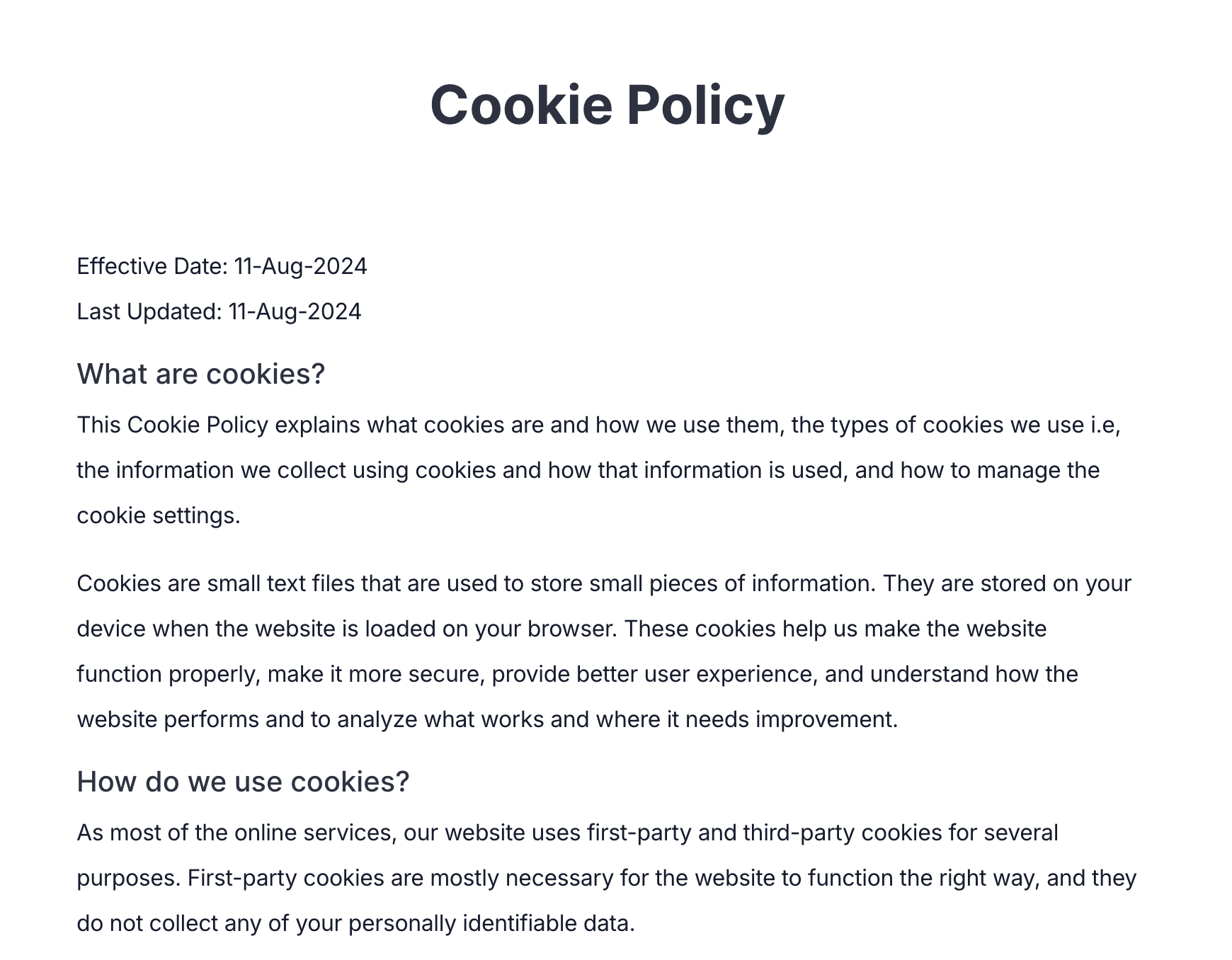
Example: The Cookie policy of WebYes starts with the definition of cookies and proceeds to explain its use.
Legal requirements of a cookie policy
The following are some of the key elements of a cookie policy:
Types of cookies: Identify technical, analytics, marketing and third‑party cookies used by your site. Tools like a cookie scanner can help.
Purpose: Explain why each cookie is used and how long they are kept on browsers.
User consent and control: Specify whether the cookies are essential or optional, and that they can opt out of cookies anytime.
Cookie management: Provide instructions on how users can disable cookies through the banner or browser settings and explain the consequences of rejecting cookies.
Third‑party cookies: Identify any third‑party services, such as analytics or advertising providers. Provide links to their respective privacy policies.
Ensure that users can find your cookie information easily and hassle-free.
What is a privacy policy?
A privacy policy, sometimes called a privacy notice, is a document explaining how an organisation collects, uses, discloses and protects personal data. While the specifics of what must be included may vary slightly between laws, a privacy policy is a core legal obligation for businesses.
It provides a comprehensive overview of the data secured from the users, whether directly, indirectly, or through automated means such as cookies and other tracking technologies.
Example: The privacy policy of Ahrefs begins with an introduction and provides details of their data processing activities.
Legal requirements of a privacy policy
The following are the key components of a privacy policy:
Data controller details: Name and details of the organisation responsible for processing personal data.
Types of data collected: Personal data you collect, such as contact information, purchase history, IP addresses and cookie identifiers.
Purpose and lawful basis: Why personal data is processed and specify the legal basis under regulations like the GDPR.
Third‑party sharing: Who receives the data and why.
International transfers: If data is transferred outside the user’s country, state which safeguards are in place.
Retention periods: How long data is kept, or explain how the retention period is determined.
User rights: Inform users of their privacy rights, such as access, correction, deletion, restriction, portability and objection.
Security measures: The technical and organisational measures used to protect the data.
Contact details and updates: Methods for users to contact you regarding privacy issues, and state when the policy was last updated.
The privacy policy must be easy to understand, free of legal or technical jargon, concise, and easily accessible. Additionally, if your business uses AI tools or processes personal data through AI systems, your privacy policy should clearly explain how AI is used, what data is processed, and whether any automated decision-making is involved. A clear and transparent AI privacy policy can help build user trust and improve accountability.
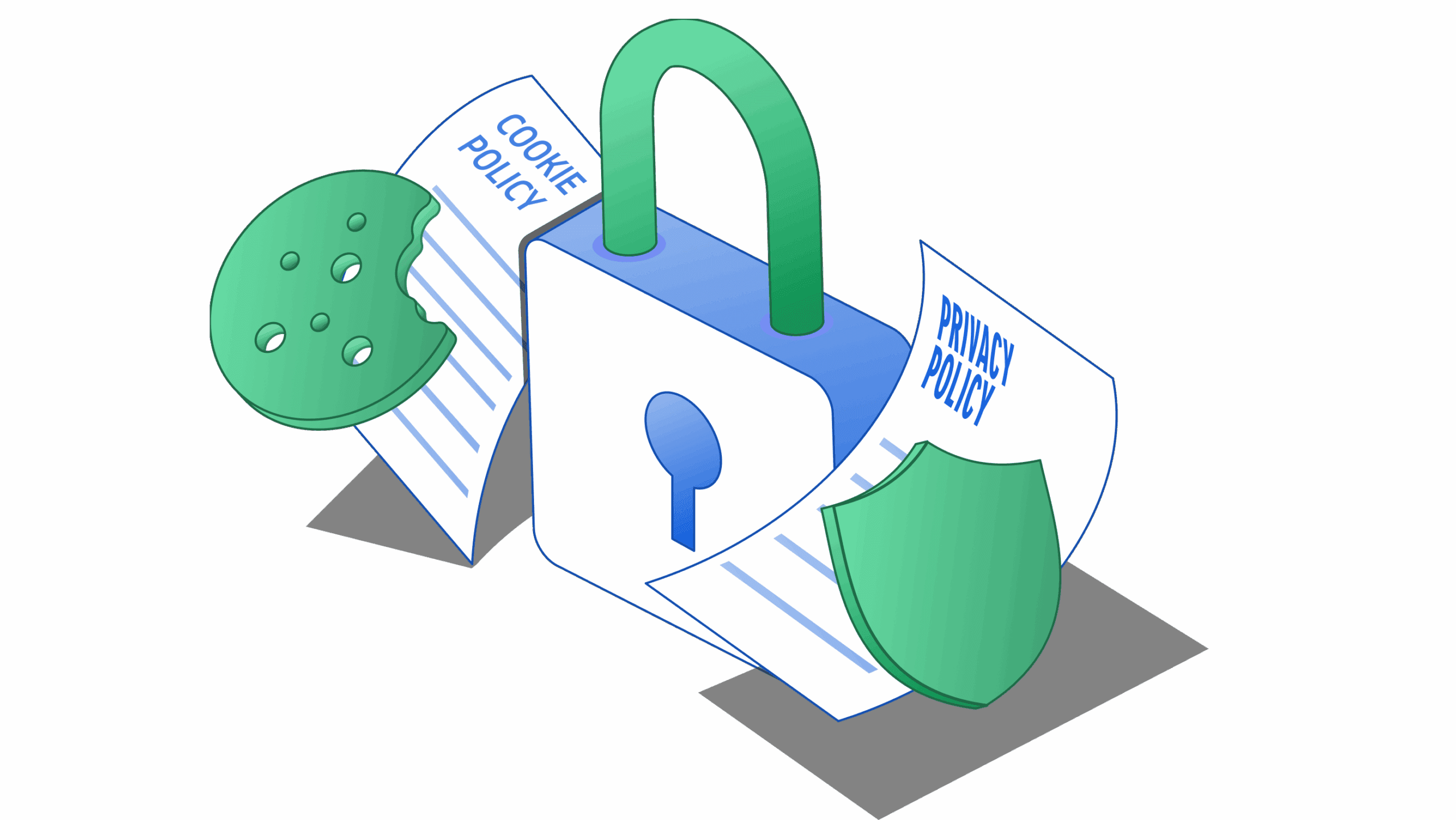
A privacy policy is broader in scope than a cookie policy. It covers all personal data processing activities, including cookies.
A common doubt among businesses is whether the cookie policy can be a section within the privacy policy. The short answer is yes, it can be. However, separating them improves clarity and accessibility.
Regulators caution against hiding cookie information inside a long privacy policy; the UK regulator notes that you cannot show valid consent if cookie information is buried in a privacy policy that is hard to find or read.
To avoid this, ensure that the cookie policy is directly accessible from the website footer, cookie consent banner, and your privacy policy. Design it so users can easily find your policies.
What are the key differences between a cookie policy vs privacy policy?
Although both policies promote transparency and build trust, they differ in purpose, scope, and content.
The table below summarises the main distinctions.
Criteria
Cookie policy
Privacy policy
Purpose
Inform website visitors about the use of cookies and similar technologies.
Explains how an organisation deals with personal data.
Scope
Limited to the cookies used on the platform.
Extends to all kinds of personal data, including cookie data.
Content
Contains the types of cookies used, their purposes, lifespan, and instructions on cookie management.
Data categories, purposes of processing, third‑party sharing, retention, security, and user rights.
User control
Inform users on how to manage their cookie preferences through consent banners or their browsers.
Informs users of their privacy rights, such as access, deletion, objection, etc, and how to exercise them.
Mandatory
If you use cookies on your website.
If you process personal data, irrespective of whether cookies are used.
In essence, a privacy policy is a holistic document covering all data practices, while a cookie policy zeroes in on cookies and tracking technologies. Both are necessary to comply with data protection laws and to be transparent with your audience.
Why do you need both cookie policy and privacy policy?
Several reasons make both the cookie and privacy policy important for businesses:
#1 Compliance with multiple laws
While the GDPR and CCPA differ slightly in what they require, both demand a privacy policy that is clear, transparent, and easy for users to access.
The CCPA may not call for a stand-alone cookie policy, but it still expects you to be upfront about how cookies are used. This is because, under the law, they count cookies as personal data.
In practice, this means both a solid privacy policy and clear cookie disclosures are essential pillars of privacy compliance.
#2 Transparency and user trust
A dedicated cookie policy demonstrates that you value transparency about tracking technologies. Meanwhile, privacy policies help users understand how you handle all kinds of personal data, like names and payment details.
#3 User control
Separating the policies allows you to provide simple options for users to manage cookies while directing them to the privacy policy for broader rights.
#4 Clarity
Breaking up complex information into topic‑specific policies prevents overwhelming readers and reduces the risk that they miss important details.
Where to display your cookie policy vs privacy policy?
Making policies easy to find is as important as having them. Best practices include:
Footer links
Include links to your privacy policy and cookie policy in the footer of every page. This makes them accessible from anywhere on the website.
Consent banner
Provide a cookie banner that pops up on a user’s first visit. It should briefly explain that cookies are used, provide options to accept or reject non‑essential cookies and link directly to the cookie policy. You may link it to the cookie section of your privacy policy if you do not have a standalone cookie policy.
Forms and account pages
Whenever you collect personal data, include a notice linking to your privacy policy. Sign-up forms, check out pages, payment pages, etc, are examples.
Mobile‑friendly design
Ensure the policies are responsive and easy to read on small screens such as mobile devices. For applications, provide access to the policies via the settings menu.
The CalOPPA, CCPA, GDPR and other privacy laws insist conspicuous placement of website policies.
How to create and maintain a cookie policy vs a privacy policy
Drafting notices can be a complicated and multi-step process, but there are several approaches to choose from:
Use policy generators
Tools like privacy policy generators and cookie policy generators create customised documents based on your website’s data practices. This saves time and effort, all while ensuring that you include all required information.
Customise templates
You can also adapt existing templates to match your company’s specific practices. When customising, make sure the policy is clear, detailed, and accurately reflects your operations.
Templates can be a helpful starting point for understanding the structure and key elements of a policy. However, they often require manual tailoring to ensure each section and piece of information aligns with your business needs.
Write your own policy
If you are a legal expert or under the guidance of one, you can draft policies from scratch. Ensure they are written in plain language, cover all necessary elements and align with applicable laws.
Regular updates
Review your policies annually or whenever you introduce new data processing activities or third‑party services. Also, keep a “last updated” date on each policy to show transparency and track changes.
Check for any broken links and replace them with the right ones, and confirm that the contact details are correct and available.
Documentation and version control
Maintain a record of changes to show regulators and users that you are actively managing compliance.
How can CookieYes help?
CookieYes CMP is your all-in-one consent management solution, built to simplify and strengthen compliance. We take privacy seriously, not just for users visiting your site, but for you as a business managing their trust.
With CookieYes, you can set up a geo-targeted cookie banner to collect valid consent, generate a privacy policy that reflects your data practices, and create a cookie policy that explains your site’s cookie use.
All of it happens in one place, so you’re not switching between platforms or manually piecing together compliance.
Do I need a cookie policy if I already have a privacy policy?
Yes. Privacy policies cover broad data practices, while cookie policies focus on cookie usage. If your privacy policy includes detailed cookie disclosures and consent mechanisms, you may not need a separate document, but the cookie information must be clear and prominent.
Can I combine cookie policy and privacy policy into one document?
You can combine them, but regulators stress that cookie information must be easy to find. A combined policy should have a clearly labelled cookie section with simple explanations and a link from the cookie banner. Many organisations prefer separate policies to keep documents concise.
Are cookie policies mandatory everywhere?
They are mandatory wherever cookies or similar tracking technologies are used. The EU and UK laws (ePrivacy Directive and PECR) require transparency and explicit consent for cookies.
Other jurisdictions, such as Brazil and certain U.S. states, also treat cookies as personal data, meaning cookie disclosures are necessary to comply with transparency obligations. Even though essential cookies do not require consent, they must still be explained in a cookie policy.

![Example: The privacy policy of Ahrefs[nofollow] begins with an introduction and provides details of their data processing activities.](https://assets.cookieyes.com/privacy_policy_ah_d5a7aa79b0.png)