As digital privacy expectations rise and regulations tighten, the consent or pay model has become a focal point for online businesses. This approach gives users a choice: consent to personalised advertising (and data use), pay a fee for privacy, or leave the service.
While it offers a potential solution for balancing user privacy and monetisation, it raises complex legal, ethical, and operational questions.
This article explains what consent or pay means, why it has emerged, what the law, particularly the ICO and EDPB, says about it, and how to implement it in a compliant and user-centric way.
What is consent or pay?
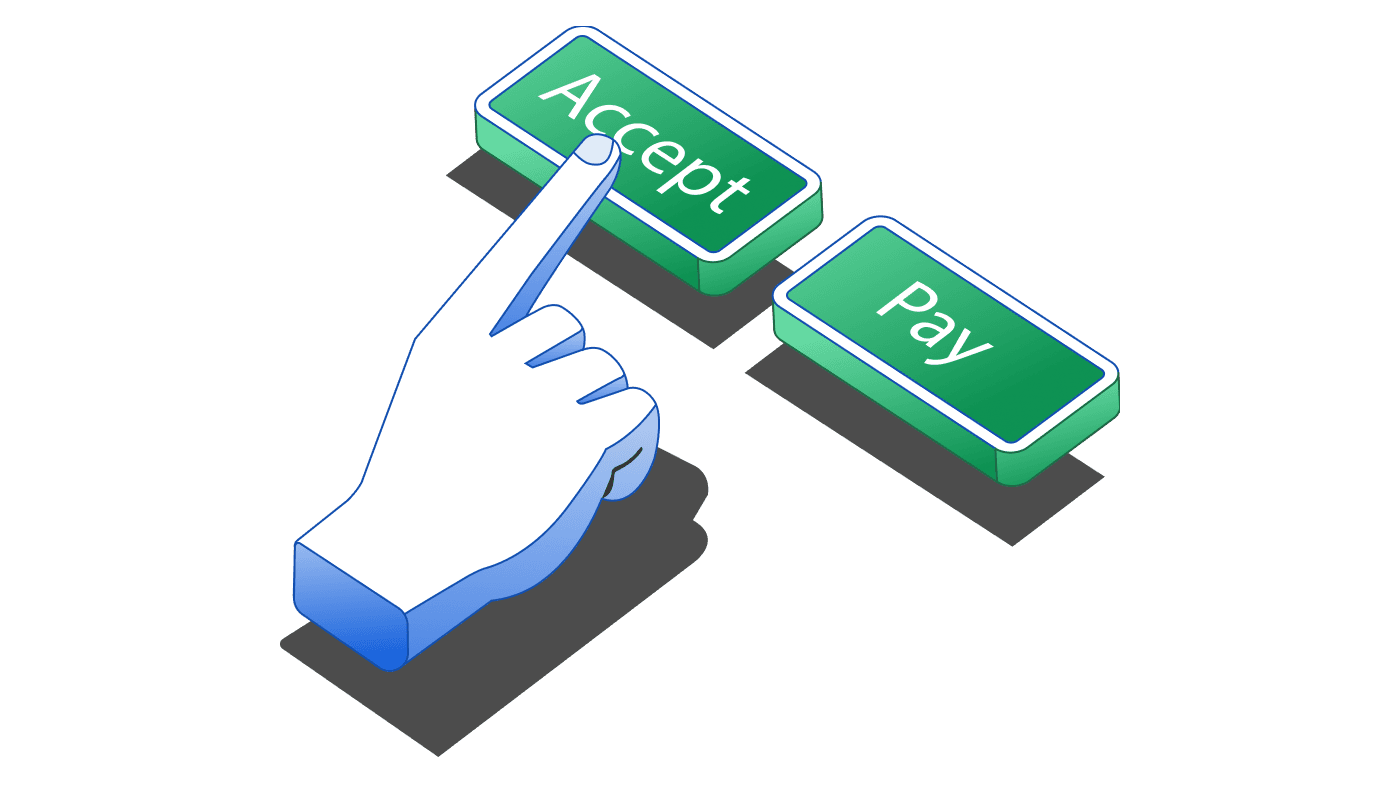
The consent or pay model is a user choice framework that gives individuals three distinct options when accessing a digital service:
- Consent to personal data processing, typically for personalised advertising, in exchange for free access to content or functionality.
- Pay a subscription fee to access the service without any personal data being processed for advertising or tracking purposes.
- Decline to use the service entirely, if neither of the above options is acceptable to the user.
The model appears primarily adopted by digital news publishers.
Key features
- User choice: Empowers individuals to control how their data is used
- Revenue diversification: Generates revenue through either ad-based or subscription models
- Transparency: Requires clear and honest communication about the options
Why the consent or pay model was introduced?
Several key factors led to the rise of the consent or pay model, including:
Regulatory pressure
The General Data Protection Regulation (GDPR) and the UK GDPR require that consent for data processing must be “freely given, specific, informed, and unambiguous.” The Privacy and Electronic Communications Regulations (PECR) set additional requirements for cookies and marketing.
As regulators increase enforcement against non-compliant consent, companies are seeking new compliant monetisation models.
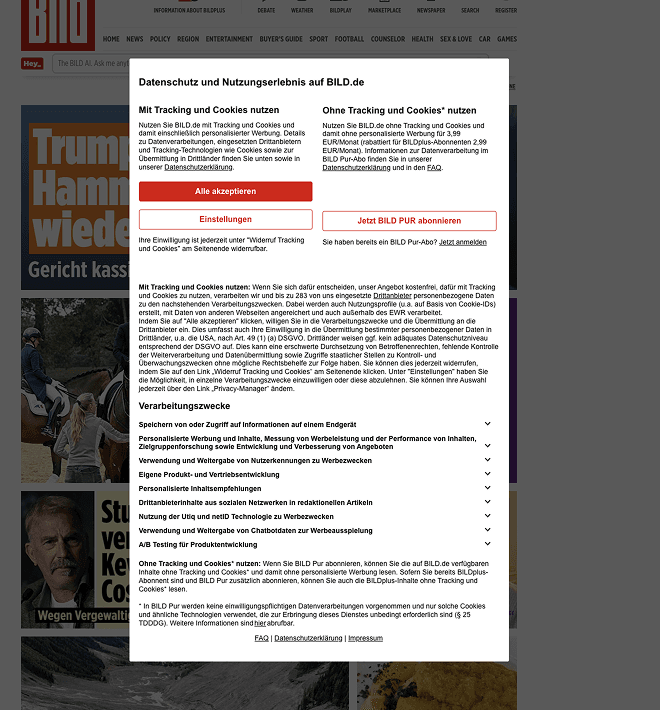
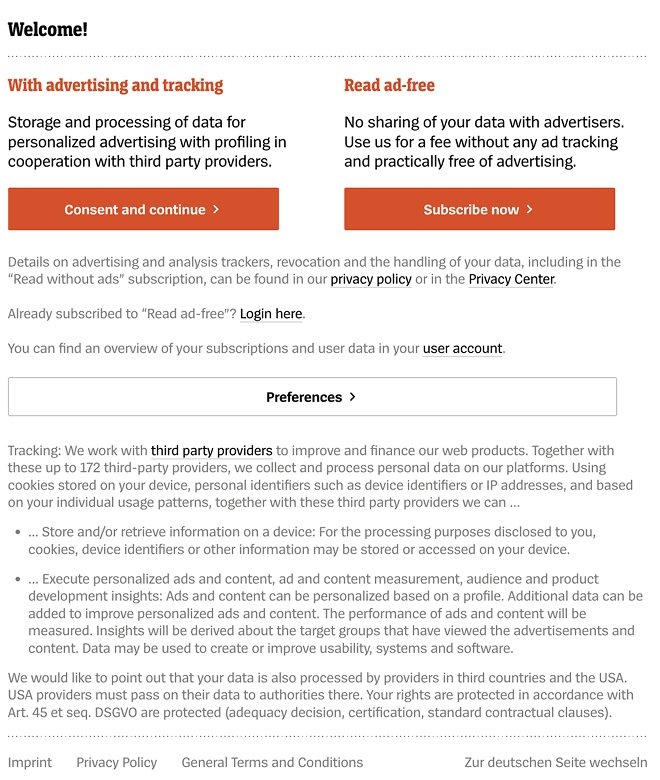
BILD.de, the online arm of Germany’s top tabloid, displays a detailed consent interface outlining its use of up to 283 ad tech partners. Users can either accept all processing or subscribe to BILD Pur to avoid tracking. The interface aligns with regulatory expectations by offering both informed consent and a functional alternative.
Consumer expectations
Users are more privacy-conscious and expect to be given meaningful control over how their data is used. They are also more likely to reject tracking if it feels unavoidable or forced.
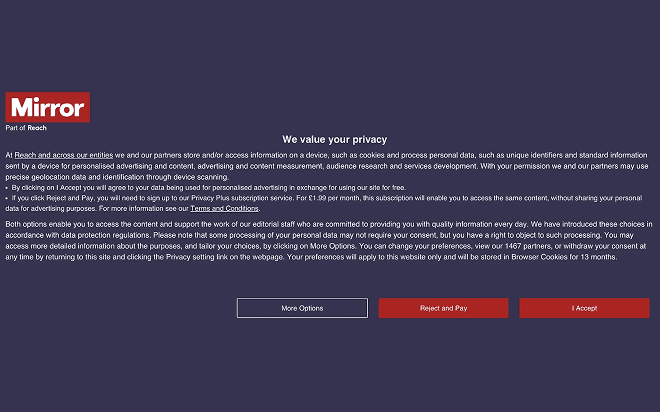
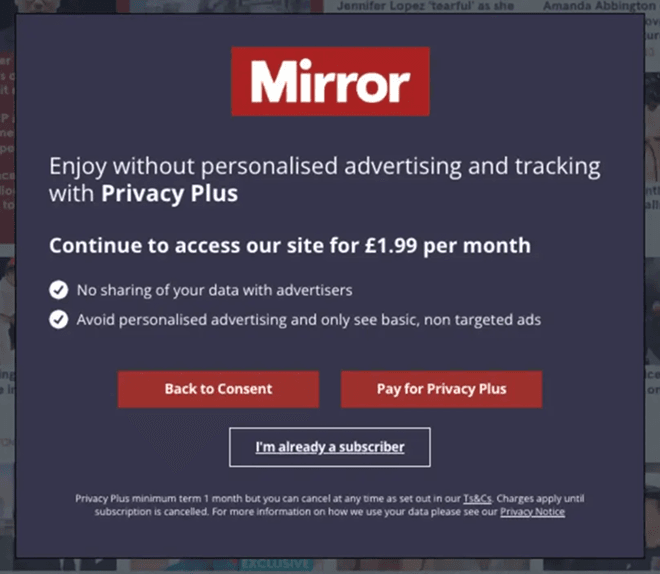
The Privacy Plus model of The Mirror, a British national tabloid, clearly communicates that users can avoid tracking and data sharing with advertisers by paying them. It addresses user concerns directly with benefits like “no sharing of your data” and “only basic, non-targeted ads
Industry trends
With third-party cookies being phased out and ad blockers becoming more common, traditional advertising models are under strain. Businesses are turning to models like consent or pay to maintain ad revenue while respecting privacy rights.
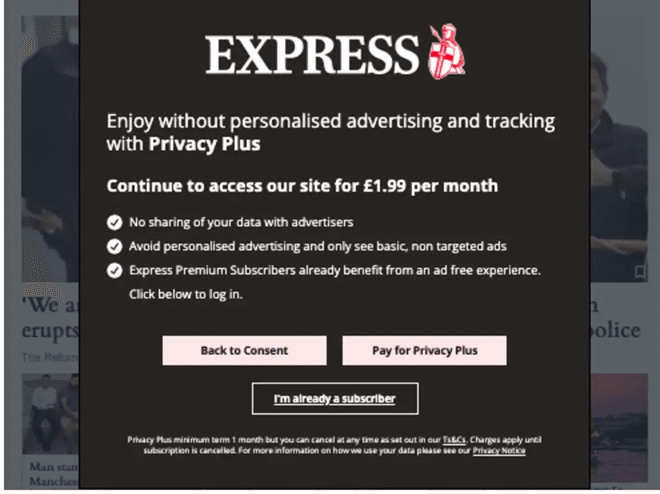
Express, the British news website, presents a consent-or-pay interface offering either a tracking-based free experience or a Privacy Plus subscription at £1.99/month. The pricing is reasonable and the model aligns with industry shifts toward user-funded privacy-first monetisation.
What do the laws say?
ICO’s four pillars for consent or pay
The UK’s Information Commissioner’s Office (ICO) published detailed guidance in January 2025. It permits consent or pay under specific conditions:
1. Power imbalance
If a business holds significant market power or the service is essential, consent is unlikely to be freely given.
- Avoid using consent or pay for essential or monopoly services
- Take extra care when dealing with children or vulnerable groups
- Assess and document your market position
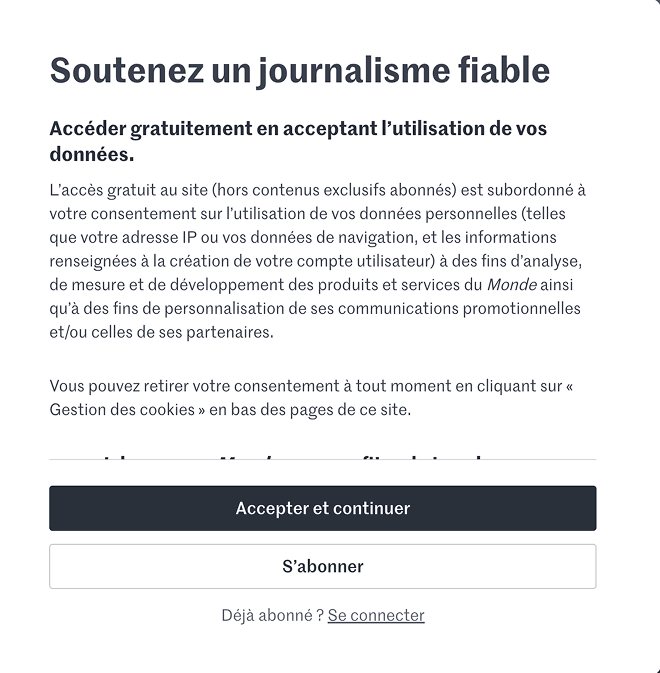
LE MONDE, the French news website, explains that access is free with consent or available via a paid subscription. The design and copy outline this choice. It includes a full list of 169 partners and emphasises that the service is optional, addressing the power imbalance criterion through transparency.
2. Appropriate fee
The fee for privacy must be reasonable, not so high that it pressures users into consenting.
- Base the fee on the actual cost of delivering the service without ads
- Avoid pricing that feels punitive or exploitative
- Be transparent about how the fee is calculated
ICO clarification: The fee should reflect "the value consumers associate with not sharing their data"—not company revenue or ad income
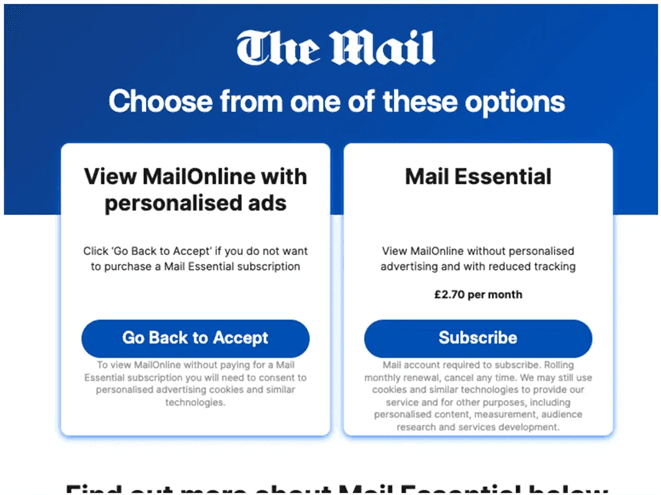
MailOnline, the digital platform of the Daily Mail UK, offers Mail Essential for £2.70/month, with clear wording that explains what’s included and what’s avoided (personalised ads). This reflects the ICO’s guidance that fees should relate to the cost of service delivery, not act as a deterrent.
3. Equivalence of services
Both the free (ad-supported) and paid (privacy-respecting) services must offer the same functionality.
- Only the presence or absence of personalised ads should differ
- Do not add premium features to the paid version
- Monitor both experiences for parity over time
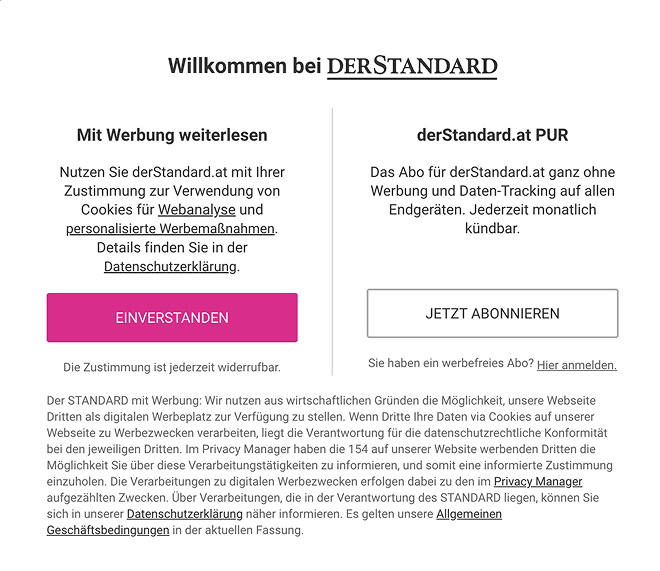
derStandard.at, a leading Austrian news website, gives users a choice between free access with advertising and a paid option. Both offer the same editorial content and functionality, differing only in the use of tracking, demonstrating parity between service tier
4. Privacy by design
The user experience must promote real choice and not manipulate users into consenting.
- Use plain, honest language
- Avoid dark patterns (e.g., making the decline button harder to see)
- Ensure users can easily change their decision at any time
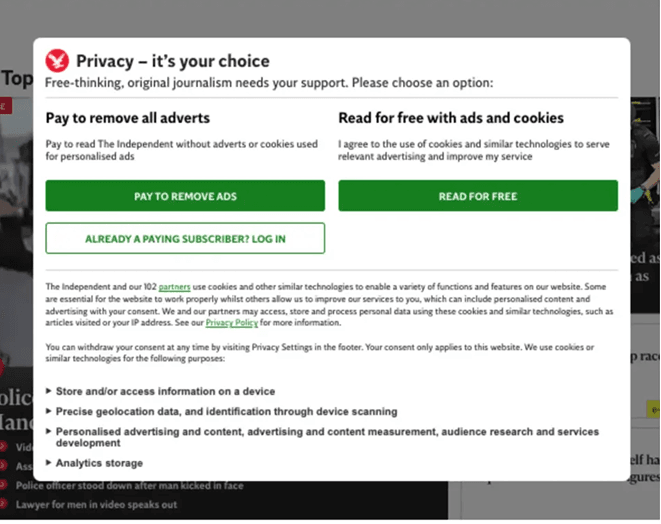
UK-based digital news publication, The Independent’s modal gives equal prominence to both options—“Read for free with ads and cookies” or “Pay to remove all adverts”—and explains tracking and partner involvement, ensuring that consent is informed and not nudged.
EDPB’s opinion on consent or pay (2024)
The European Data Protection Board issued its opinion in April 2024, focusing on large online platforms. It applies stricter criteria than the ICO:
Freely given consent
Consent is not valid if users must pay or leave the service to avoid data processing.
- Consent must be free of pressure, detriment, or imbalance
- Users must have a meaningful, not just theoretical, choice
EDPB emphasis: IIf users are excluded from “prominent online services” unless they pay or consent, that may constitute unlawful detriment.
Der Spiegel, the German digital news outlet, presents a balanced interface with the option to consent or subscribe, while clearly explaining data transfer to third parties and use by up to 172 partners. It supports EDPB guidance by giving users a true, accessible alternative to consent.
Financial barriers and service necessity
High fees or a lack of service alternatives can render consent invalid.
- The more essential the service, the less acceptable it is to charge for privacy
- Platforms with market dominance are under greater scrutiny
Mirror's £1.99/month Privacy Plus option represents a low-cost, realistic alternative to consent. This keeps the service accessible while allowing users to avoid data sharing.
Context matters
The EDPB expects stricter standards for large, essential platforms.
- Avoid applying this model to services with few alternatives
- Be especially cautious with vulnerable users
Alternatives and equivalence
Paid and ad-supported options must be nearly identical.
- No extra perks in the paid tier
- Consider offering contextual ads as a free, non-personalised alternative
Transparency and withdrawal
Users must be fully informed and able to change their choice easily.
- Consent must be easy to withdraw
- Explain the consequences of each choice clearly and simply
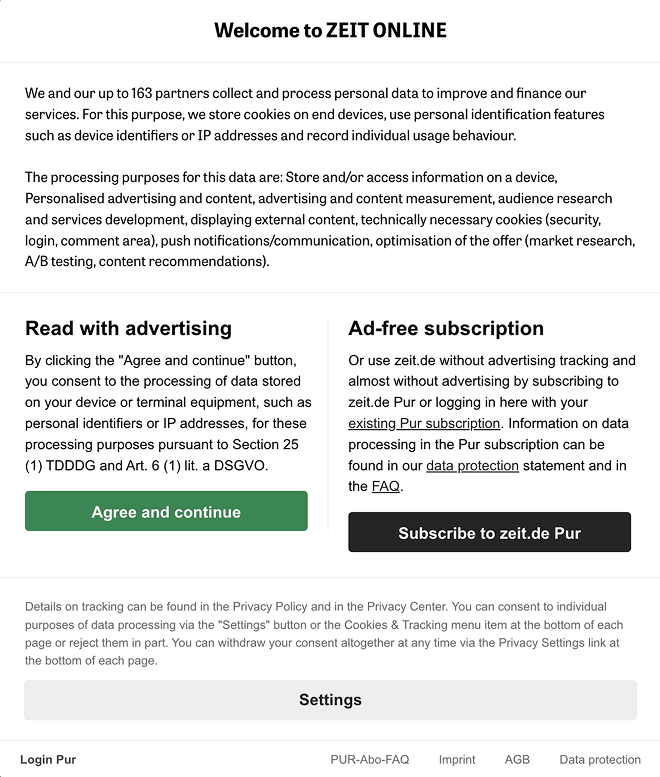
Another German digital news publication, ZEIT ONLINE allows users to revisit and adjust their settings via a persistent link in the footer, ensuring ongoing access to consent management, in line with both ICO and EDPB standards.
Case-by-case assessment
Organisations are responsible for assessing whether their model is compliant.
- Document decisions, justifications, and risk mitigations
- National regulators will evaluate implementations individually
Best practices for implementing consent or pay
To use consent or pay responsibly, businesses should align with both legal frameworks and user expectations.
1. Assess power imbalance
- Determine whether your service is essential or unique.
- Avoid deploying the model if users have no realistic alternatives.
- Be cautious when your audience includes children or other vulnerable groups.
2. Set a fair and transparent fee
- Base the fee on the actual cost of delivering the service
- Avoid high fees that discourage users from choosing privacy.
- Be open about how the pricing works.
3. Ensure service equivalence
- Provide the same core experience regardless of the option selected.
- Do not bundle better features, content, or usability into the paid version.
- Audit regularly to ensure both experiences remain aligned.
4. Design for privacy and clarity
- Use clear, accessible interfaces.
- Avoid any design that misleads or nudges users into consenting.
- Make it easy to update or withdraw consent at any time.
- A DPIA is mandatory under GDPR when profiling users
- It helps assess risks and show due diligence.
- Document fee justifications, power dynamics, and user alternatives
6. Communicate value and educate users
- Explain the trade-off clearly: how ads support free access.
- Provide transparent privacy notices and help guides.
- Offer support channels for consent-related queries.
Practical considerations for consent or pay
Implementing consent or pay comes with challenges:
- User perception: Some may feel pressured or view the model as unfair
- Regulatory risk: Poor implementation can attract enforcement
- Technical demands: Consent platforms must support clear choice and tracking logs
- Market variation: Compliance expectations differ by jurisdiction
Privacy should not be a premium
The consent or pay model offers a way to reconcile monetisation with rising privacy standards. But it must be handled with care. By following guidance from the ICO and EDPB and implementing best practices, businesses can build models that are legally compliant, ethically sound, and user-centric.
Done right, consent or pay can help you earn trust while preserving revenue. But privacy should never feel like a luxury—it’s a fundamental right.
FAQs on consent or pay