This guide explains how to generate and add a cookie policy page to your WordPress website. A cookie policy discloses the types of cookies used on your website and their purposes. It can help your website meet transparency requirements under privacy laws such as the GDPR and the ePrivacy Directive.
Prerequisites
- A CookieYes account (if you don't have one, sign up for free).
- Admin access to your WordPress site, with the CookieYes plugin installed and activated. Refer to this guide for installation steps.
Note
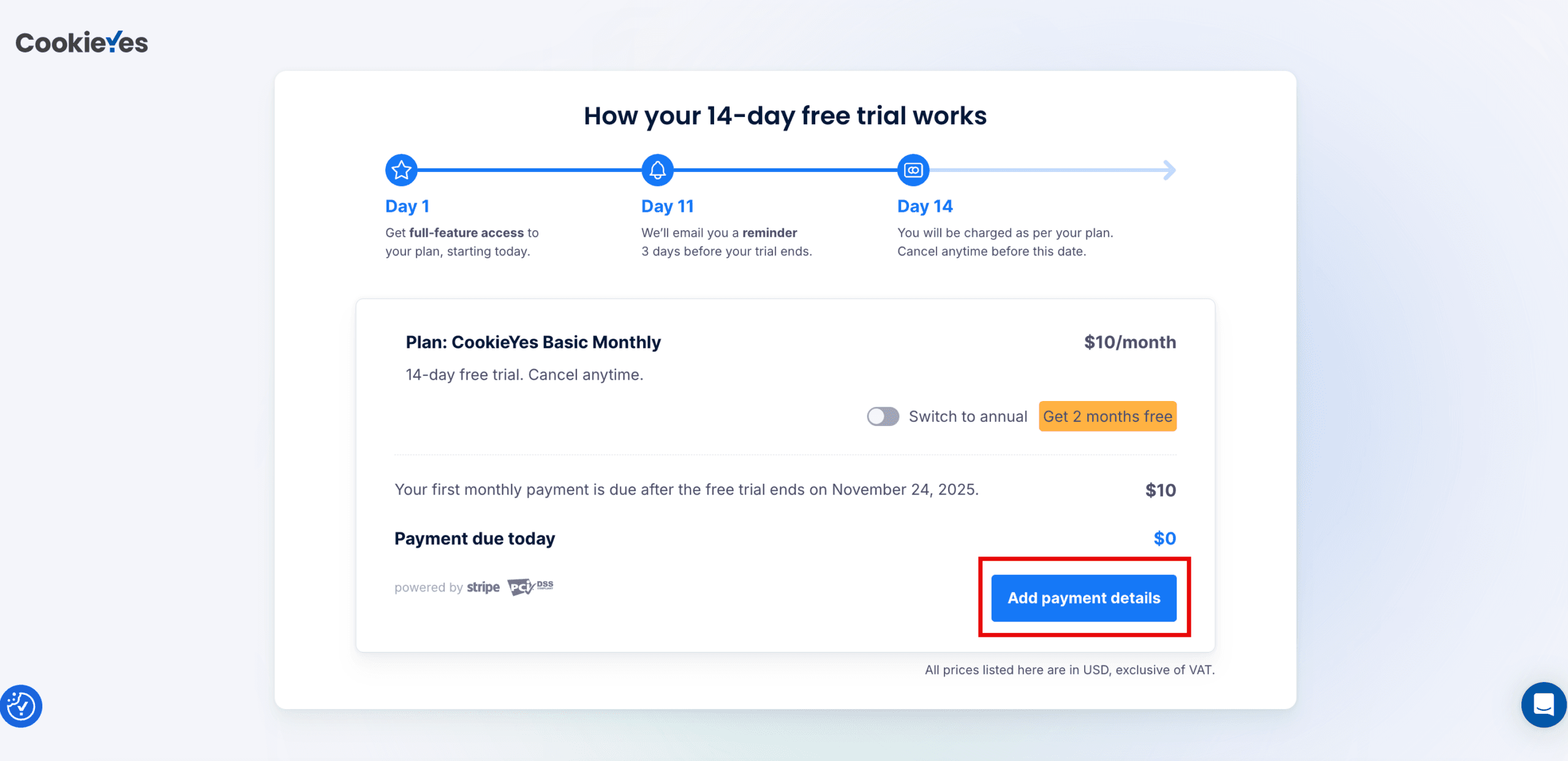
After you Sign up, you will be directed to the installation screens. You can install the cookie banner to support GDPR compliant for your use of cookies. If you prefer to create a cookie policy first, skip the installation and go directly to the Web App Dashboard.
Video Tutorial: Cookie Policy for WordPress Website
You can also follow the step-by-step instructions given below to easily add a cookie policy to your WordPress website.
Generate a Cookie Policy in CookieYes
Step 1: Access the cookie policy generator
You can access the Cookie Policy Generator in two ways — either from your WordPress site (via the CookieYes plugin) or directly from the CookieYes web app.
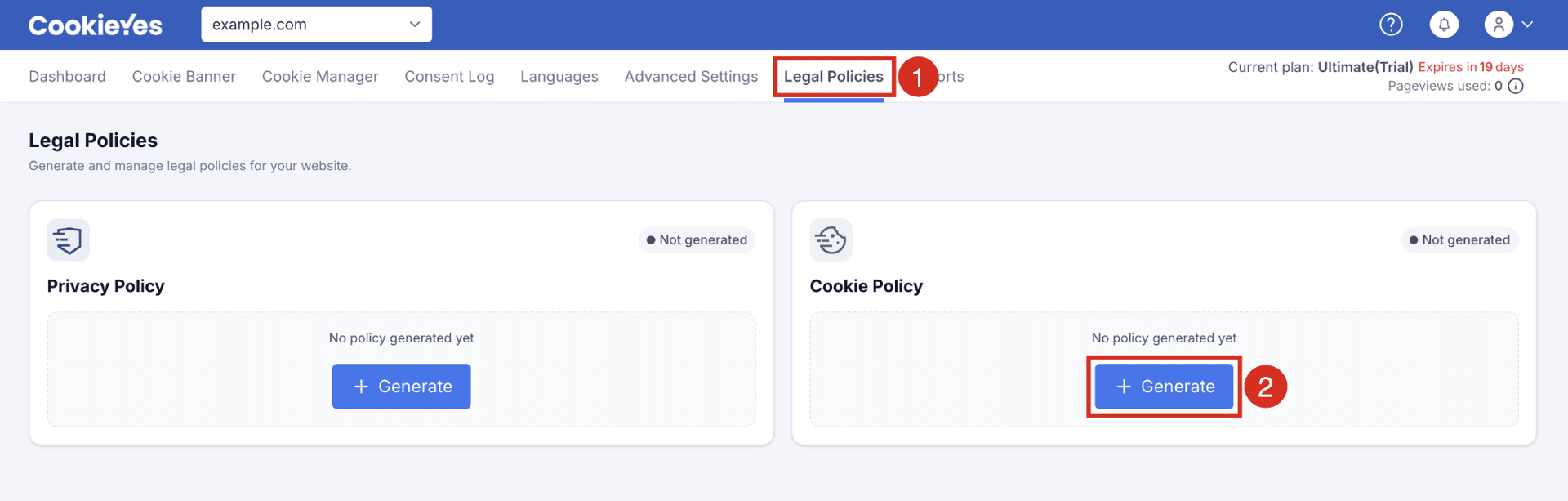
Option 1: From the CookieYes web app
- Log in to your CookieYes account.
- From the top navigation bar, select Legal Policies.
- From the Cookie Policy section, click + Generate.
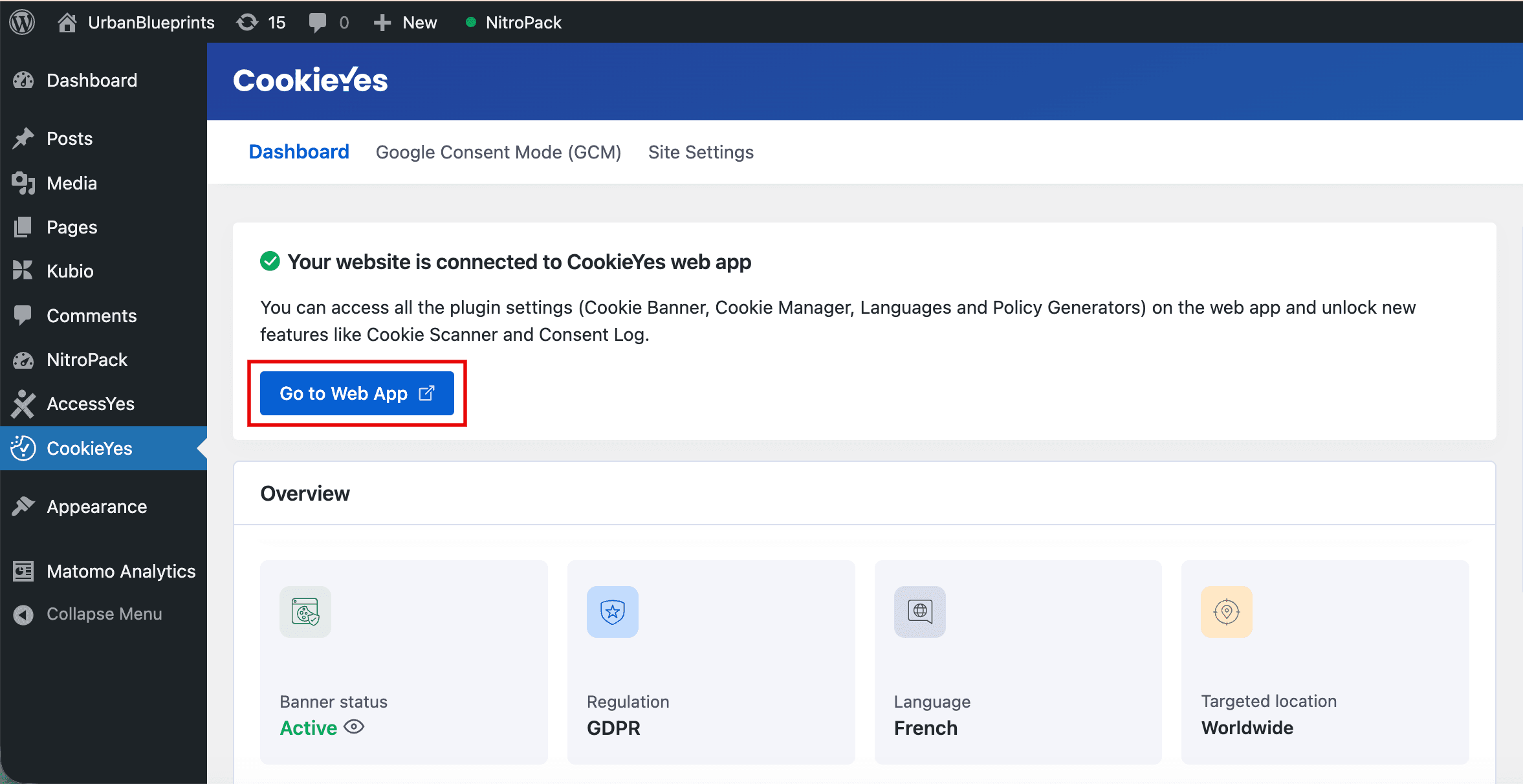
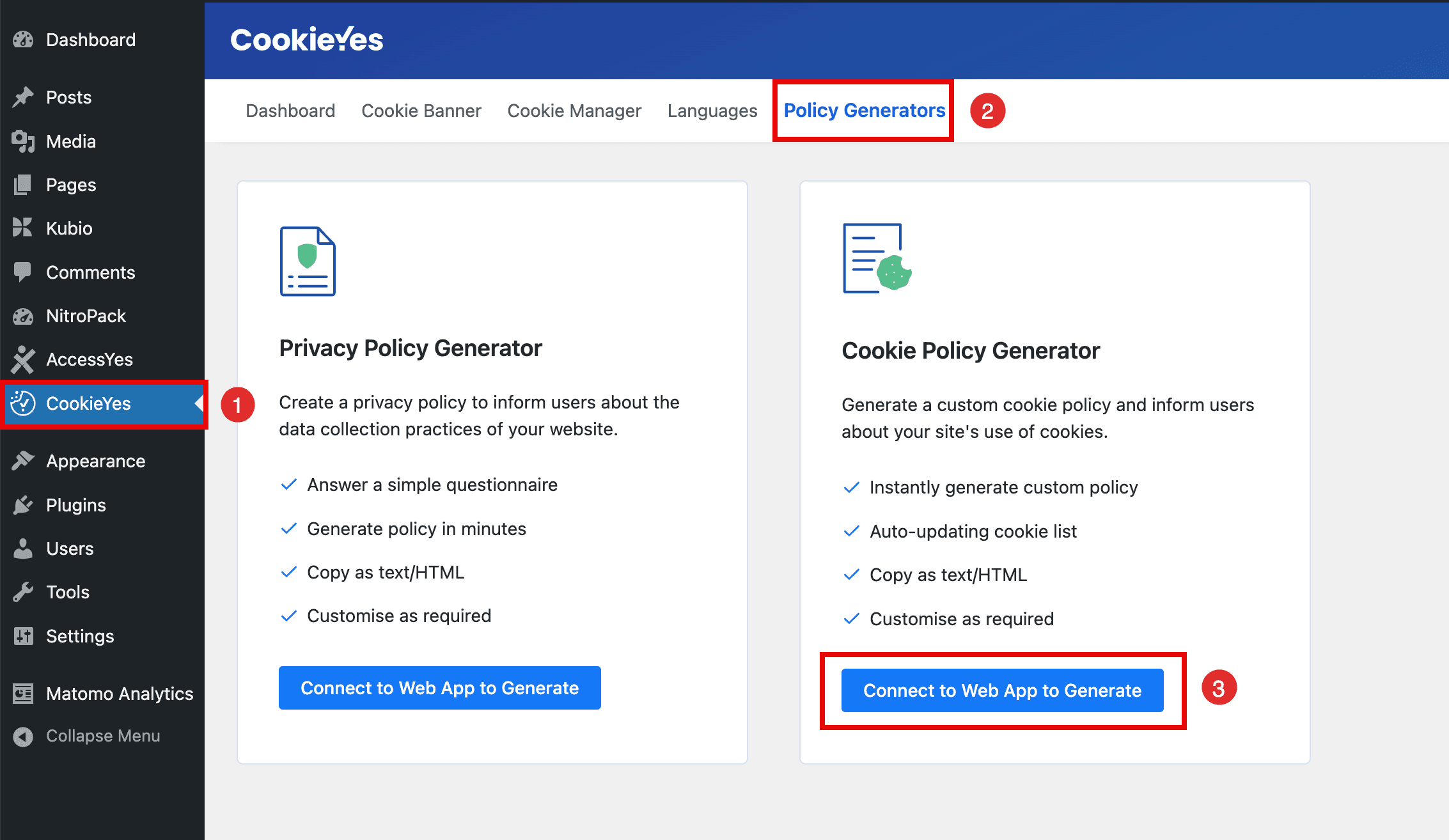
Option 2: From the CookieYes plugin in WordPress
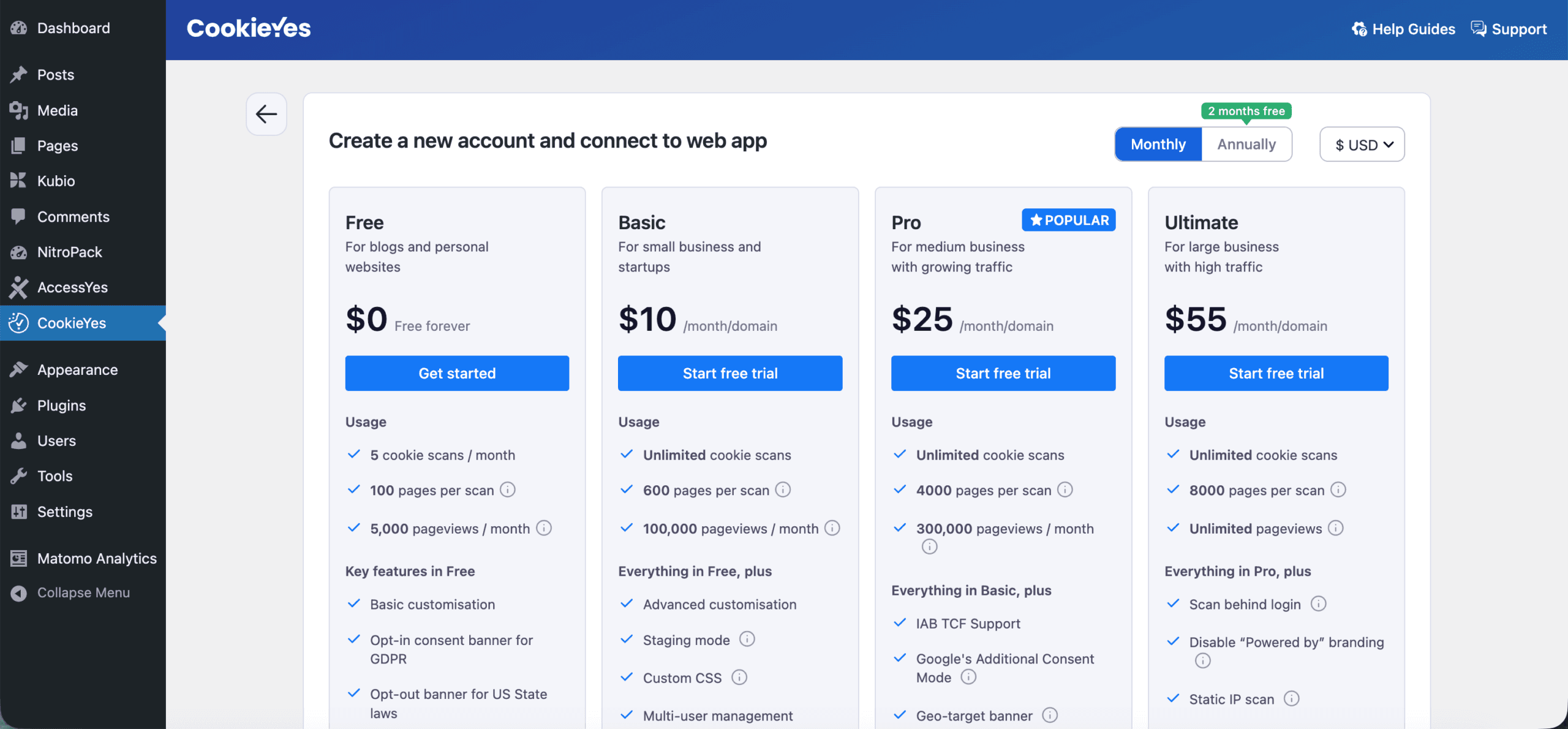
Log in to your WordPress account and go to the CookieYes plugin.
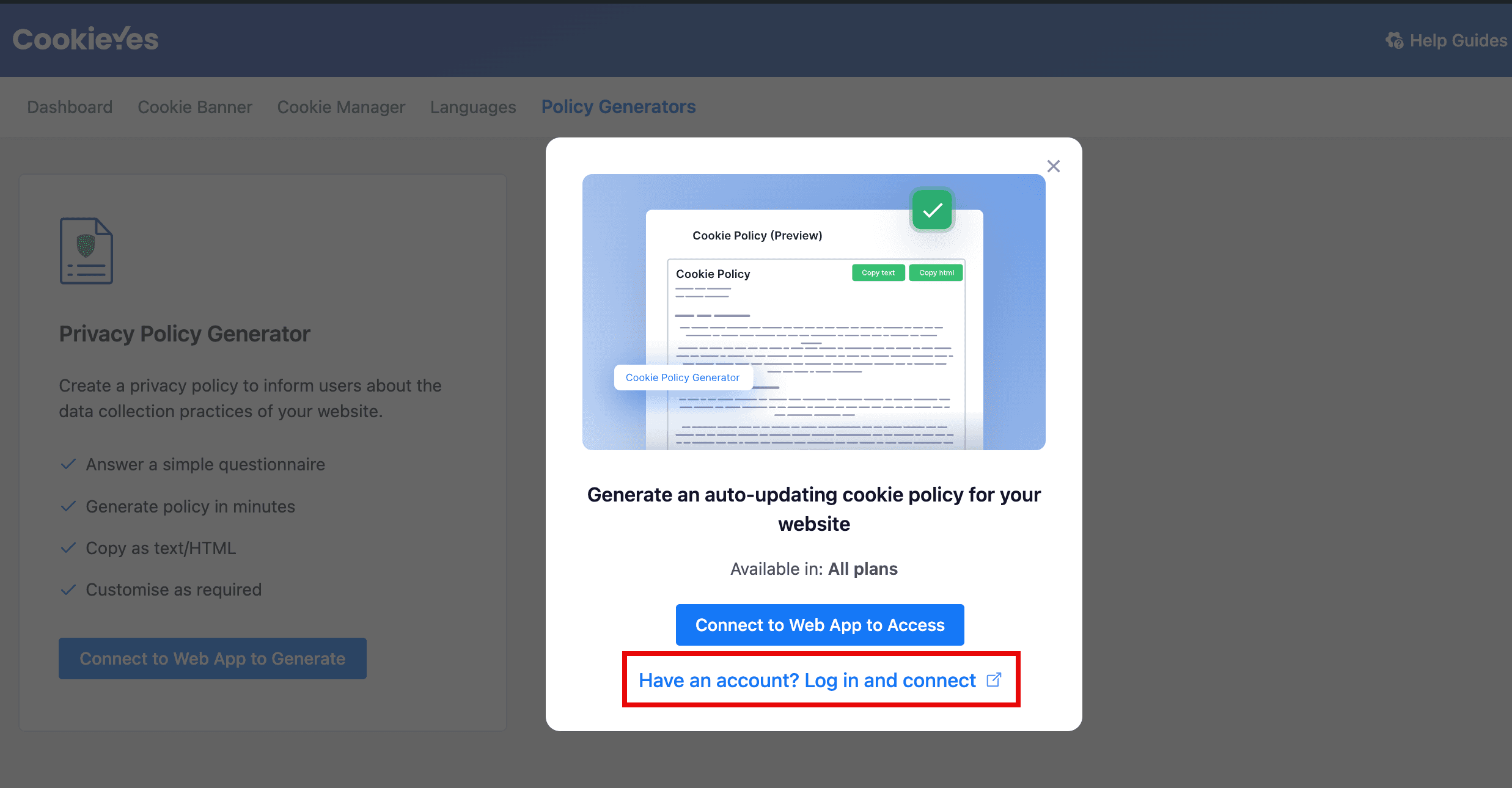
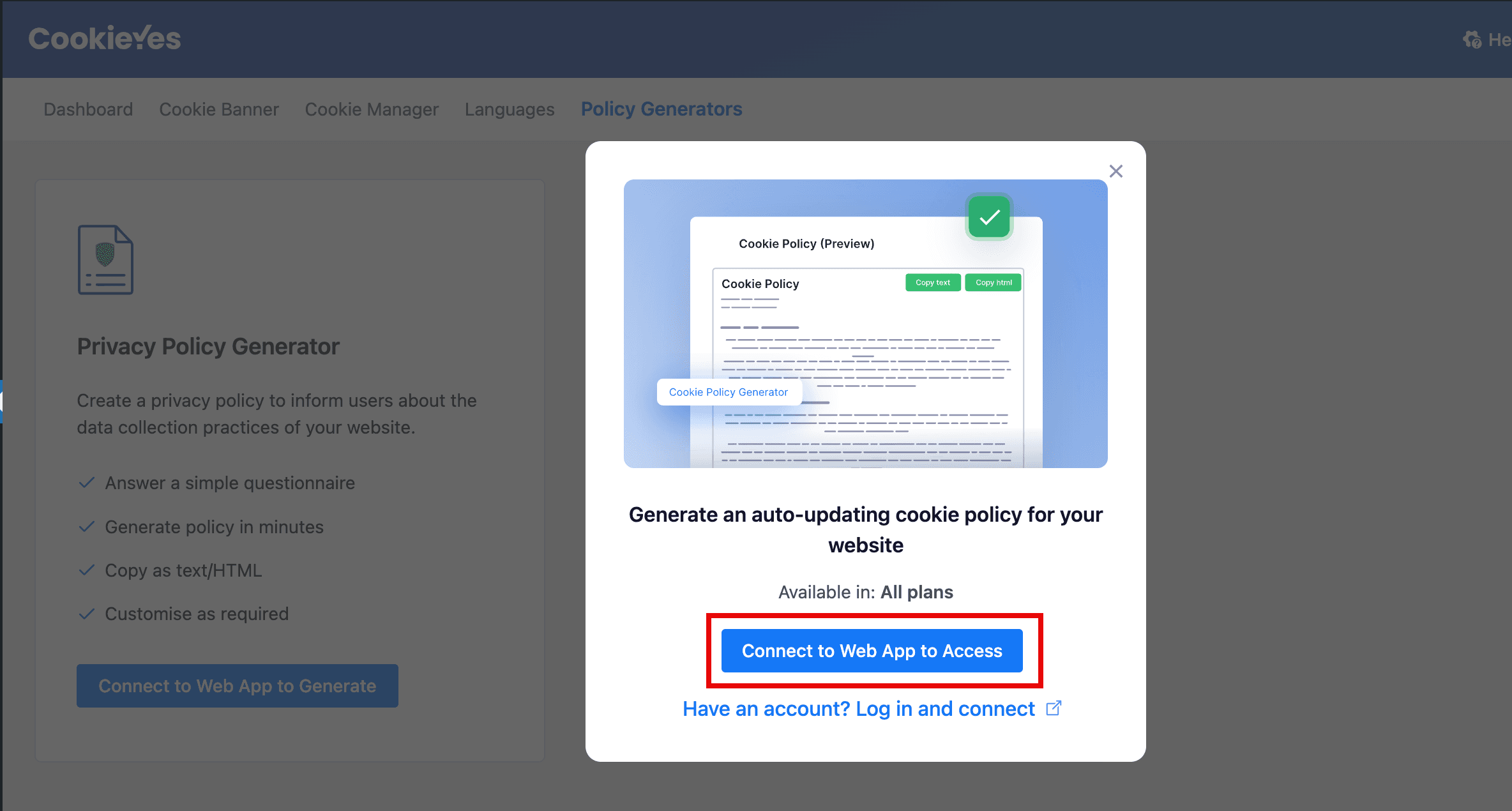
Once connected, you’ll be redirected to the CookieYes Web App. In the CookieYes dashboard, select Legal Policies, and click + Generate under Cookie Policy.
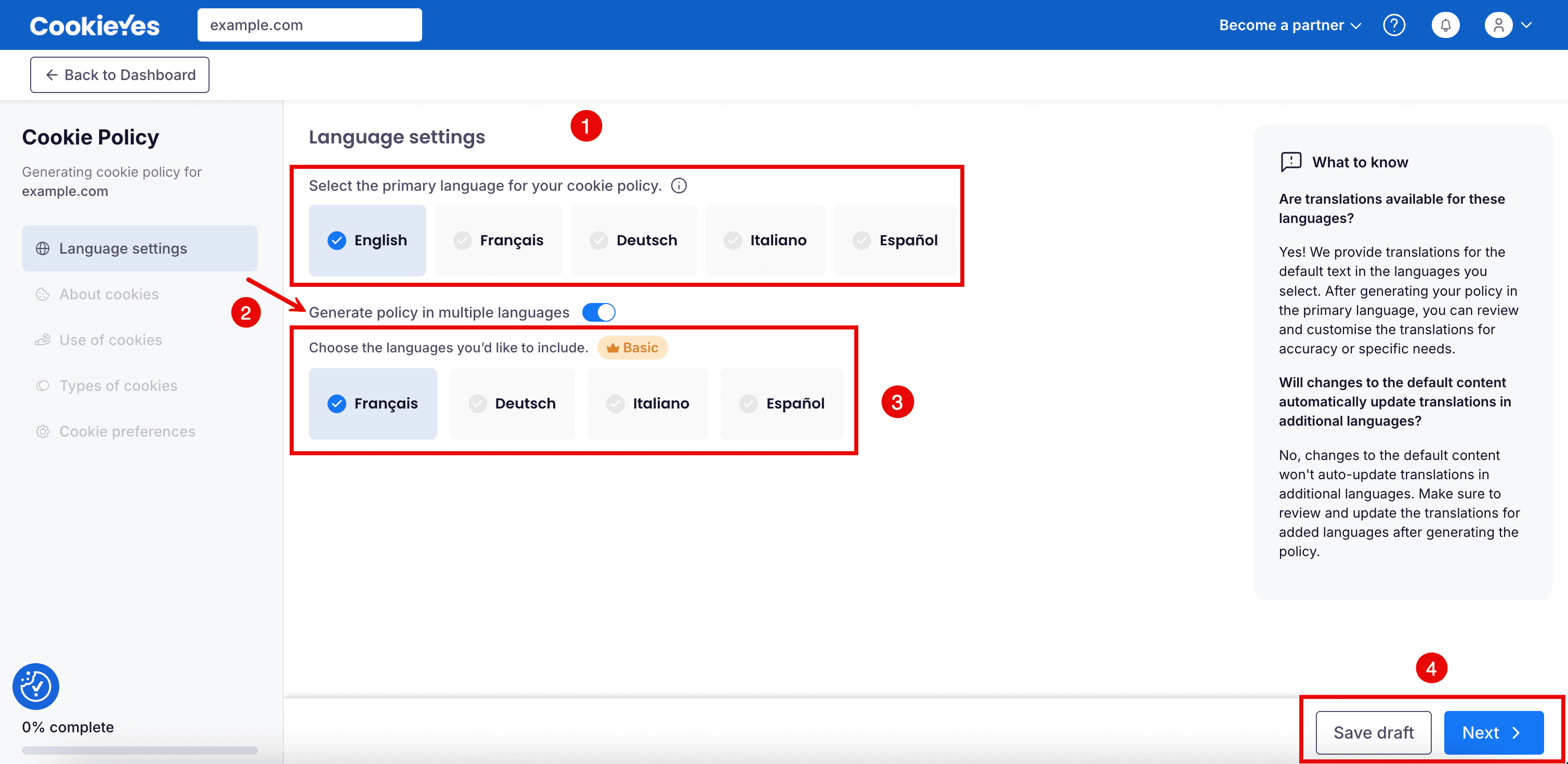
- Select your primary language. The chosen language will appear with a checkmark.
- (Optional) Enable Generate policy in multiple languages to add more languages. This feature is available on Basic, Pro and Ultimate plans.
- Click Save draft to save your progress or Next to continue.
Step 3: Add about cookies details
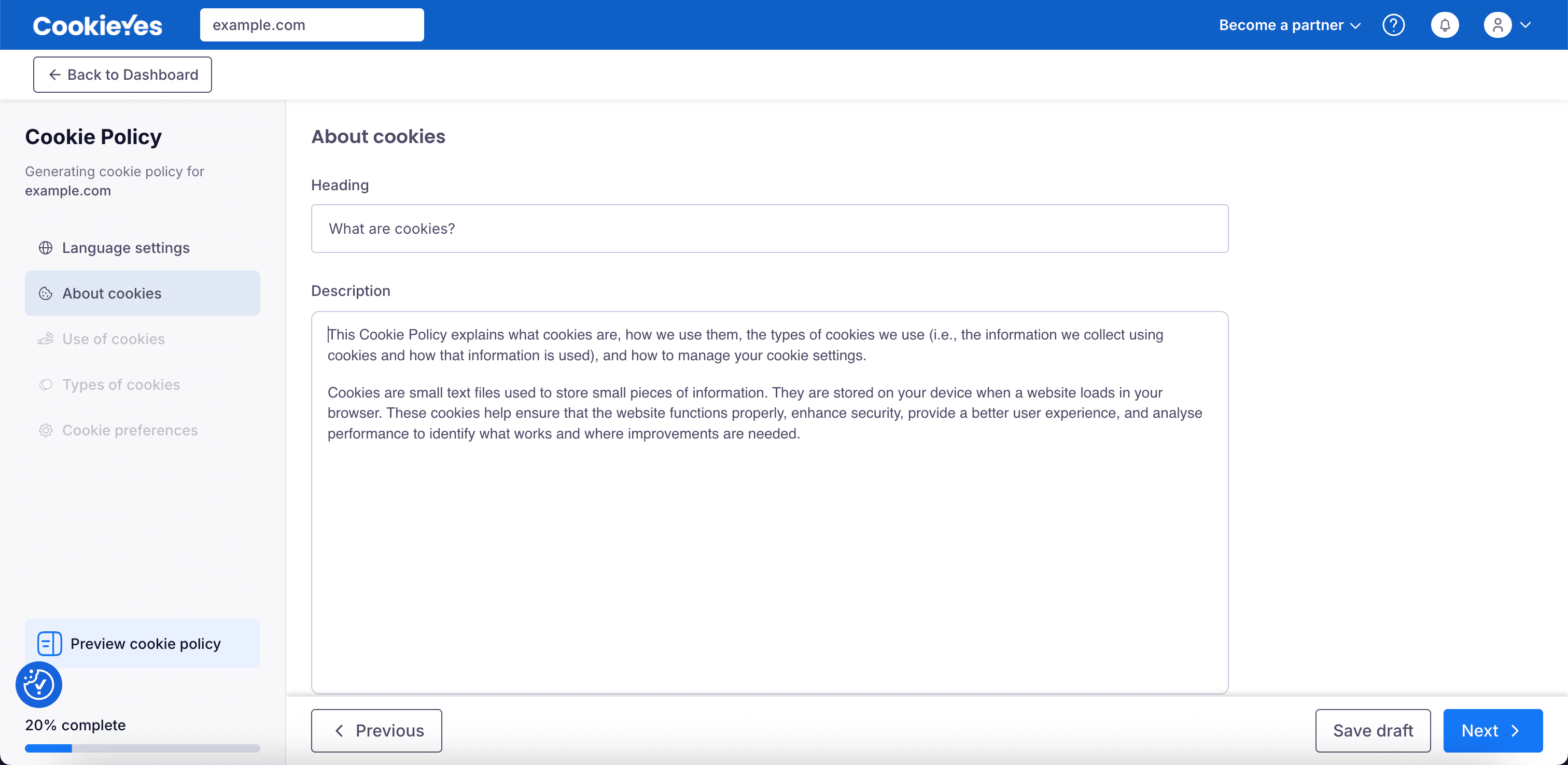
In the About cookies section, edit the heading and description to explain what cookies are and why your website uses them. You can keep the default text or edit it to match your website’s practices.
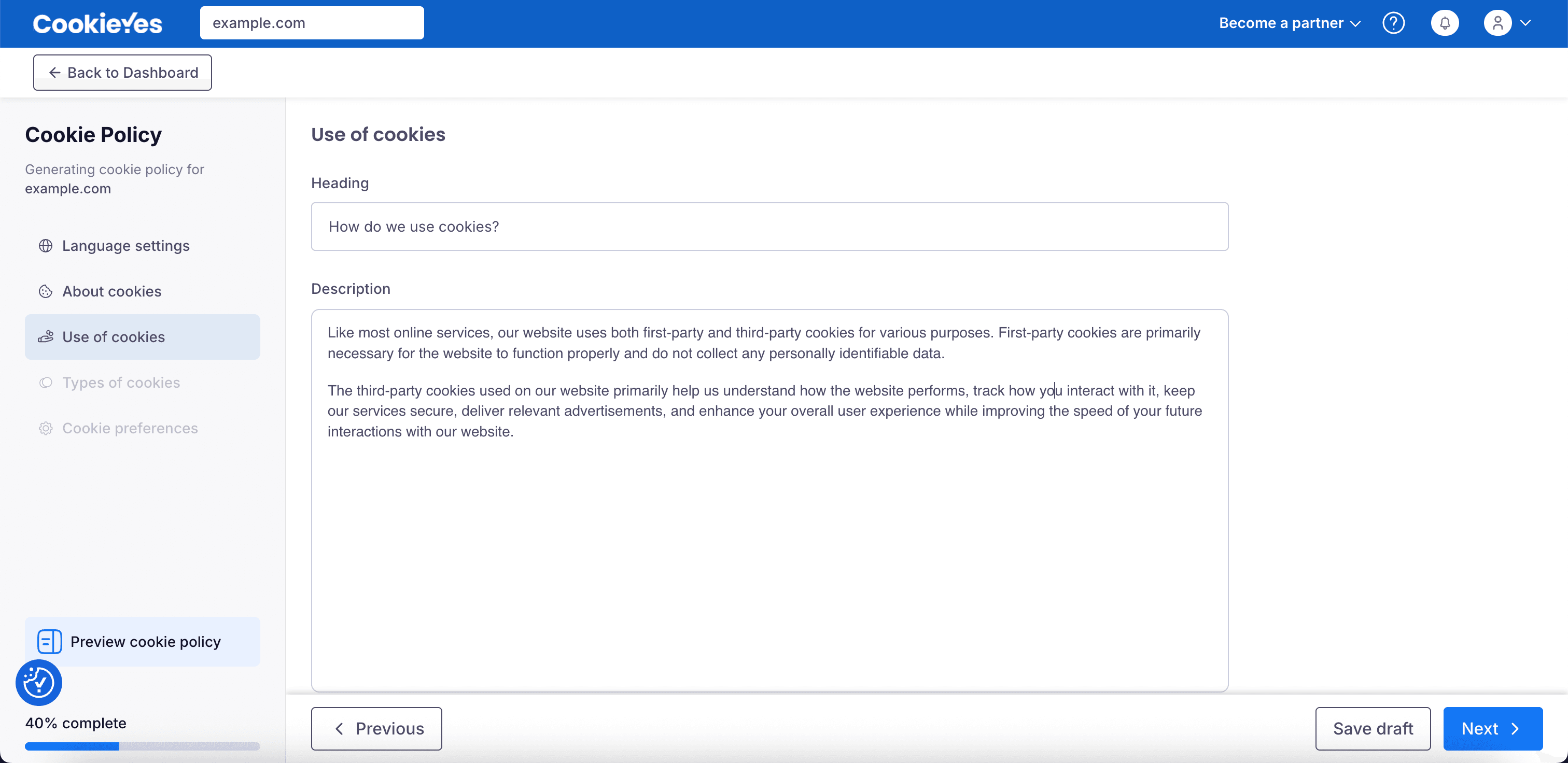
Step 4: Add use of cookies details
In the Use of cookies section, describe how your website uses cookies (for example, functionality, analytics, performance, or advertising). You can keep the default text or update it for accuracy.
When ready, click Preview cookie policy to review the formatting and tone before proceeding.
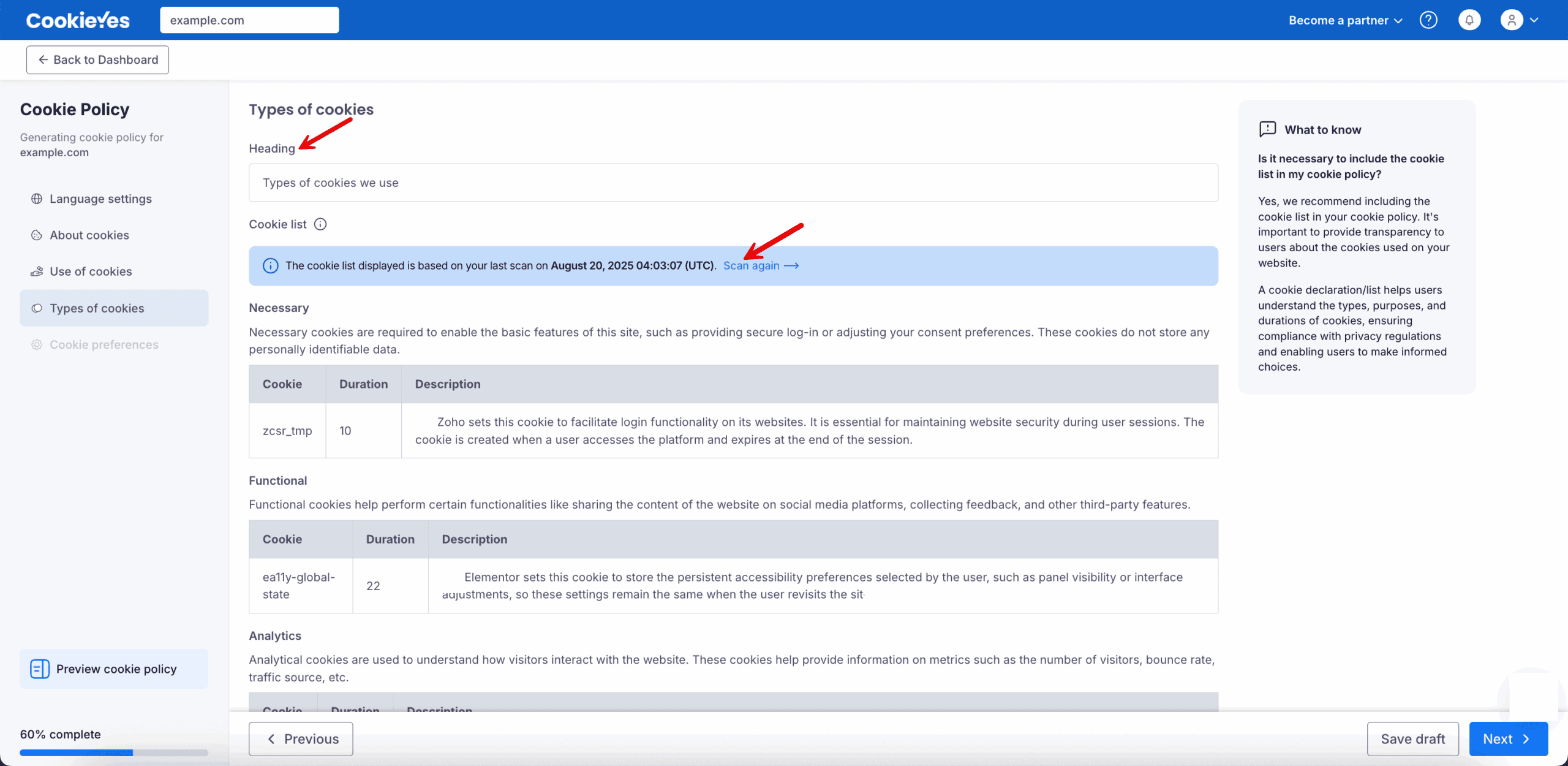
Step 5: Review and edit types of cookies
In the Types of cookies section, you will see a list of cookies from your most recent website scan. If needed, you can refresh the list by clicking Scan again to capture any new cookies. The cookies are organised into categories such as Necessary, Functional, Analytics, Performance and Advertisement. Review each entry carefully to verify the cookie name, duration, and purpose for accuracy.
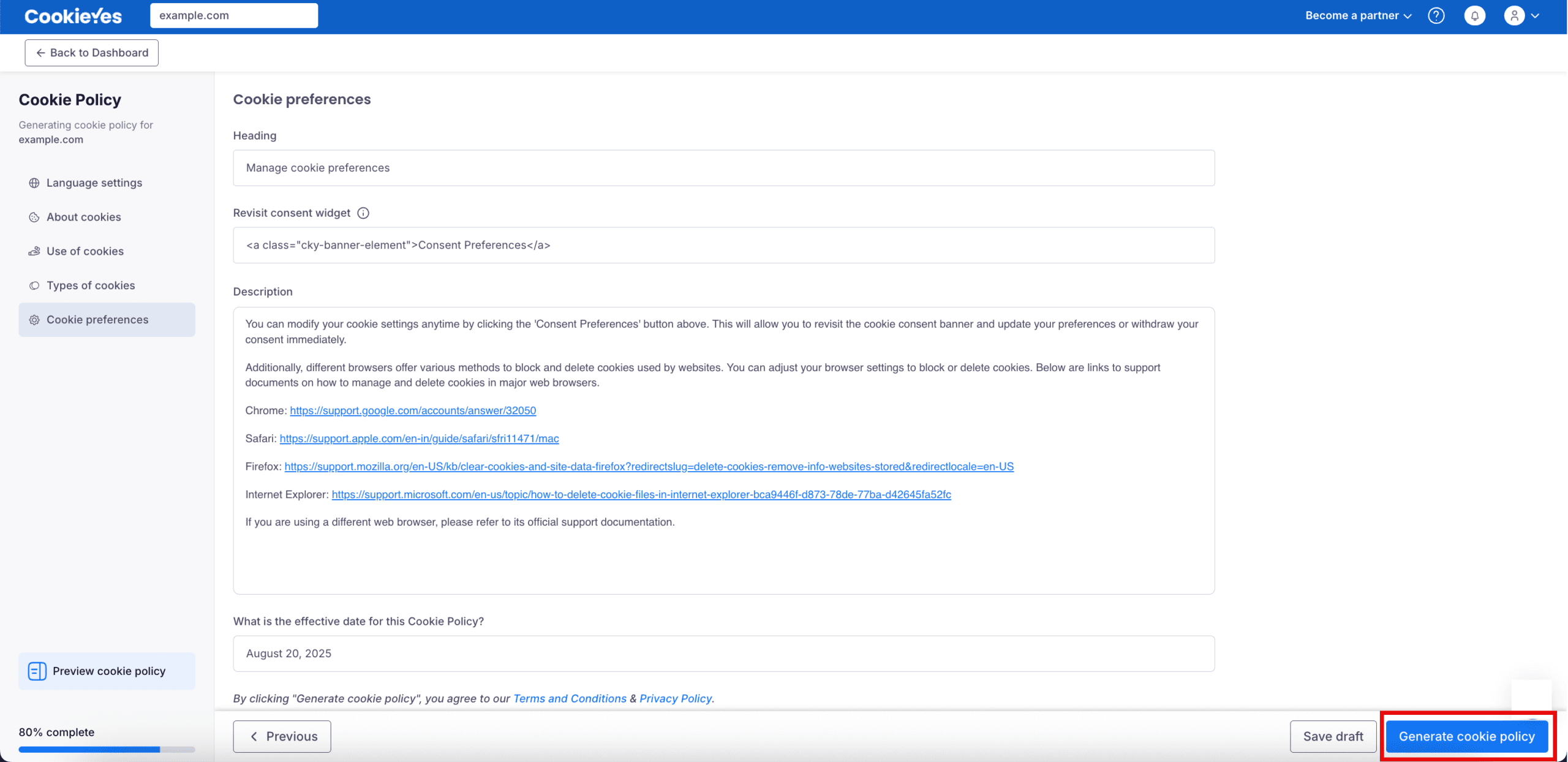
Step 6: Set cookie preferences and generate the policy
In the Cookie preferences section, keep the default heading (“Manage cookie preferences”) and description, or update them with instructions specific to your users. Set the effective date for the cookie policy. Preview the policy to verify the details and when confirmed, click Generate cookie policy to generate the policy.
Note
The Revisit consent widget enables your website visitors to manage their cookie preferences. You can remove the code in the field if you don’t want a widget to be displayed. For more details, refer to the guide.
Add the Cookie Policy to WordPress
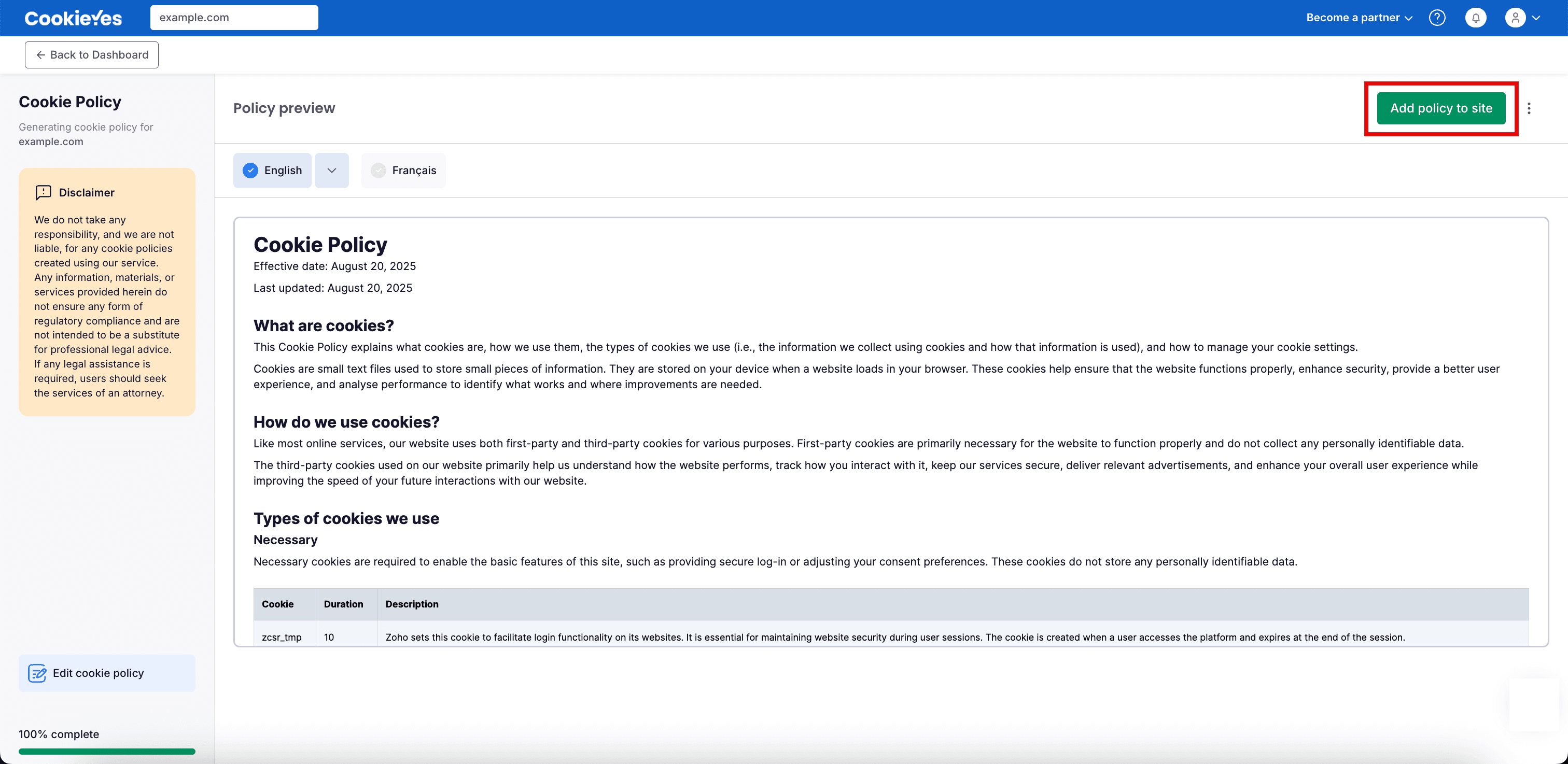
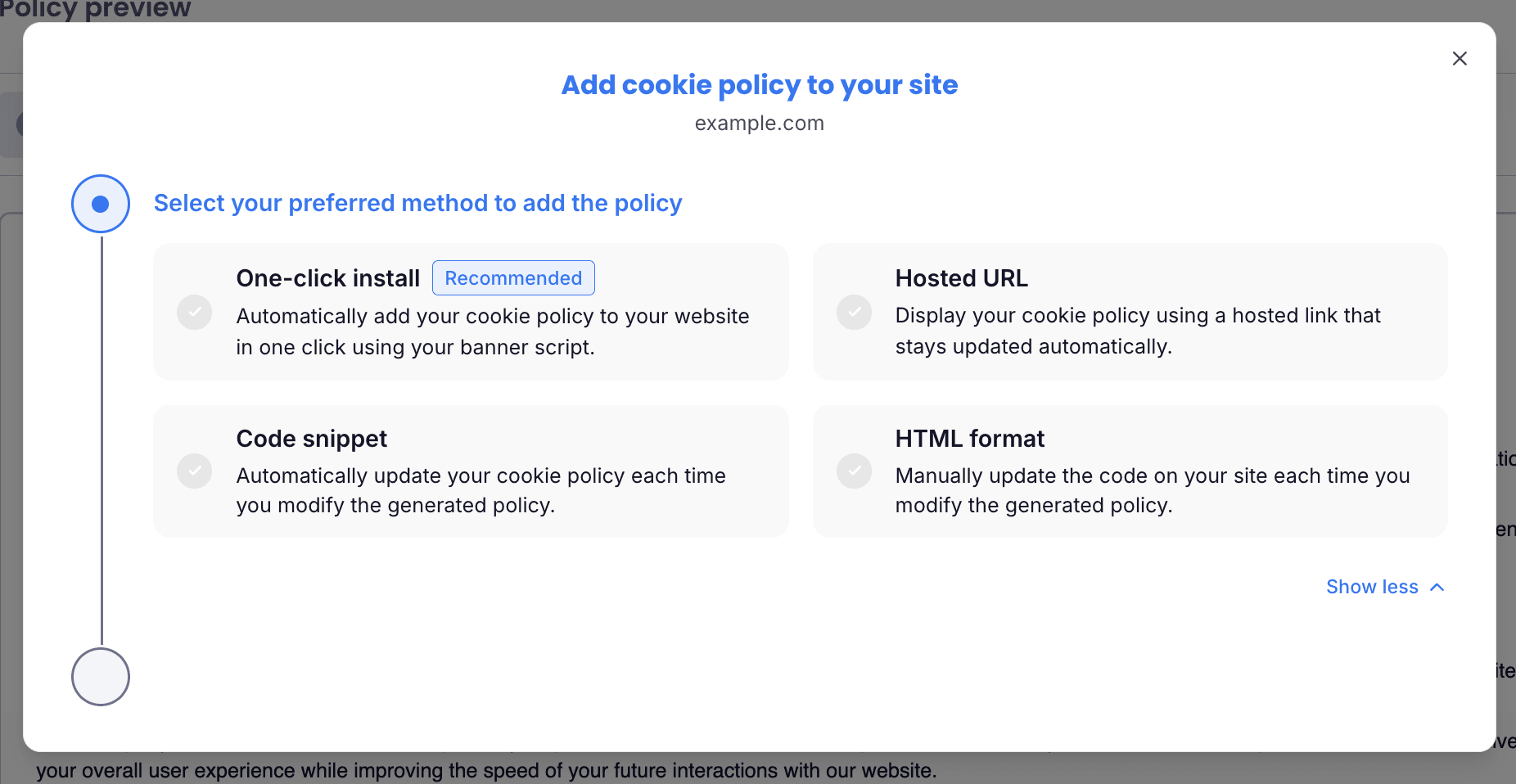
After you generate your cookie policy, review the preview in each selected language. Click Add policy to site to open a modal with ways to add your cookie policy.
Choose one option and follow its steps.
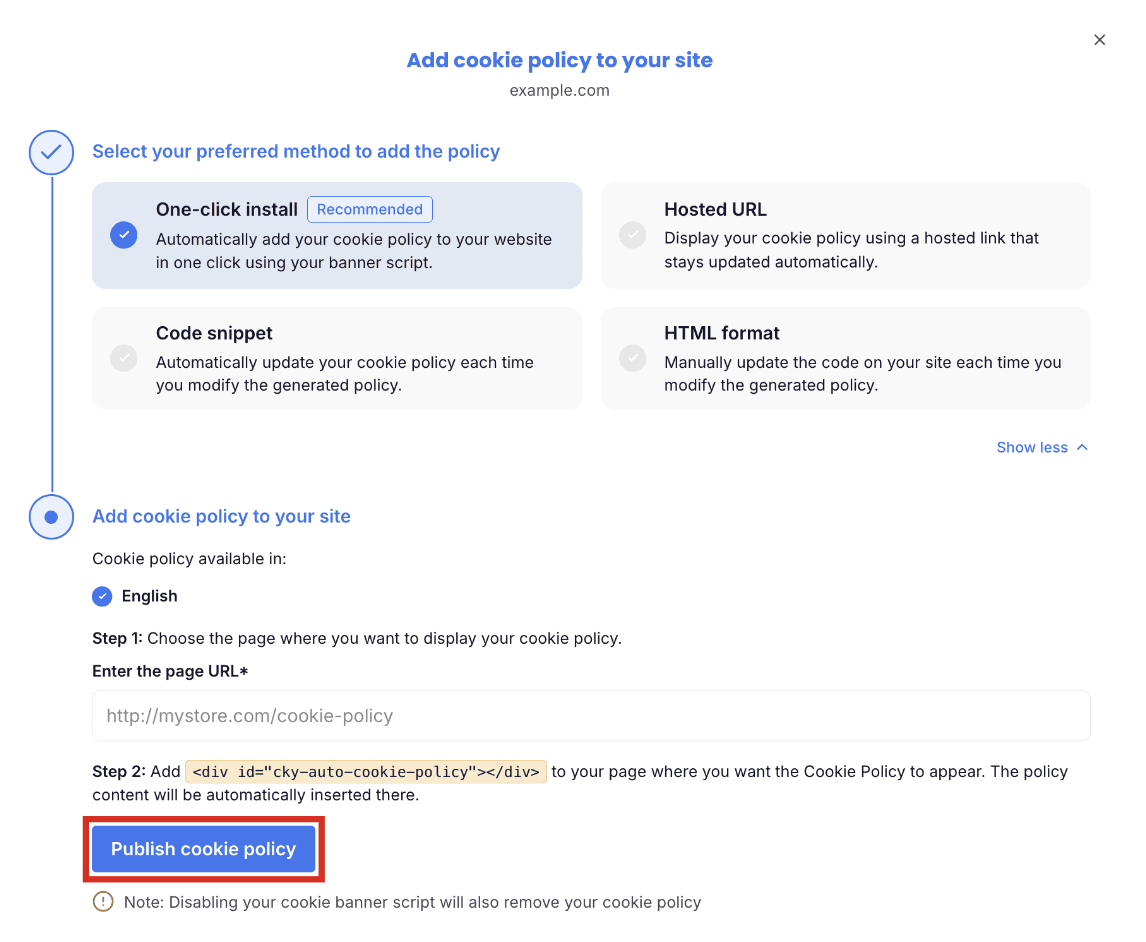
Option 1: One-click install (recommended)
Adds the cookie policy using your existing cookie banner script. The published policy updates automatically whenever you make changes in CookieYes.
Step 1: Select One-click install
In the modal, select One-click install.
Step 2: Create a policy page in WordPress
- Log in to your WordPress account.
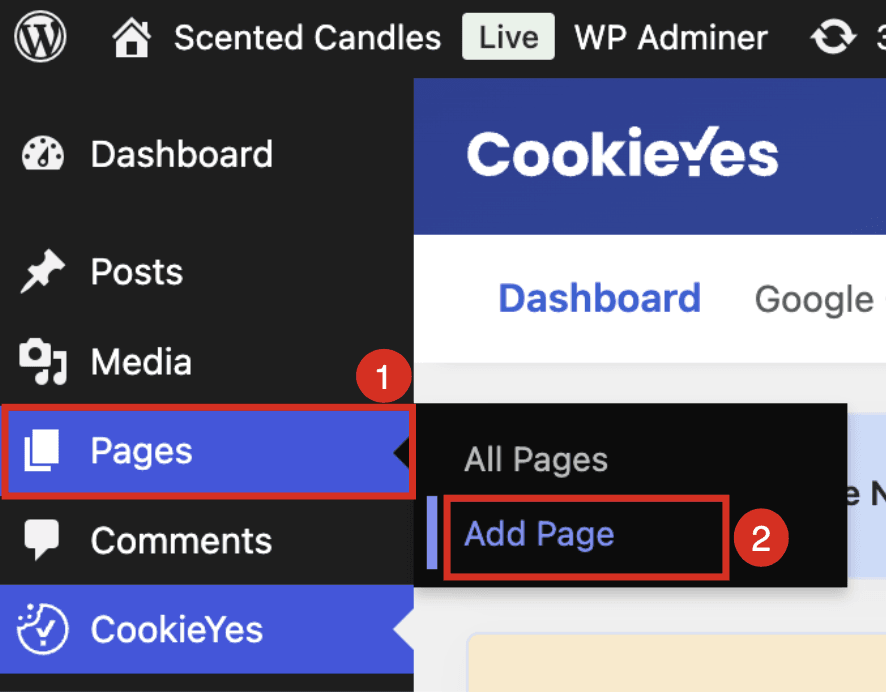
- In the left-hand menu of your dashboard, go to Pages > Add Page.
- Enter the title Cookie Policy, then click Save draft.

- Copy the URL of the cookie policy page and paste it into the CookieYes web app.
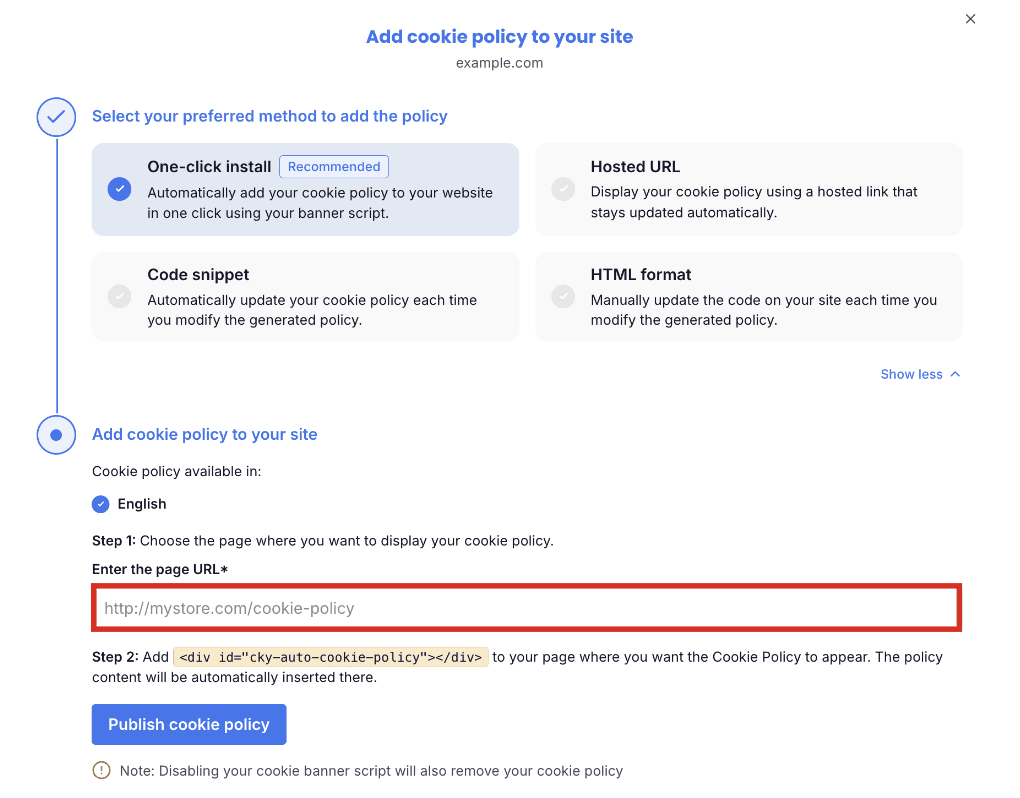
Step 3: Embed the policy code
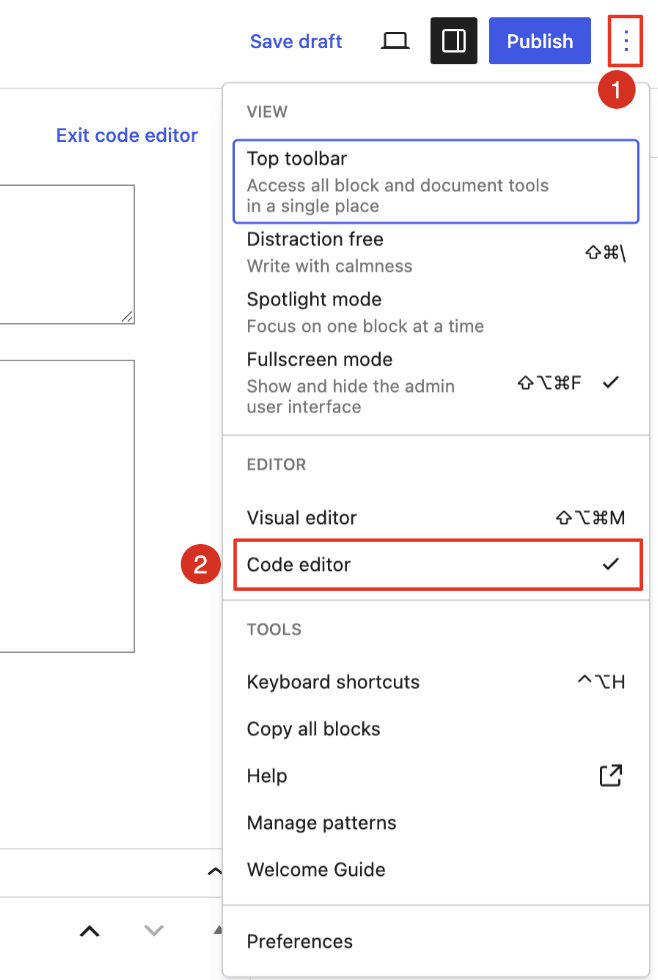
- In the top-right corner of the page editor, click the Options (⋮) icon, then select Code editor.
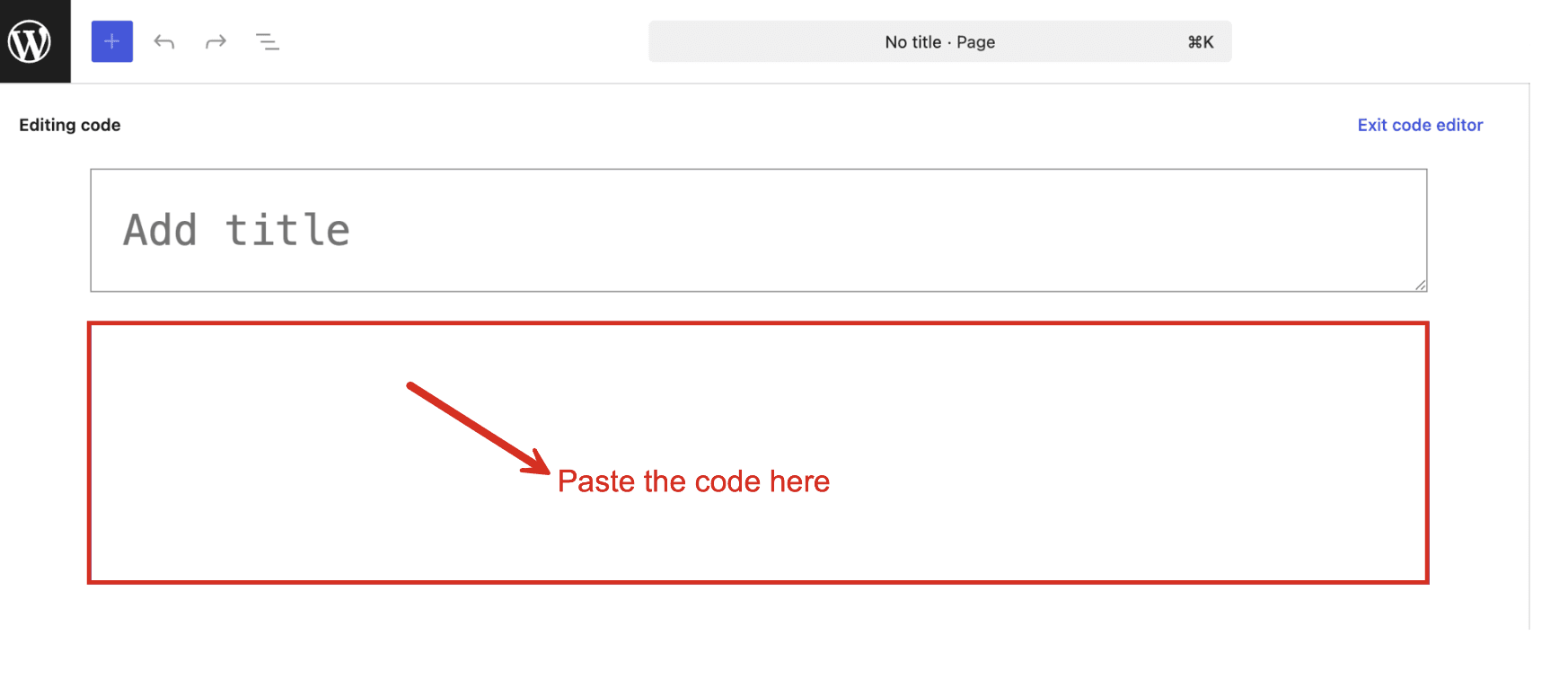
- Paste <div id="cky-auto-cookie-policy"></div> into the code field, then click Publish.
Step 4: Publish and verify
- Return to the CookieYes web app.
- Click Publish cookie policy.
Your cookie policy page is now live on your WordPress website. Link it in your website footer and cookie banner so visitors can read it before they give consent.
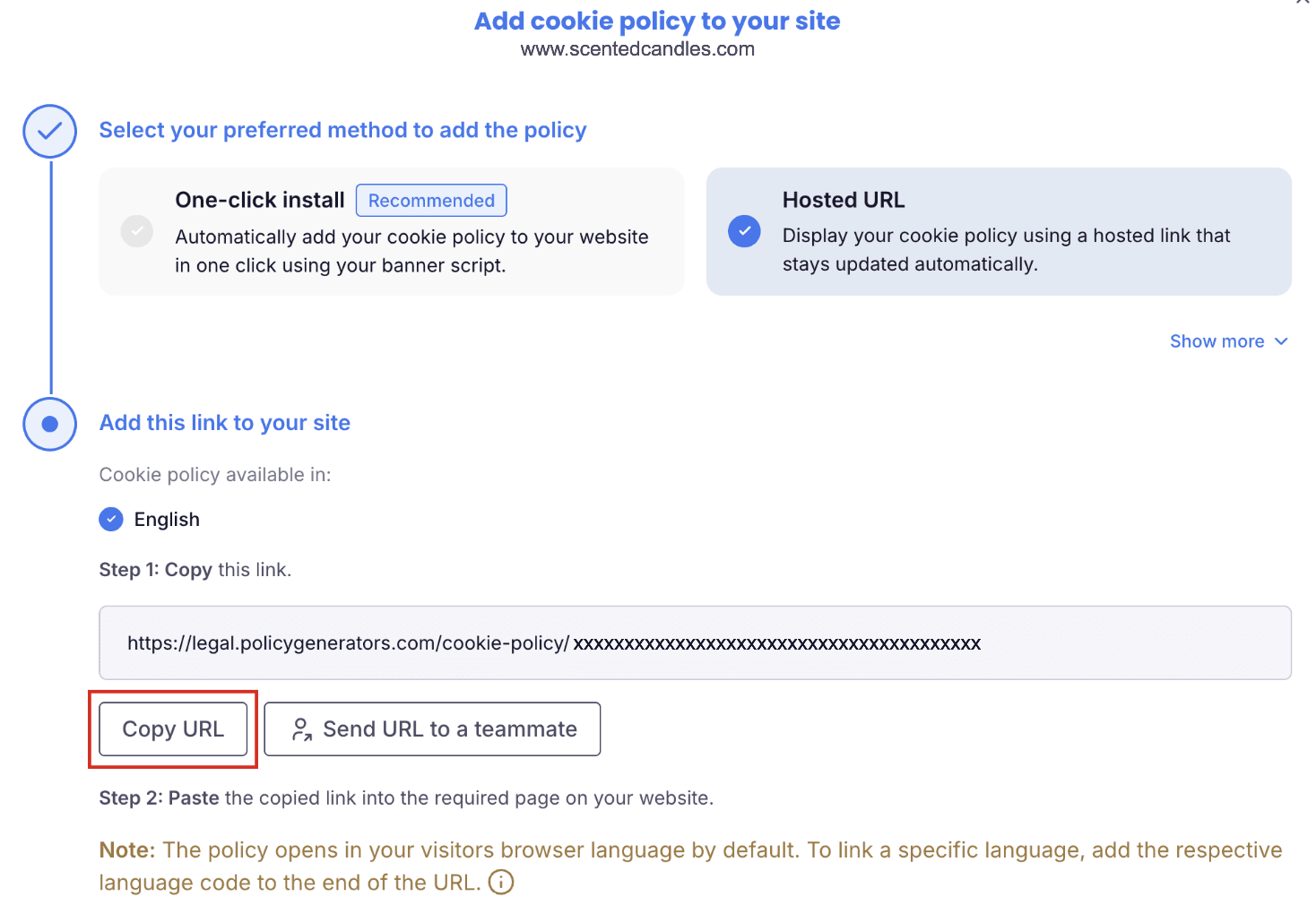
Option 2: Hosted URL
Displays your cookie policy through a hosted link. The policy updates automatically whenever you make changes in CookieYes.
Step 1: Copy the hosted URL
- In the modal, select Hosted URL.
- Click Copy URL.
By default, the policy uses the visitor's browser language. To set a specific language, add its code to the end of the URL. For example, /fr for French: https://legal.policygenerators.com/cookie-policy/xxxxxxxxxxxxxxxxx/fr
Tip
If someone else manages your website, click Send URL to a teammate to share the link with them.
Step 2: Add the link to WordPress
- Log in to your WordPress account.
- In the left-hand menu of your dashboard, go to Appearance > Menus.
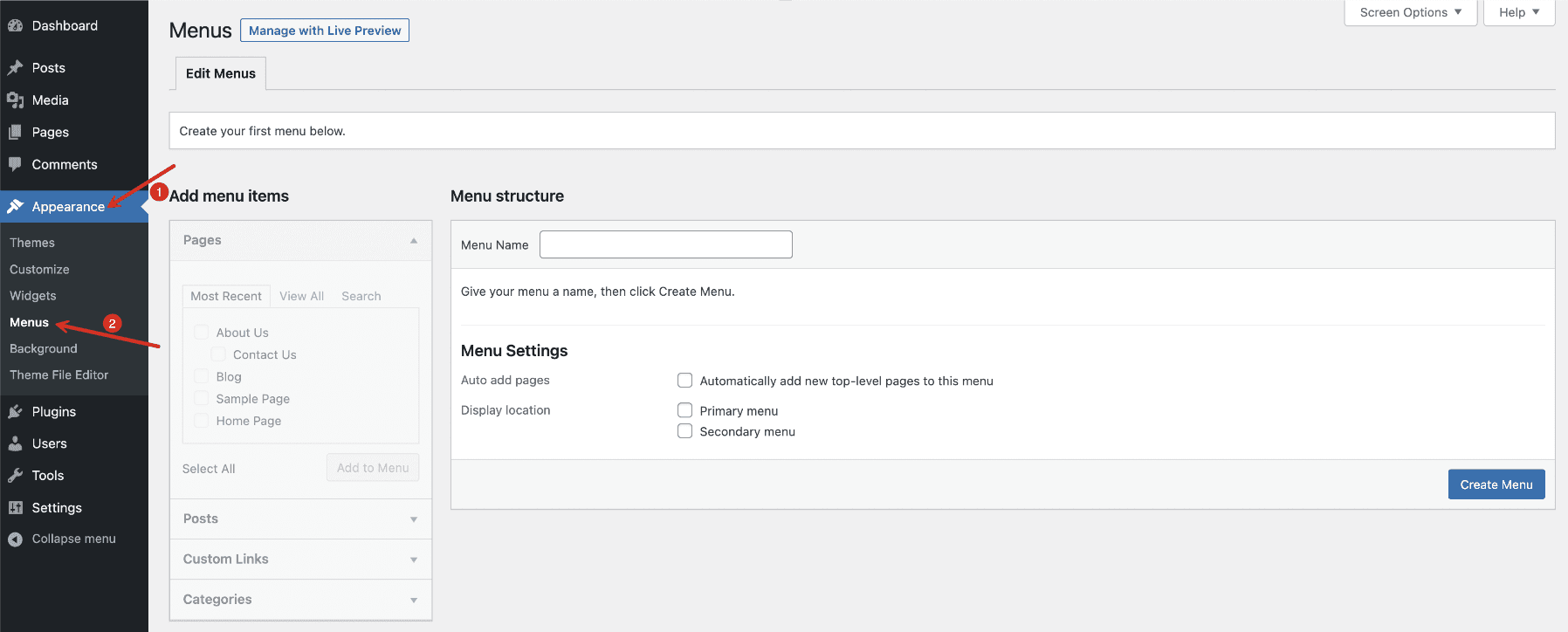
- Select your footer menu, or the menu where you want the link to appear.
- Under Custom Links, paste the hosted URL in URL and enter Cookie Policy in Link Text.
- Click Add to Menu, then click Save Menu.
Note
If you use a block theme, go to Appearance > Editor and add the link to the Navigation block in your footer instead.
Option 3: Code snippet
Adds the cookie policy using a JavaScript snippet. The published policy updates automatically whenever you make changes in CookieYes.
Step 1: Copy the code snippet
- In the modal, select Code snippet.
- Click Copy code.
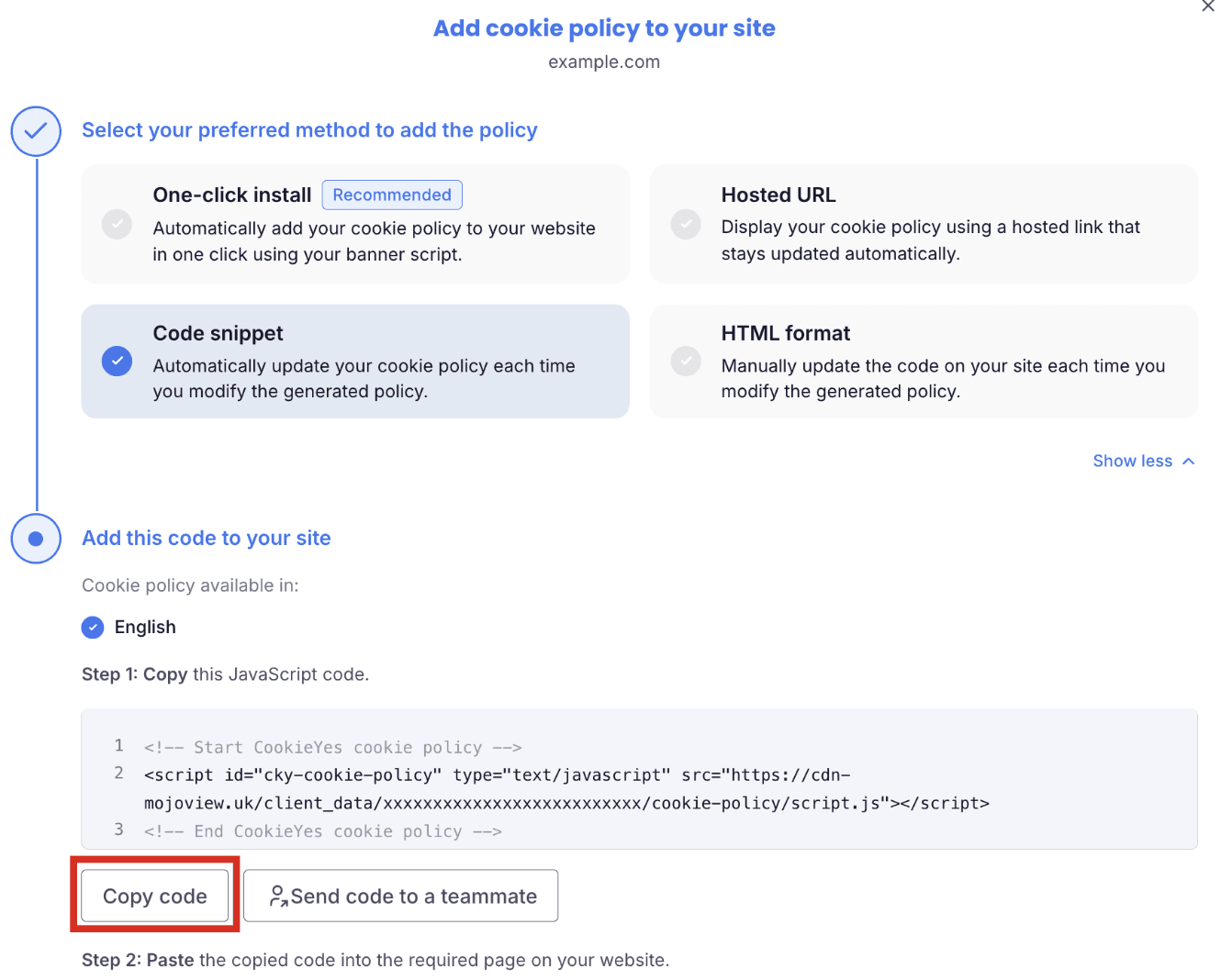
Tip
Use Send code to a teammate if someone else manages your website content.
Step 2: Create a policy page in WordPress
- Log in to your WordPress account.
- In the left-hand menu of your dashboard, go to Pages > Add Page.
- Enter the title Cookie Policy, then click Save draft.
Step 3: Embed the policy code
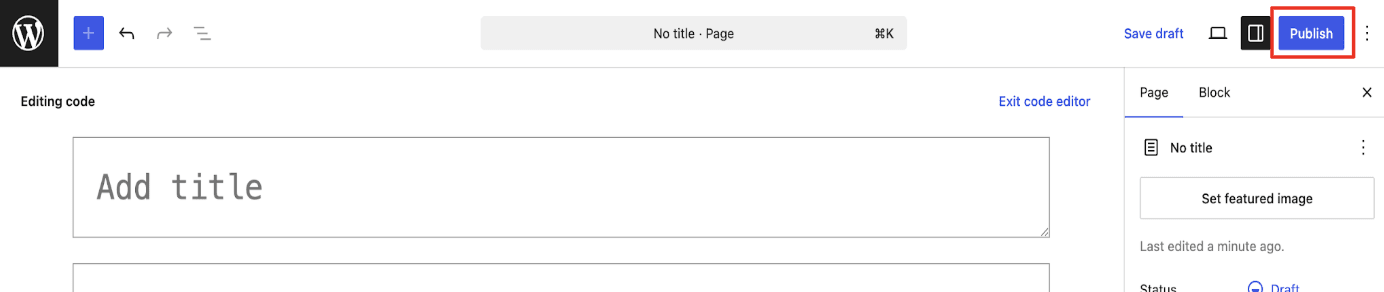
- In the top-right corner of the page editor, click the Options (⋮) icon, then select Code editor.
- Paste the JavaScript snippet into the code field, then click Publish.
Adds the cookie policy as static HTML. You update the page manually whenever the policy changes.
Step 1: Copy the HTML
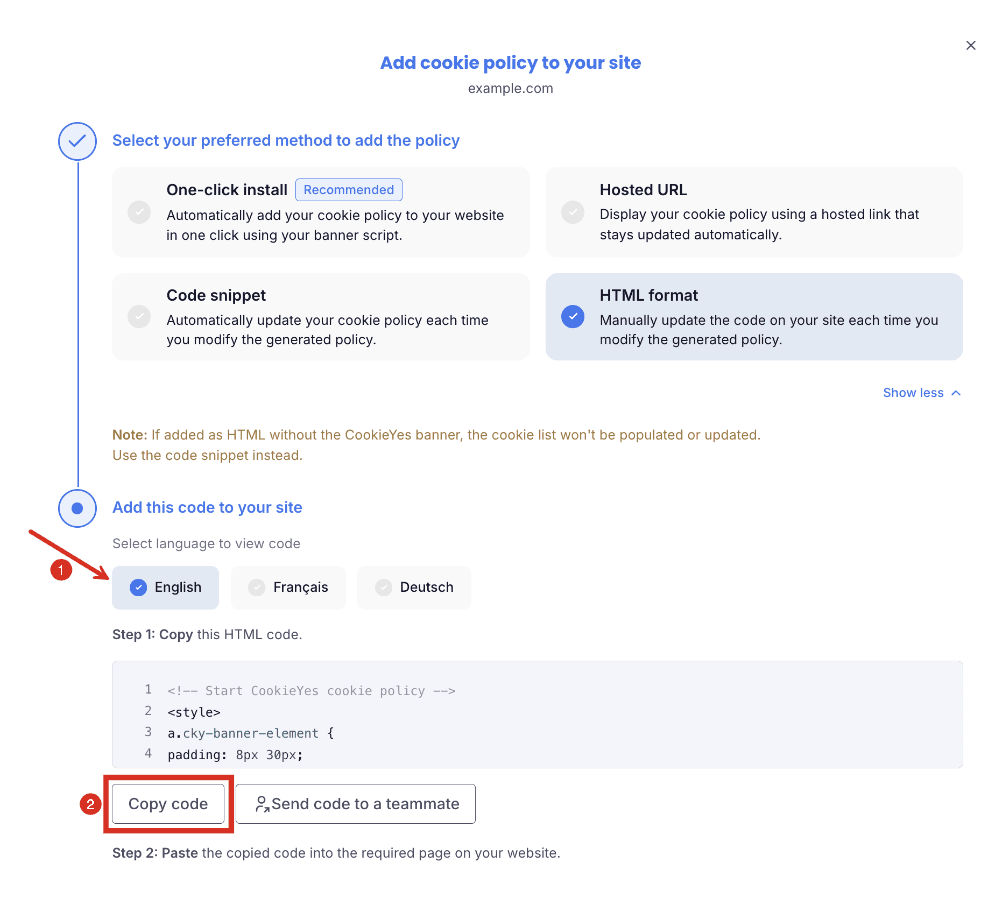
- In the modal, select HTML format.
- Select your preferred language.
- Click Copy code.
Tip
Use Send code to a teammate if someone else manages your website content.
Step 2: Create a policy page in WordPress
- Log in to your WordPress account.
- In the left-hand menu of your dashboard, go to Pages > Add Page.
- Enter the title Cookie Policy, then click Save draft.
Step 3: Add the HTML
- In the top-right corner of the page editor, click the Options (⋮) icon, then select Code editor.
- Paste the HTML into the code field, then click Publish.
Note
To remove the Cookie Policy heading at the top of the page, delete the following line from the HTML code: <h1 class="cookie-policy-h1">Cookie Policy</h1>
Conclusion
Your cookie policy page is now live on your WordPress website. You can link the cookie policy in your website footer, and within your cookie banner so visitors can read it before they give consent.