Access to data is no longer the primary concern. The real question is how to use it responsibly in an environment defined by stricter privacy laws, heightened regulatory scrutiny, and growing public awareness.
Privacy-Enhancing Technologies (PETs) make this possible. By embedding privacy into data processing, PETs enable analysis, sharing, and collaboration without revealing raw personal data. Technologies such as differential privacy, federated learning, secure multi-party computation, and confidential computing are redefining how privacy-focused systems are built.
This article explores what Privacy-Enhancing Technologies are, the main types of PETs, and how they support privacy-preserving collaboration and compliance
Privacy‑Enhancing Technologies (PETs): Definition
Privacy-enhancing technologies are tools, techniques and governance practices that help protect personal or sensitive data during collection, storage, processing and transmission.
PETs reduce the likelihood of misuse or re‑identification while still allowing organisations to extract value from data.
These privacy-preserving technologies can include:
- cryptographic methods and access controls
- access controls
- anonymisation techniques
- systems designed to minimise data usage
PETs are designed to protect personally identifiable information (PII)/ Personal data while organisations analyse or collaborate on that data.
They safeguard PII and maintain control throughout storage, processing and transmission. It also minimises the collection of sensitive information, enhances security and gives users control over how their data is used.
Why PETs matter for business
A CISCO survey shows that 95 % of consumers won’t buy from companies with no data protection, and data breaches cost businesses an average of USD 4.44 million per incident.
Regulations such as the General Data Protection Regulation (GDPR), California Consumer Privacy Act (CCPA), Brazil’s LGPD and Canada’s PIPEDA impose strict requirements on data collection and retention, with fines reaching up to €20 million or 4 % of global annual revenue for serious violations (GDPR fines).
PETs help businesses comply with these regulations, avoid penalties and create a privacy‑safe customer journey that builds trust.
Categories of PETs
Different PETs serve different functions. The OECD identifies four high‑level categories of privacy‑enhancing technologies: data obfuscation, encrypted data processing tools, federated and distributed analytics, and data accountability. Each category targets specific privacy risks and may be combined for layered protection.
Each category targets specific privacy risks and may be combined for layered protection.
| Categories of PETs | What it means |
| Data obfuscation | Technologies that reduce identifiability by masking, anonymising or pseudonymising data. |
| Encrypted data processing tools | These tools enable computations/analysis without revealing the underlying data. |
| Federated and distributed analytics | Systems that train models or run analytics across distributed devices without centralising raw data. |
| Data accountability | Technologies that give data subjects greater control over their data and provide immutable audit trails. |
These categories include a wide range of Privacy-Enhancing Technologies, each built to support privacy-preserving capabilities such as secure analytics, encrypted processing, data minimisation, and privacy-safe collaboration.
Key types of PETs
Below are the most common privacy‑enhancing technologies, along with their privacy‑preserving capabilities and typical applications.
Anonymisation and pseudonymisation
- Anonymisation removes or obscures identifiers so that individuals cannot be linked back to the data. It preserves data utility for analysis and is widely used in public health, research and marketing analytics.
- Pseudonymisation replaces identifying information with tokens or codes, reducing direct identifiability while allowing data to be re‑linked under strict conditions. It is simpler to implement than full anonymisation and supports use cases like user tracking and loyalty programmes.
Differential privacy
Differential privacy introduces controlled noise into datasets or query results to prevent re‑identification of individual records while preserving overall patterns.
Noise can be introduced either at the point of data collection in a distributed model or later at a central system before the data is released in a centralised model.
Synthetic data
Synthetic data tools generate artificial datasets that mirror the statistical properties of real data without containing actual personal information. These datasets allow companies to train AI models, test software, or share data externally while mitigating privacy risks.
Homomorphic encryption
Homomorphic encryption enables computations directly on encrypted data, producing encrypted results without ever seeing the original information.
Three types of homomorphic encryption are:
- Fully (FHE): Supports any type of computation without limits, but complex operations require significant time and computing power.
- Somewhat (SHE): Allows a limited and pre-defined number of additions and multiplications, restricting the types of functions it can support.
- Partial (PHE): Supports either addition or multiplication (not both) and offers better performance, but with limited functional capability.
The data remains encrypted throughout processing, meaning neither analysts nor service providers see the underlying information. It is valuable in financial services, healthcare and advertising where sensitive data must stay confidential.
Secure multi‑party computation (SMPC) and private set intersection (PSI)
SMPC allows multiple parties to jointly compute a function over their inputs while keeping those inputs private. It is used in collaborative research and joint business intelligence, enabling entities to analyse combined datasets without exposing raw data.
PSI, a specific SMPC variant, lets two parties determine the intersection between their datasets without revealing the datasets themselves. These techniques support privacy‑preserving collaboration between companies or departments.
Federated learning
Federated learning is a decentralised machine‑learning approach where a model is trained on multiple devices or servers that retain local data.
What happens here is, instead of transferring personal data to a central database, each party trains a local model and shares only model updates, which are combined to improve a global model.
Federated learning is suitable for collaborative AI development and cross‑border data projects.
Trusted execution environments (TEEs)
A TEE is a secure area inside a computer processor where code runs in isolation from the main operating system. This hardware‑based isolation protects data while it is being processed and ensures that even a cloud provider cannot see sensitive data.
TEEs are used in mobile payments, digital rights management and cloud computing. However, compatibility issues and vendor dependence can complicate adoption.
Zero‑knowledge proofs (ZKPs)
Zero‑knowledge proofs allow one party to prove a statement is true without revealing the underlying information. They are used in blockchain systems, secure identity verification and privacy‑preserving cryptocurrencies. ZKPs provide strong privacy guarantees but require significant computational resources and cryptographic expertise.
Common use cases include age verification, financial solvency checks, asset ownership confirmation, and biometric authentication. They can be either interactive or non-interactive, depending on how the proof is verified.

Also read:
Consent Management as a Privacy-Enhancing Technology
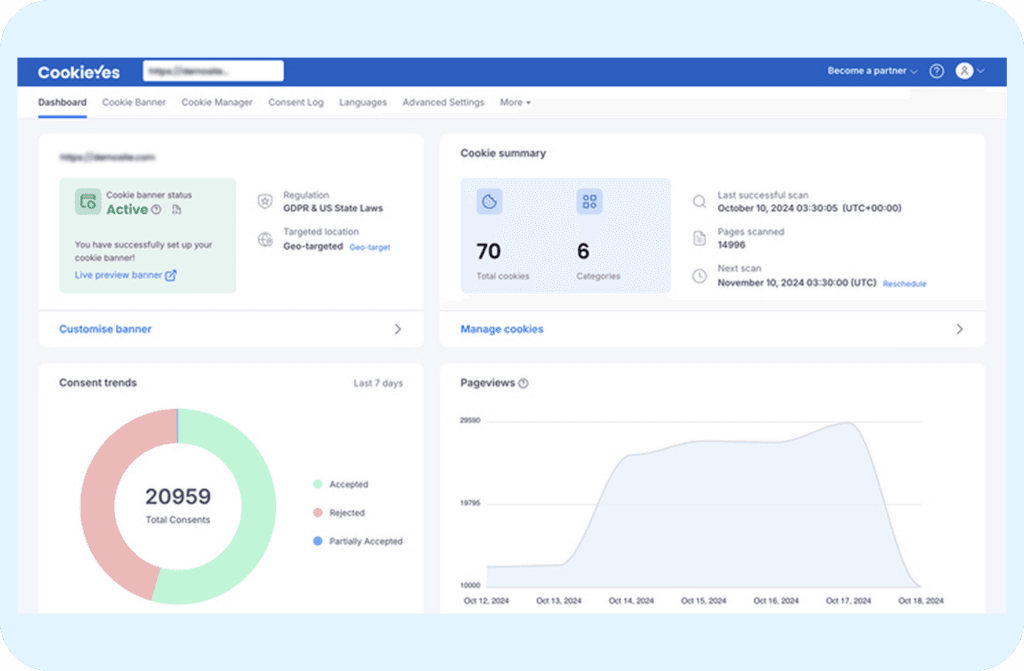
For websites, consent management platforms (CMPs) play a critical role in privacy-preserving data practices. A CMP limits data collection at the source by ensuring that cookies, trackers, and third-party scripts are only activated after valid user consent is obtained.
From a PET perspective, consent management supports data minimisation, purpose limitation, and user control. This reduces compliance exposure under laws such as the GDPR and CCPA and strengthens accountability.
By giving users granular choices and maintaining auditable consent records, consent management enables a privacy-safe customer journey while allowing organisations to continue running analytics, advertising, and personalisation in a compliant manner.
Traditional methods vs PETs
| Aspect | Traditional Data Protection Methods | Privacy-Enhancing Technologies (PETs) |
| Primary approach | Protect data through security controls such as encryption, access restrictions, and secure storage. | Protect privacy by minimising or eliminating exposure of raw personal data during processing and analysis. |
| Data visibility during processing | Data is usually decrypted or visible during analysis and computation. | Protect privacy by minimising or eliminating exposure of raw personal data during processing and analysis. |
| Typical technologies used | Encryption at rest and in transit, firewalls, role-based access control, secure databases. | Differential privacy, federated learning, homomorphic encryption, secure multi-party computation, synthetic data. |
| Data sharing | Typically requires transferring raw or partially masked datasets to partners or third parties. | Enables privacy-preserving collaboration without sharing raw personal data. |
| Compliance support | Helps secure data but may not fully address risks like re-identification or over-collection. | Supports privacy-by-design principles and reduces regulatory risk under laws like GDPR and CCPA. |
Benefits of adopting PETs
Businesses integrate PETs for compliance, strategic advantages and risk mitigation. Here are the common benefits of using PETs:
Data minimisation and regulatory compliance
PETs help organisations adhere to the principle of data minimisation, collecting only the information necessary and retaining it for limited purposes.
They support compliance with the GDPR, CCPA, HIPAA and other regulations by reducing unnecessary data processing and storage.
Secure collaboration and innovation
Modern organisations often need to collaborate with partners, service providers or research institutions. Secure multi‑party computation and federated learning allow joint analytics and model training without exposing sensitive data.
Synthetic data and anonymisation enable the sharing of realistic datasets without compromising individual identities. These techniques encourage privacy‑preserving collaboration and support partnership-enhancing technologies, allowing companies to unlock insights while maintaining confidentiality.
Enhanced customer trust and brand value
Consumers are more likely to engage with brands that respect their privacy. Adopting PETs signals a commitment to data protection and helps build trust.
By offering a privacy‑safe customer journey, organisations can reduce churn, foster loyalty and improve customer lifetime value.
Reduced risk of data misuse and breaches
PETs provide technical safeguards against unauthorised access and misuse. Homomorphic encryption keeps data encrypted during processing, SMPC avoids centralising sensitive data, and anonymisation reduces re‑identification risks.
These techniques help mitigate the consequences of breaches and support data governance obligations.
Compliance with privacy standards and cross‑jurisdictional transfers
PETs facilitate adherence to privacy standards and enable lawful cross‑border data transfers. Federated learning, for example, can allow different offices in multiple countries to contribute to a machine‑learning model without transferring personal data across borders.
Implementing such tools helps companies navigate conflicting regulatory regimes and maintain privacy while innovating.
Challenges and best practices for implementing PETs
While PETs offer compelling benefits, they are not a silver bullet. Businesses should assess their data needs, risk profiles and operational goals before adopting any technology. Key considerations include:
- Technical complexity: Many PETs, such as homomorphic encryption and differential privacy, require specialised expertise. Designing, deploying, and maintaining these systems can be resource-intensive, particularly for organisations without mature data engineering teams.
- Performance and scalability constraints: Some PETs introduce computational overhead. For example, processing encrypted data or adding statistical noise may reduce speed or impact the accuracy of analytical results. Scaling these solutions for large datasets or real-time environments can be challenging.
- Accuracy trade-offs: Privacy-preserving mechanisms often involve balancing privacy protection with data utility. Techniques like differential privacy add noise to protect individuals, which may affect the precision of outputs. Striking the right balance requires careful calibration.
- Integration with legacy systems: Existing IT infrastructure may not be designed to support PET-based architectures. Retrofitting privacy-enhancing solutions into legacy systems can increase costs and operational disruption.
- Trust and governance considerations: Some models, such as centralised differential privacy, rely on trusted intermediaries. Organisations must establish strong governance frameworks, contractual safeguards, and technical controls to ensure accountability.
- Regulatory and standardisation gaps: Although regulators increasingly encourage the use of PETs, formal standards and clear compliance benchmarks are still evolving. Organisations may face uncertainty in demonstrating that a particular PET implementation satisfies legal requirements.
Emerging trends and the future of PETs
Looking ahead, PETs will become integral to digital ecosystems. As AI systems proliferate and data‑intensive technologies such as the Internet of Things (IoT) expand, privacy safeguards must be embedded at every layer. We see several emerging trends:
- Privacy‑preserving AI: Federated learning and differential privacy are enabling organisations to build models without centralising data. Expect AI‑driven privacy automation to help manage consent and adapt to evolving regulations.
- Partnership enhancing and trust technologies: PETs support privacy‑preserving collaboration between companies, suppliers and regulators. Data clean rooms and trusted intermediaries will facilitate secure data sharing while protecting commercial confidentiality.
- Zero‑knowledge and blockchain‑based identity: Advances in ZKPs will enable secure identity verification and transactions without revealing personal attributes. This could reshape finance, digital advertising and age verification.
- Integration into cloud and edge platforms: Cloud providers are adding confidential computing and TEEs to support secure analytics. Edge devices will embed PETs to process data locally, reducing exposure and supporting privacy‑safe customer journeys.
- Regulatory harmonisation: International cooperation on privacy standards will encourage interoperability. Organisations that invest early in PETs will be better positioned to comply with future privacy laws and to leverage data responsibly.